This essay was published in Flyway, Journal of Writing & Environment, in 2010. It is not so much about mothers on this Mother’s Day weekend, as it is about grandmothers and aging in many species. I will note that I am much more “aged” today, than I was when I wrote this.
[image from http://www.pexels.com]
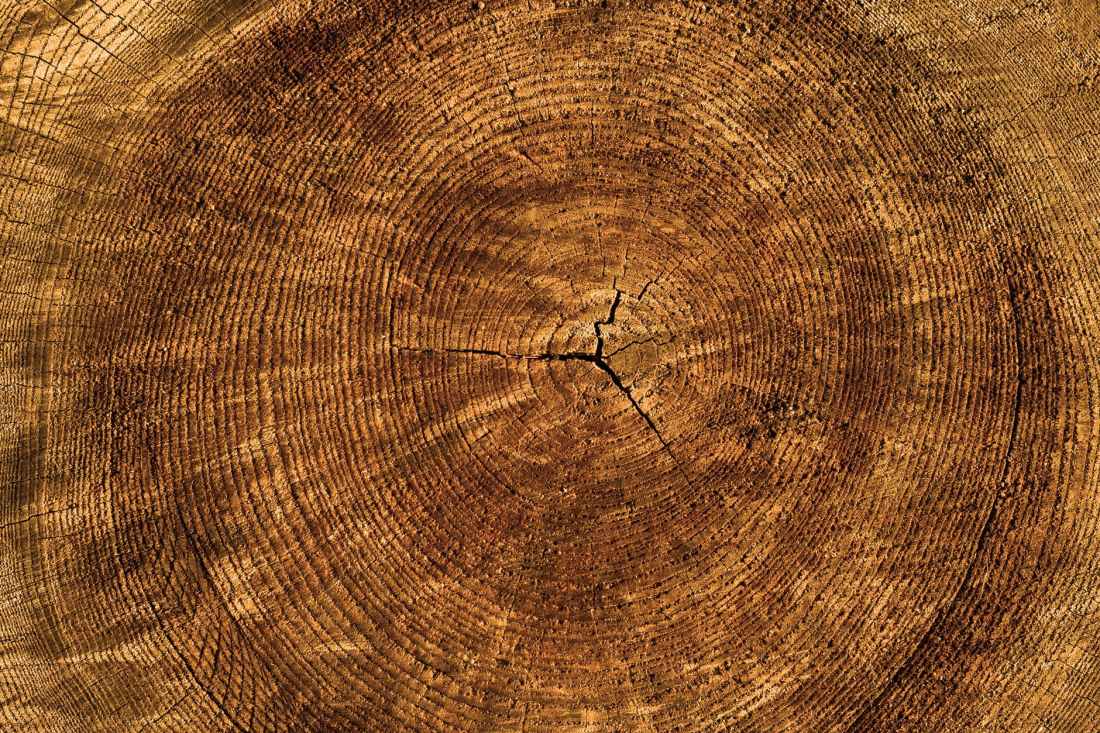
Half my life ahead, and half behind, if I’m lucky enough to live to the age of my grandmother. What wisdom will I gain with each birthday? Wrinkles increase like the rings on a tree, some years thicker than others. Biology tells us our goal is to live, eat, grow, reproduce, and pass on our genes. There you have it, life at its simplest. But what of the growing old part? Are we still necessary, or are we just taking up space? What good are grandmothers? Or, to be a little less biased about it, what good are elders?
Anthropologists suggest that elders are necessary to carry the wisdom of the culture, to share their life skills with the younger, risk-taking generation. Grandparents help with the care of grandchildren (or grand-whales), increasing those relatives’ survival and thereby better ensuring the continuance of that grandparent’s genetic line. Other than that, grandparents eat food, take resources from the young, and they repeat their stories over and over.
The ocean quahog is the oldest known animal. Rings on an ocean quahog clam found off Iceland aged it to between 405 and 410 years old. What good is a clam grandmother of 400 plus years? At that ripe age, it shows it is a highly successful individual. And, those successful genes have been passed on through spawn many times over. If sexual maturity began at 12 or 13 years, and there are multiple spawnings in a year, that’s, well… the math eludes me, but that’s a whole lot of generations of little fertilized clam swimmers, some of which might actually survive the larval stage and embed in the silt, growing into very old clams themselves. What might the elderly clam have seen in her protected deep bed: whales, giant squid, phosphorescence in the midnight waves, dredgers raking up the ocean bottom. Maybe only the animals that hide from us in deep dark places can reach a ripe age without our eating them, and then only if our dredgers miss them. For we eat most things, one way or another. Sometimes we eat the things that eat the other things; but we humans are skillfully ravenous.
At the most basic level, a gene’s goal is to reproduce itself. But in humans, our big brains get in the way of reproduction for reproduction’s sake. While many of us do reproduce as much as we can during much of our life, purposely or not, others of us choose to measure success in a different way: through the gathering of material possessions. Perhaps in that way we more closely resemble a pack rat: the one with the most shiny things in the nest wins. But, is there an advantage to amassing shiny things? Who inherits the pack rat’s nest?
Pack rats, while not noted for being particularly old themselves, do leave their “middens” or nests as records of the past. The pack rats gather plant materials, sticks, and any other unusual thing they can carry into a brushy pile. They then excrete a thick urine that acts like a varnish, over time preserving the seeds, twigs, or other gathered knick-knacks into a layered fossilized mass. Some desert middens have been radiocarbon dated to be as old as 50,000 years, or perhaps older; that’s as far back as carbon dating goes. Paleobotanists and other scientists use the botanical gifts left by grandmother pack rats to study plant communities and climate change.
At 46, my age is measured by a piece of paper, and birthday candles. I am nothing compared to the bowhead whale. One was recently killed in an Eskimo subsistence hunt and found to have an old bomb-lance harpoon fragment embedded in the bone; the harpoon design was traced back to 1890. That centenarian whale had lived to watch her brethren dip low near extinction and start back up the population curve. She lived through the last days of whaling for oil, then whaling for baleen, all to feed the human need for things, like corsets, for my great-grandmother to wear. The whale lived through oil being discovered in Alaska, and pipelines, and tankers bigger than the biggest whales, all needed to make bigger and faster and prettier things to line our nests. It wasn’t until 1946, when this bowhead grandmother was more than 50 years old that the International Whaling Commission began to regulate harvests around the world. It wasn’t until 1971, when she was 80 or so years old, that Green Peace was organized, with their in-your-face whale protection tactics.
In addition to harpoon remains, a whale’s age can be gauged by changes in aspartic acid in the eye lens; scientists using this method estimate bowheads living up to 200 years. Age may give these survivor whales and their kin advantages through passing on learned behaviors: locations of good eating areas, knowledge of migration seasons and migration pathways. The Bering Sea stock of bowheads follow pack-ice as it advances and retreats. Their 3,600-mile polar migration takes them along Russia, Canada, and Alaska; through the Bering Sea, the Bering Strait, the Chuchki Sea, the Beaufort Sea, and off Point Barrow. These grandmother whales are examples for us in staying power. They have simple needs: finding food, reproducing, and caring for their kin. Even in this arctic environment, it sounds more sane than our usual frantic lives.
The bristle cone pine is a high desert tree in the Great Basin region of the United States. Knobby, stooped, and bulging at the midline; they look a little like some senior citizens I know. Foresters age living trees using an auger coring device that drills into the trunk and pulls out a long narrow dowel of wood, displaying the tree rings, yet hopefully allowing the tree to survive. In 1964 a geology student studying climate and ice ages used a coring tool on a bristlecone pine on Wheeler Peak in Nevada. His auger jammed, and rather than lose the tool, he sawed off the knarly trunk. A horizontal slab off this tree displayed 4,844 annual rings. A later dendrochronologist found the same tree to be even older: 4,862 years. That was the oldest dead bristlecone pine. The oldest still-living bristlecone, named Methuselah, is more than 4,600 years old in the White Mountains of California. But what do these ancients teach us, other than to count our years carefully? They survive in a harsh arid climate, in low nutrient soils, and grow very slowly, adding a quarter of a millimeter to their girth each year. They show us that by holding tough, we can make it through the tough times, and all times are tough times. They show us that even the harsh spots on this earth are important, and they teach us to look back. What happened 4,600 years ago? Mesopatamia and cuneiform writing; the cradle of western civilization. Have we really changed so much since then? Today, that middle eastern cradle is in a tough time, and economic and social change is moving slowly, at what seems like a millimeter a year.
Annual cycles, annual circles. Fish age is measured by counting growth rings on otoliths, a small bone in the fish’s ear. A yellow-eyed rockfish lived to 190 years, missing the nets, the fish fries, and salt-cod barrels, until in 1999 she became a data point in a catch survey, and her otolith was removed for later analysis. These rock fish grow slowly, becoming only a moderate size despite their centuries. If they grow so slowly, they likely take many years to reach reproductive age, and are prone to over-fishing. Typically, we over-fish, we change species, we overfish again. How fast are we fishing out ancient stocks for processed food and fertilizer? Who will speak for a goggly-eyed rock fish, and the next creature up the web?
Even human teeth show rings, enamel in layers, displaying days, years, and major events. Our births, hungry times, and puberty can all be seen on electron x-rays. Our teeth read like a biography. If only wisdom was guaranteed to get deeper with the layers of time.
I believe it’s our weapons that age us more quickly. Ivory-carved harpoons progress to bomb-lances, progress to even more efficient killing machines. We perfect our techniques until we are really good at wiping out species. We wait until the species or substance is rare, and the costs make it hard to keep up the hunting, catching, dredging, drilling, mining. Only then do we hear voices of caution, those whale lovers in zodiacs, cutting between the whale and the high-tech harpoons. For the whales, we mostly stopped, but its the stopping point we have trouble seeing. We sail right past the caution signs until its almost too late to throw out the anchor. My grandmother said: “Moderation in all things”. While I think she meant don’t eat too much sugar, or drink too much alcohol, or put too much butter in the clam chowder; I broaden that idea to the things of the earth. If we show moderation in our use of all things, then they may still be there when we need them. A hundred years, two hundred, four thousand.
It seems we are all searching. Scientists recently found black corals off Hawaii that are more than 4,000 years old. The living polyps on the edge of the coral are only a few years old, but they have been continually growing and accreting layers on their underlying skeleton. Yet another reason to harvest our oceans slowly, and carefully. Another lesson in moderation, to use caution if we fish with bottom trawlers, and to hesitate before buying coral jewelry. As my grandmother and Aldo Leopold believed, we need to save all of the pieces. My grandmother saved cottage cheese cartons in cupboards, piles stashed away in case she needed them some day. I hope I grow old and wise and wrinkled, and that there are enough important things still stashed in earth’s cupboards. I hope each generation grows wisdom on the layers of wisdom that came before, like polyps on a skeleton of coral. Today I listen for all the grandmothers, human or otherwise, telling the lessons of the past. Sometimes I hear them whispering in the wind between the aspens. The aspens grow in a ring, from roots radiating out from their original ancient clone, concentric rings of history.

 Michelle Eames