The Invasion of the Ants

 Late last summer I was upstairs working on the computer, when I heard Doug say something.  “What?” I yelled toward the downstairs.  “Bugs!!” he yelled back loudly.  That was odd, he’s not normally worried about a bug or two. 

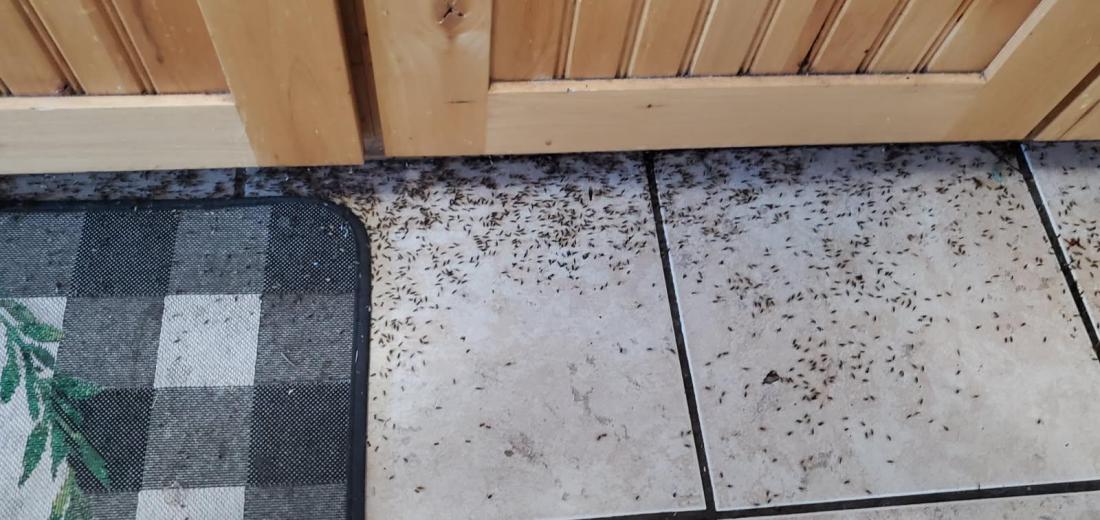
I meandered downstairs to see if there was a new kind of bug in our house. Doug was in the kitchen spraying a cleaner on hundreds of small insects that were swarming all over the kitchen floor tile. I looked closer— those were small flying ants!  How odd that there was a hatch of flying ants in our kitchen!  We’ve had ants off and on, finding holes and cracks in our walls and window frames, on their way to finding the sticky honey jars in our cupboards.  But we’d never had numbers like this, moving every which way inside the house.  Doug sprayed the ants to keep them from flying, then we wiped them up with towels.  They just kept coming. It was an invasion!  We wished we had lizards to go with the ants. 

During our Peace Corps time in the Gambia, we would see hatches of termites right outside our house.  They would crawl out from tiny dirt chimneys they had built, winged termites trying to fly before the push-up lizards and geckos found them.  The lizards would surround those eruptions of termites and eat so many that their abdomens would distend and they could barely move.  But even in that buggy country, we had never had a hatch inside the house. 

The flying ants (and termites) are a reproductive life stage, a way to start new colonies.  As I was refreshing my memory on the lifestyles of ants, I found a very cool entomology blog.  The ant article was here, but there was much more: https://blog.entomologist.net/why-do-some-ants-fly-and-others-don-t.html.

We figured that last year’s ant invasion was just an odd one-time event. I mostly forgot about the incident.  Fast forward to this summer.  Our kitchen had been buggier than normal.  We had earwigs and sow bugs showing up regularly on our counters and floors. I hate earwigs.  Do they really enter our ears?  I’ll have to check the entomologist blog.  After killing more bugs than normal in my kitchen, I finally decided to check outside around our foundation and see if there was a crack they were coming in through.  I looked down low near the ground under the siding directly below our kitchen window.  There wasn’t a crack.  There was a deep hand-sized hole in the cement.  You could see the kitchen sink drain pipe. That must be how the bugs were getting in. 

We had been doing many projects around the house, and luckily I had some leftover cement repair mix.  I mixed up two cups of the fast-setting cement, and filled that hole as best I could, pushing it up under the siding and squishing it into the opening with gloved hands. 

That night I went to a meeting.  My son walked downstairs at one point and found a horde of bugs carpeting the floor in front of the kitchen cabinets.  The return of the flying ants!  Chris hurriedly called Gramma over from next door and they vacuumed and sprayed and vacuumed some more.  By the time I got home there was another smaller mass of ants crawling out below the cabinets.  I spent the rest of the evening until bedtime intermittently vacuuming up the unwanted house guests.  Eventually they slowed down.  In the morning the floors were clear. 

Later that day I put another layer of cement patch over the large hole outside.  In the evening the ants came out again. But there were far fewer.  I was tired by then, so I brought my wheeled office chair down, staged my vacuum near me, and vacuumed while seated and having a beer.  I prepared dinner, then sat and vacuumed some more while dinner baked.

The next night Doug was home from a fishing trip, and the ants came out again!  He vacuumed and cooked dinner with a beer in hand.  It was becoming a thing.  I got to drink a beer comfortably seated on the couch, while giving Doug advice on how often to suck up the ants. We wives are good at giving advice.

I initially thought that I had just pissed off the bugs by blocking a hole to their nest, and therefore they were trying to escape via my kitchen.  But outside along the path between my mom’s house and ours, there was a different flying ant hatch happening.  So maybe the ants in my kitchen were just coincidental.  But, if I blocked their hole, how did they get into the kitchen?  Are they living under my cabinets, or in my walls, and the hole was how they accessed outside? Have I fully closed that hole? Is there another hole allowing access?  Are they planning to take over my whole house? Or maybe the world?  Is the invasion over or is it the beginning of a long war?

The ants entered my kitchen for several nights, beginning during the warmest part of the afternoon, and continuing until the evening started to cool.  Each night there were fewer ants.  I must admit that I never even thought of calling an exterminator, until my aunt suggested it.  But it’s fall, the weather is wonderful, and we have fun things to do.  I don’t want to make an appointment and waste a day of good weather waiting for somebody to come and spray my house.  I’m sure last night was the final night of the invasion and we will have no more ant trouble.  This year.  I’m afraid I won’t know for sure if I have blocked their entry until flying ant season late next summer.  Will there be another indoor ant invasion, or will they all be outside where they belong? I should probably look into getting some house geckos.

P.S. These ants are not carpenter ants.  They are the smaller kind.  Apparently, there are several species around here, and I haven’t taken the time to learn how to key them out.  Too busy vacuuming. 

Where There is Smoke, There are Cinnamon Rolls

We evacuated with little notice during the Spokane Complex Fires.  Our house was fine only because the wind was in our favor. Some of our neighbors lost everything. We are now home but are still in a Level 2 evacuation zone (be ready). There are firefighters putting out hotspots down the road.  We are basically hanging out with our cars still loaded in case we have to leave again.

Which makes me think of cinnamon rolls.  I don’t make very good cinnamon rolls, but my mother-in-law Doris made delicious tender cinnamon rolls with the perfect ratio of sweet stuff to bread. Doris raised five kids, four of whom became wildland firefighters either for a time, or for a whole career.   Doris was a watcher of fires. 

Doris lived in Wenatchee, Washington, where there were many fires to watch.  When the fires got big and became a “complex”, chances were fairly high that one son or another would be at the fire camp.  And they would need cinnamon rolls. 

Let me note here that most of the time the fire camp officials don’t want locals to bring food in to the crews for many good and valid reasons.  But if your son is on the overhead crew helping to run the camp, and you say that you are bringing him a package, there is a moderate chance that the guard will allow you to take the sweet smelling container of deliciousness and deliver it in person to Doug in Logistics.  As Doris enters the school or other building where the overhead team is set up, heads will pop out of doorways and begin to follow the heavenly scent of the baked goods.  Soon a parade of workers will wait, politely salivating, while Doug gets a hug and then shares the rolls.  They are scarfed up before Doris gets back to her car.  

There is also a moderate chance that the guard will only allow the package through the fire camp gates without Doris escorting it, and she will ask that it be delivered over to Logistics.  But then it never makes it to Doug because he is out doing important fire camp stuff.  Upon his return to the tent or the building Doug will receive a chorus of thank-yous, but no cinnamon rolls.  They will be gone. 

There is a high chance that the next time that fire team sets up a fire camp near Leavenworth, or Wenatchee, or Chelan, the team members will ask Doug when his mom will arrive with the cinnamon rolls.  Doug, as the Logistics Chief, will put in an order.

In memory of Doris, I bought some cinnamon rolls for Doug to offer to the National Guard members controlling traffic in our neighborhood.  I’m not sure if that is against the rules, so I can’t say if they accepted them.  But there is no frosting on my fingers…

The Ironing Board

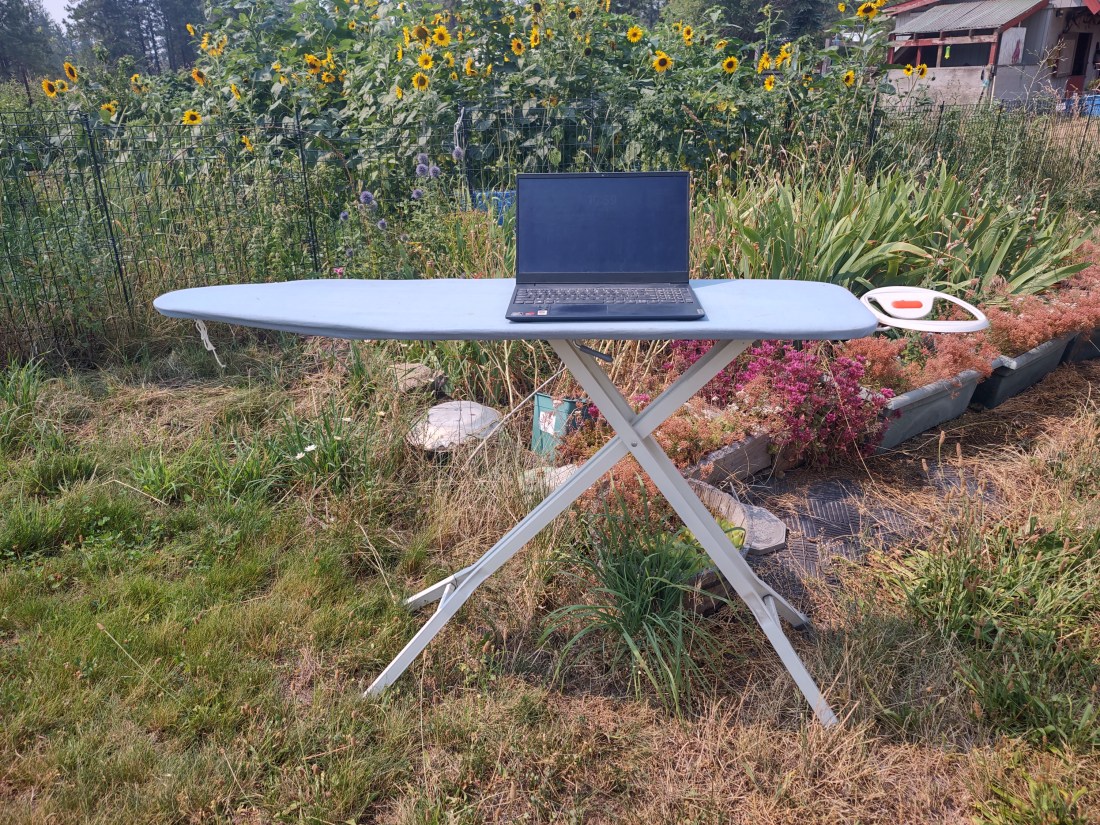
If you know me, you may be surprised to learn that I like ironing boards.  Not because I iron clothes very often (although we used to iron my son’s kilt and dress shirt before bagpiping performances, and when I say we, I mostly mean my mom, because she is really good at ironing.)  Anyhow, the ironing board that exists at my house is the kind that has the X-shaped legs, that with the pull of a lever can be adjusted  from tall to short, for different ironing heights.  In my craft room, I will sometimes use the board for ironing cloth smooth before cutting out a project, for ironing a folded edge to make sewing a hem easier, or for ironing the fusible sticky stuff for a patch or an applique project. 

But the ironing board is useful for so many other things in my craft room.  I don’t have a work-table, so I use the board as a cutting table or a layout table for small projects.  I use it as a counter for my laptop to stream shows or podcasts while I sew.  As I think about it now, I could use it for a stand-up desk for writing.  It’s the perfect height.

In a living room, one could use an ironing board for a behind-the-couch table by disguising it with a tablecloth. Or even as a TV stand.  Perhaps all TVs are now affixed to walls?  We have a shelf for our large TV.  I don’t know if my ironing board could support the weight of a giant TV, but if it did, we could adjust the height from high to low to provide the perfect viewing situation.  It would all go great until the cat jumped up and pushed the TV off the stand, like he did with a monitor in my son’s room.  Crash.  

Of course, the main use of an ironing board, or any flat spot really, is to lay things upon it.  Piles of cloth, half-finished projects, art supplies, clothes that need mending, clothes that don’t need mending, pencils, cell phones (that then get buried and in order to find them you have to call them from another phone and hope that your ringer is turned on.)  Sometimes I even place the iron on the ironing board. Now and then I clean off the top of the ironing board to fold it up and stow it away, leaving space to move about in the craft room, that can then become a guest room.  Multi-use objects and multi-use spaces matter.

I’ll bet somewhere some tech company is trying to invent a smart ironing board and a smart iron.  Maybe the smart-board will have an electric jack that automatically adjusts to the perfect height for ironing.  Maybe it will iron your shirts while you are away from the house.  Maybe it will talk to you and tell you what temperature it is and then yell at you when you adjust the iron to the linen setting, but start to iron nylon fabric, thereby melting an iron-shaped mark on the garment.  But do we really need all of those smart doohickeys and advancements?  Sometimes the old designs are the best and most functional objects.  As my grandfather used to say, if it aint broke, don’t fix it.

Fairy Rhymes with Prairie

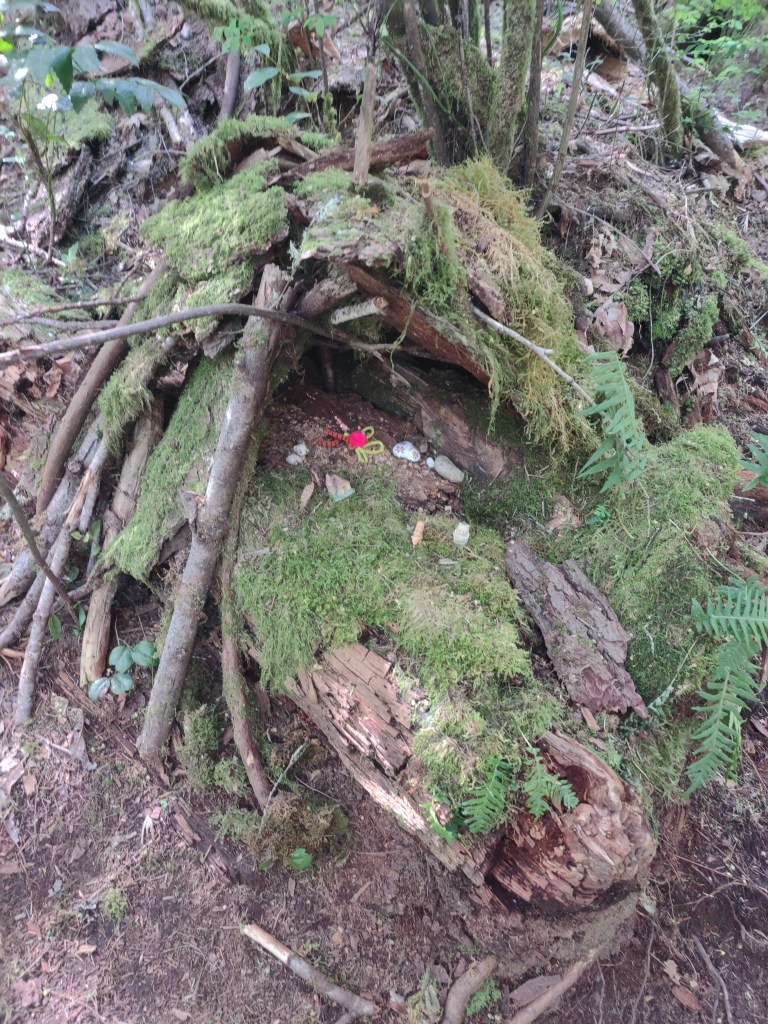
During a trip last month to the west side of Washington, I discovered that all my close friends like walking, hiking, and beach meanders.  I was good with it.  We walked a lot.  During an evening walk through the maples and Douglas firs near our friends’ Olympia neighborhood, we saw an area where neighbor children had  built and decorated little fairy houses in the woods.  I loved it!  For the rest of our trip, on our many walks across prairies, forests, and beaches, I was looking at the little things.  What would a fairy need in a fairy house? 

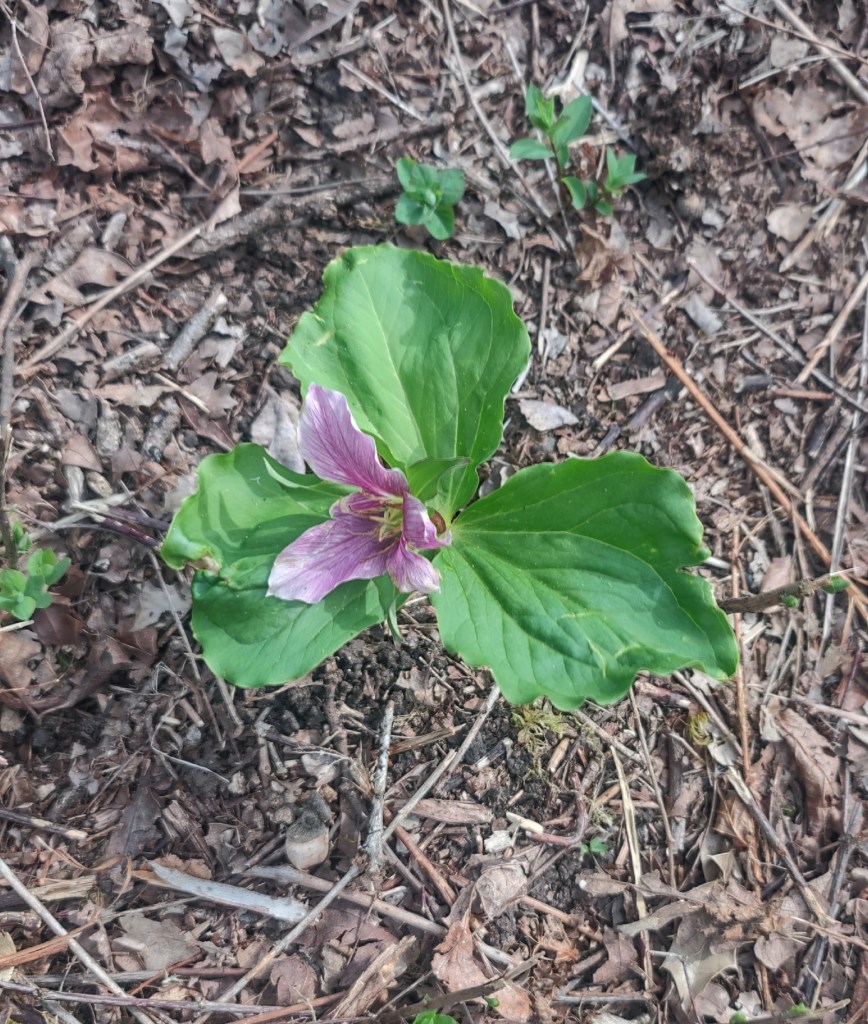
When I went bird watching (and walking) with my friend John at Scatter Creek Wildlife Area, in addition to learning about birds and bird songs, I noticed the fungus on dead trees (maybe a table?), the trillium flowers (a little rain hat?), and the purple and blue swales of blue-eyed Mary and camas flowers blooming across the prairie.  So many things that a fairy might use.    

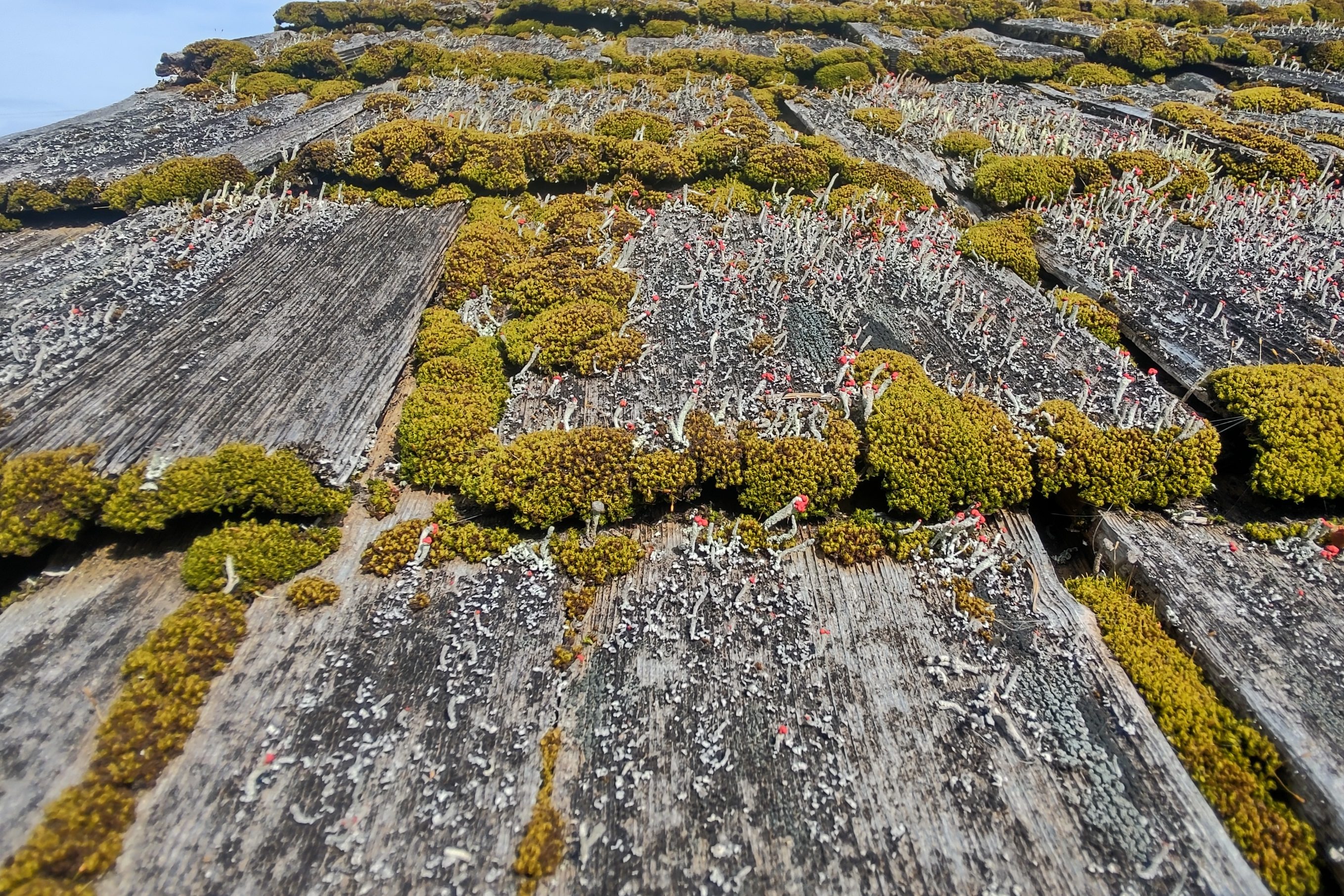
At another location I noticed the lichen growing on the roof of an old lean-to.  The little flowering or fruiting bodies were gorgeous.  I could see that tiny roof garden being tended by fairies.    

Later, when we headed out to Port Townsend to visit another friend who enjoyed beach walks, I was proclaimed the goddess of shells.  It goes well with my nickname: Shell.  My husband Doug looked for agates while my friend Sandy looked for shells.  Not just any shells, but shells with texture.  Sandy creates art using macro-photography.  She has found landscapes, alien worlds, storms, and mystical creatures in the zoomed-in images of tiny bits of shells.  No fairy houses yet.  My job on the beach was to rinse off the shells in the gentle waves, to get a better look for potential photography.  I got this job because I was the first person in our group to accidentally get my shoes wet.  It is normal for me to explore the wave edges on a beach.  I can’t help but go out just a bit further, looking for sea creatures and shells, and misjudging the extent or the depth of the waves.  And once one shoe is wet, you might as well go all in. 

Sandy kept a few promising shells to take home to examine more closely under a dissecting scope.  A few would be photographed to find fascinating scenes.  Afterwards, she planned to return the shells to their original beaches, to avoid offending the shell goddess. [You can see some of Sandy’s macro-photography here: https://www.facebook.com/sandy.tweed.7/]

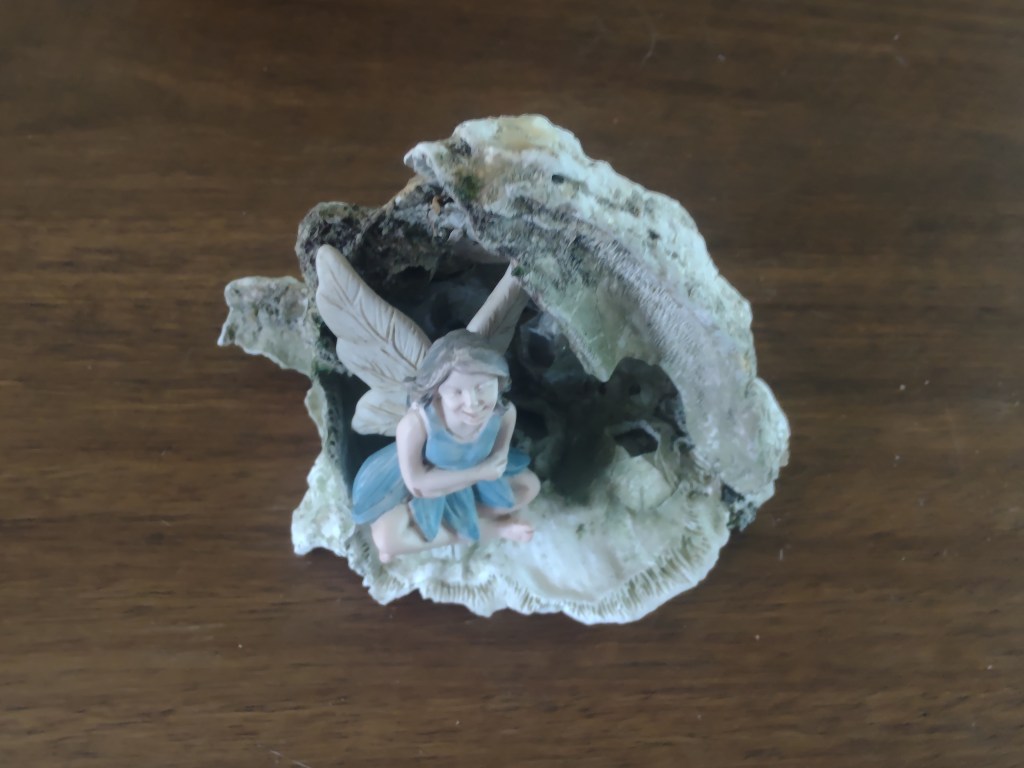
While at the beach I gathered a few small shells and bits that might be used in a fairy house.  Then I found a large broken ocean barnacle that was shaped a bit like a teepee.  It would make a perfect little house for a fairy.  Or better yet, a tiny mermaid.  It came home with me. 

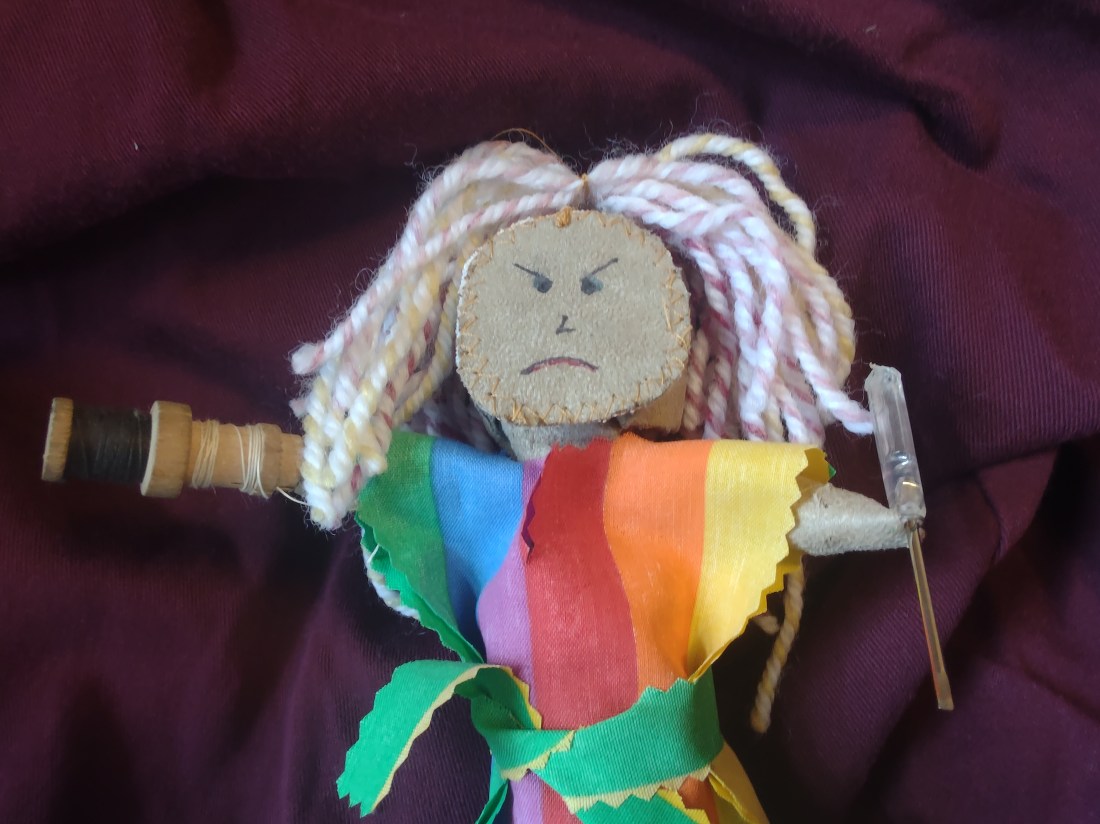
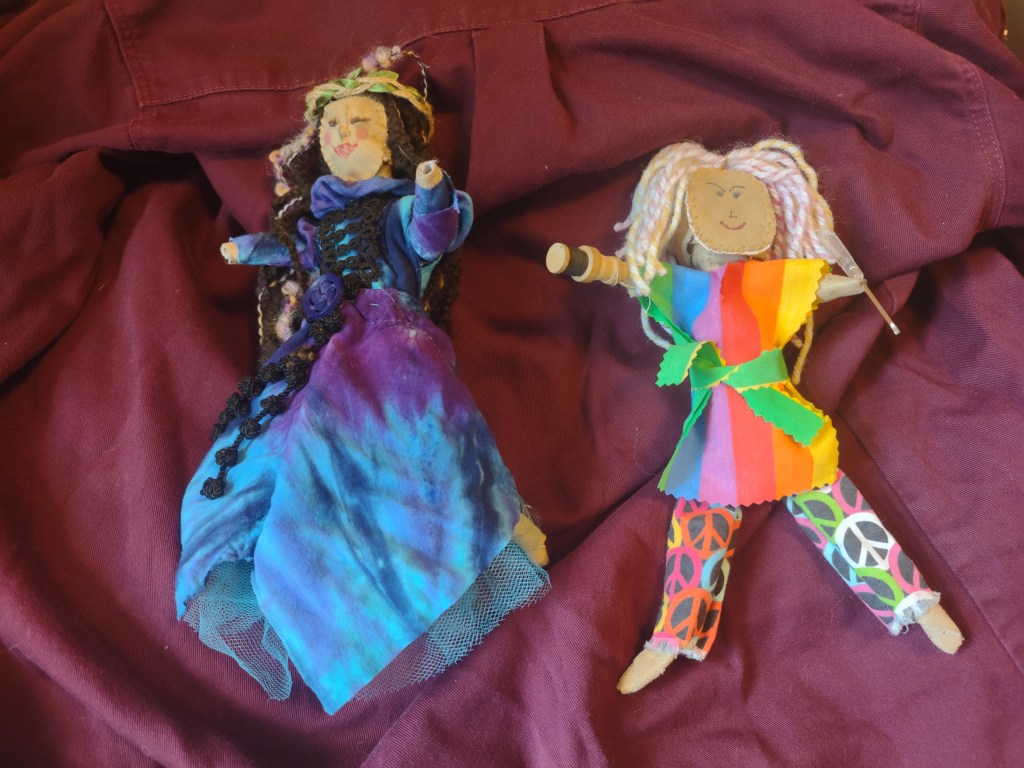
A few weeks later, my mom, sister-in-law, and I had a craft day.  I tried to create a fairy, but that little doll wanted to become a sewing machine mechanic wearing Peace Corps clothes.  You must go where the art takes you.  If you look closely, you will see that my mechanic has a tiny screwdriver in one hand, and a thread spool in another.  Also, his face turns around with one side grouchy and one side happy, depending on how the sewing machine repairs are going.  Of course, my artist sister-in-law made a gorgeous doll that she named Witchy Woman.  She doesn’t have wings either.  Instead of flying, she dances.

I will have to keep working on creating fairies and fairy houses.  Because I need more hobbies.  Oh, I should make a shell goddess! 

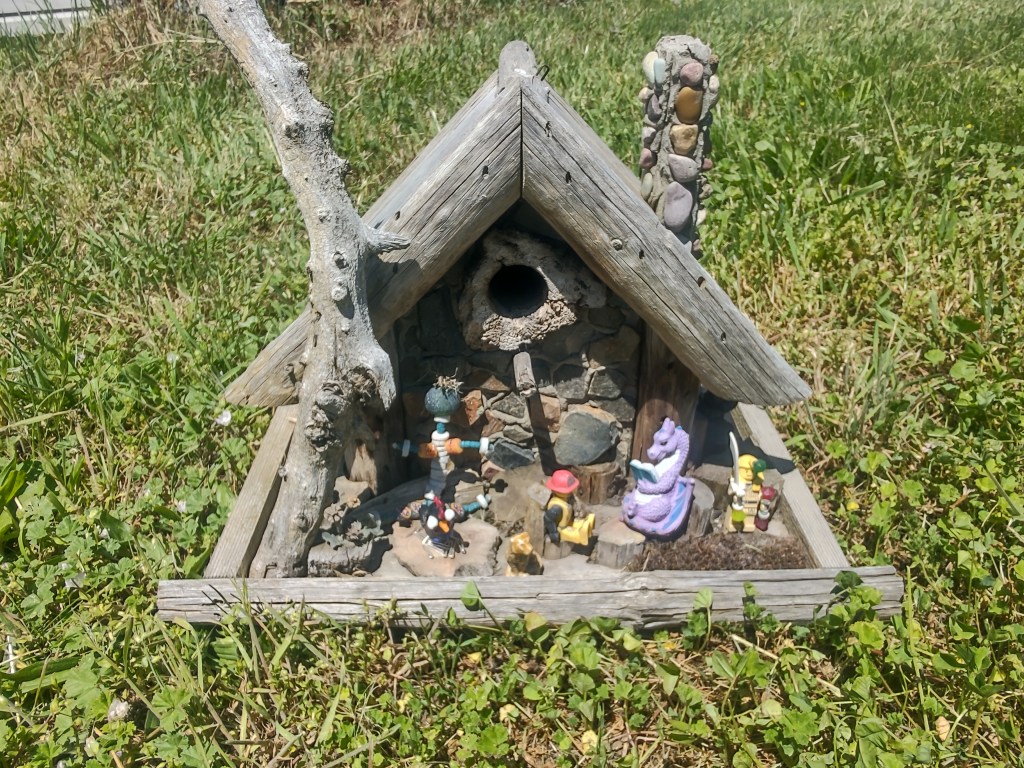
For now, here’s a picture of a decorative bird house we keep in our yard with little fairies in it.  Okay, there are no fairies in it, because the one fairy flew off to live in the barnacle house. There is instead, a Lego construction guy, a Lego warrior, a dragon reading a book, and a few others…  I’m sure they all have many stories to tell.      

Road Riding

This is an excerpt from my last newsletter.  I thought it deserved its own blog.

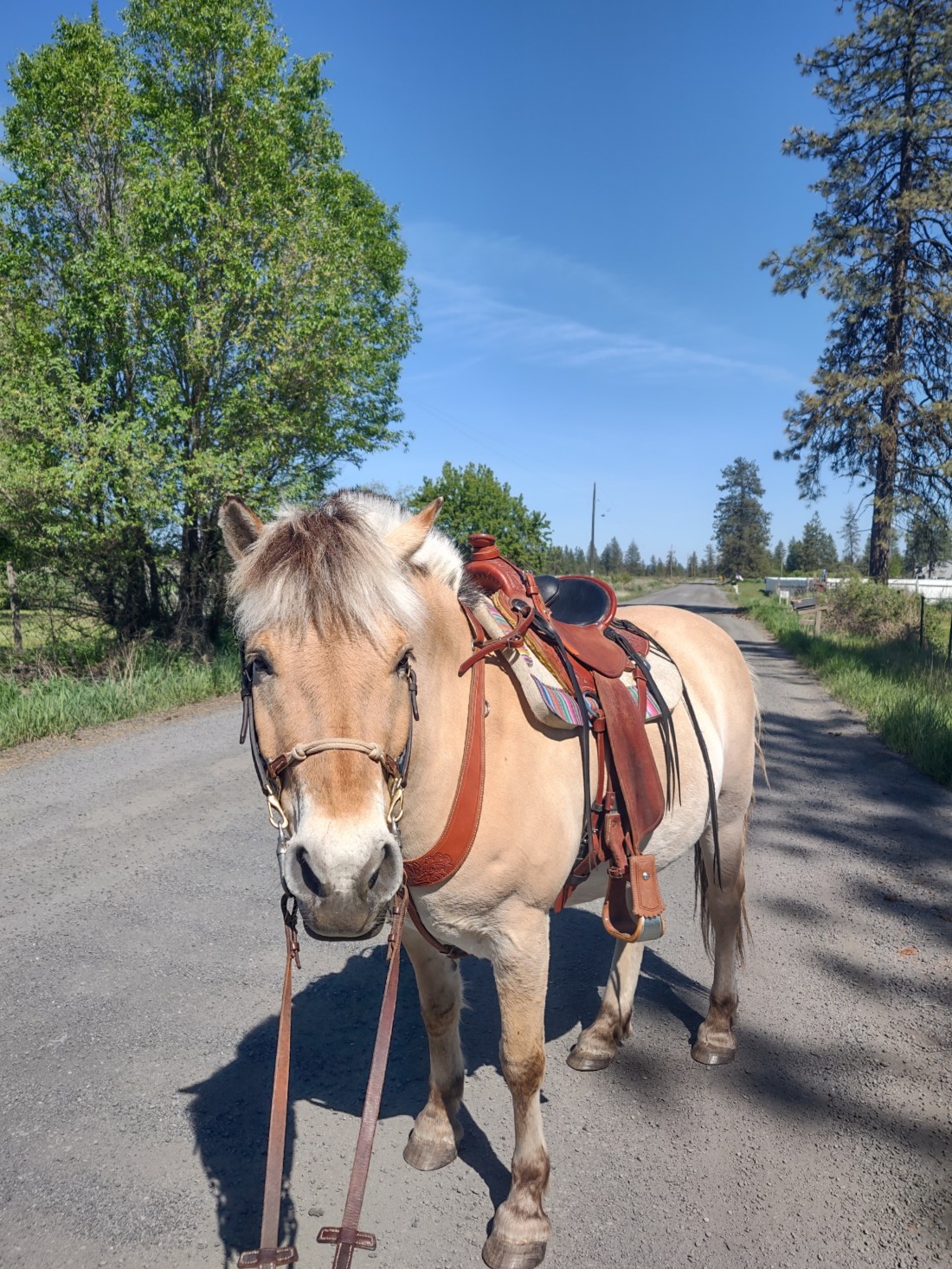
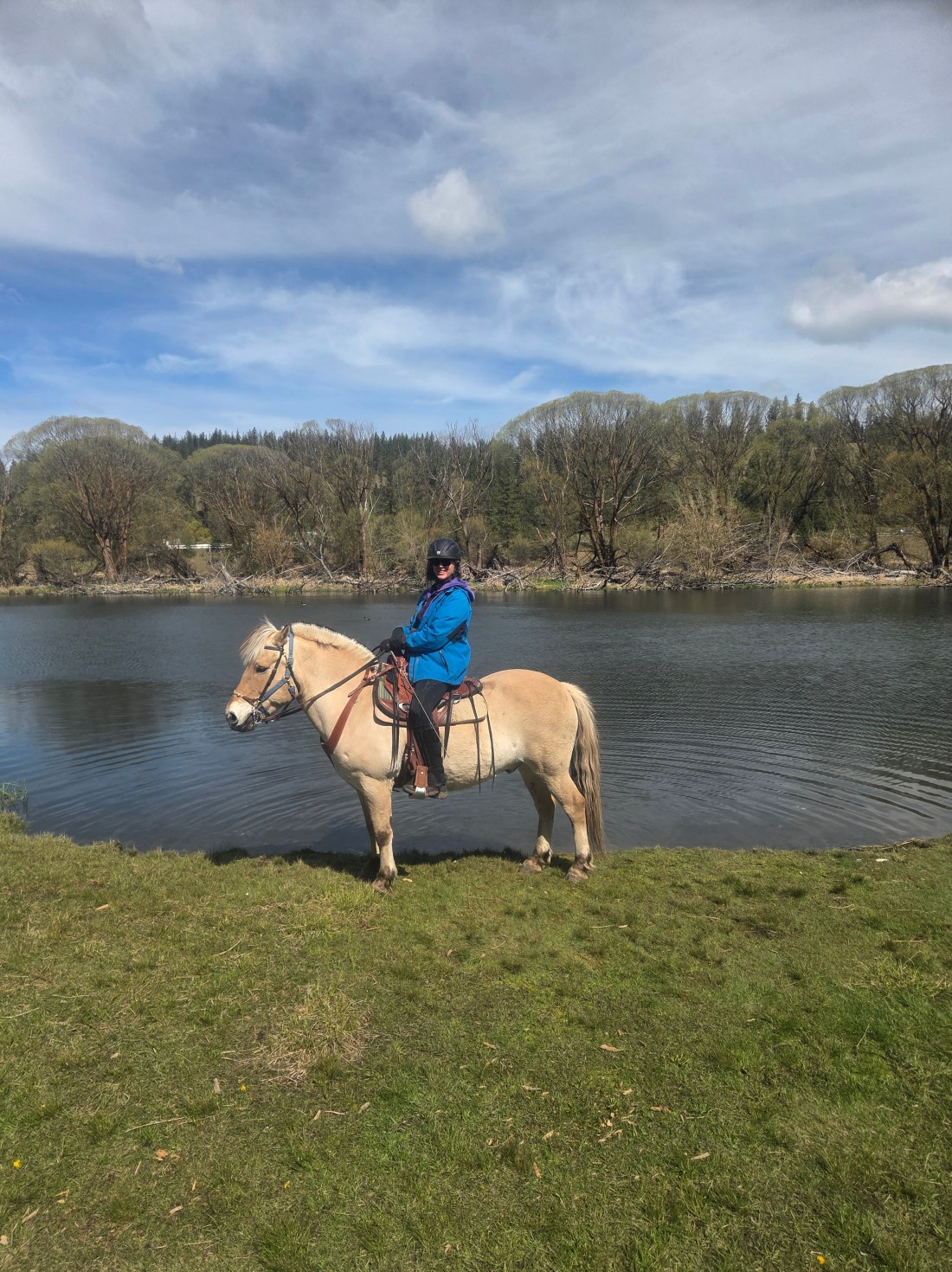
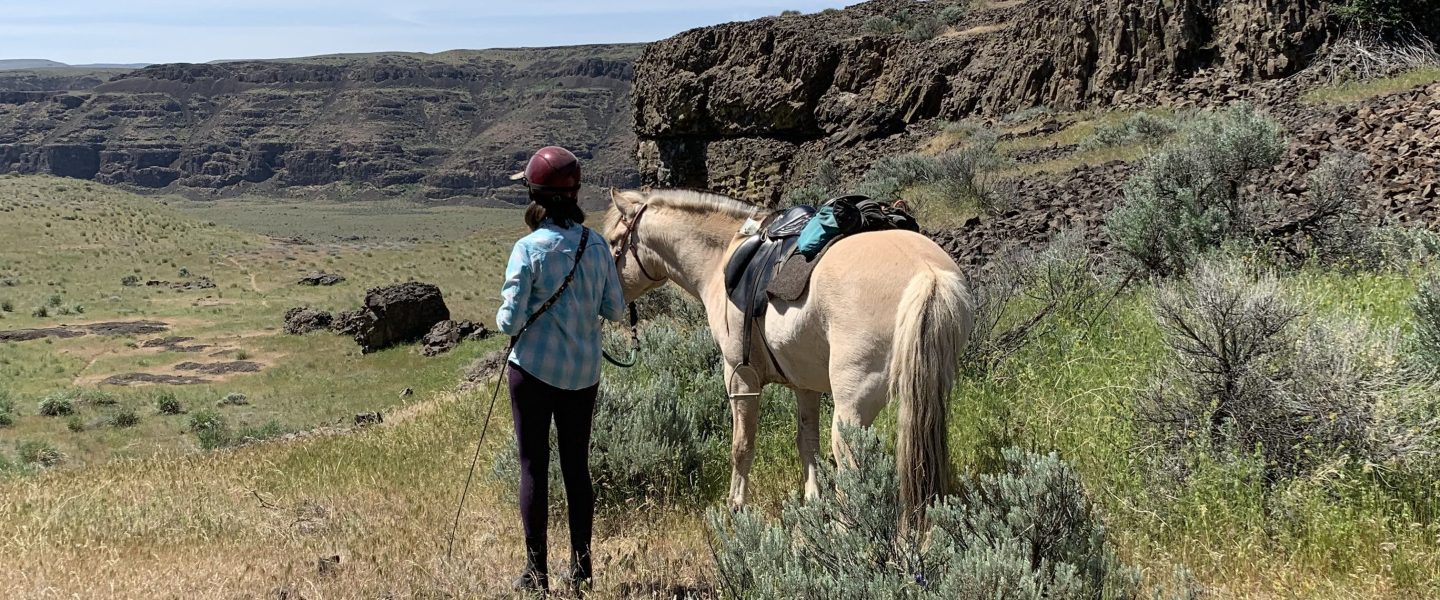
I’m hesitant to ride my horse down my road these days, even though I used to do a lot of road riding.  American drivers have forgotten how to safely pass horses.  Our rural farmer mentality is mostly gone and has been replaced with rural hot-rods screaming by, at or above the speed limit, while texting on their phones.  This gets especially worrisome on the two blind corners that I must negotiate going either direction down the gravel road in front of my house.     

For those of you who are not old farmers and are now wondering how you should pass a horse and rider if you come across one on a road, here are some hints. 

  1. Slow down.  Like to about 10 miles per hour.  If a person is riding a horse on a road, it is probably a mellow steady-eddy that doesn’t care about cars, but you never know for sure—the horse might be inexperienced or having a reactive day.  The reactiveness might have little to do with your passing car; maybe a large dog has just run up aggressively barking and jumping up to bite at the horse’s hip (yes, this happens). 
  2. Give a buffer of room so the horse can react if needed.  Move to the far lane if you can.  Pass wide.
  3. Watch the horse as you go by.  If it starts jumping around a lot, stop.  Watch the rider.  Wait for the rider to wave you past.
  4. Take your eyes off your phone so you can see the horse and rider up ahead on the road and you don’t inadvertently run into them (yes, this nearly happened to a friend). 
  5. Why does it matter how you pass a horse on a road?  Because horses are unpredictable, and cars can surprise them.  They might spook (jump) toward the car as well jump away from the car.  They might dump their rider and run away if they get scared. And they are 1000-plus-pound animals, so if you hit them, or if they hit you, they will not only hurt your car and hurt themselves, they could hurt the rider or you.  Or worse.

Remember that horses are prey animals.  Their first instinct is to spin and run when surprised.  This is why horse people typically only ride on quiet roads, if at all.  But the quietness depends on the drivers of the cars.  Let’s look out for each other, be calm, be kind, and enjoy the lovely spring weather. 

Ride on!

Changing Temperatures  

I don’t know how to dress myself anymore.  It’s that time of year, when the temperature changes from cold to warm, winter to summer, and my body doesn’t want to give up the layers.  My brain doesn’t know how to prepare.  I am too cold in the mornings, and too hot in the afternoon.  I am still wearing my flannel lined jeans and my fleece breaches, and three layers over a turtle neck when I go out to do afternoon chores.  I wait for the warmer part of the day to go out.  I walk out the door toasty warm, and then by the third pitchfork full of manure, I’m looking for a place to leave my wool hat.  By fork six I’m dropping my winter coat.  By the time the wheelbarrow is full I’ve dropped all the layers I modestly can, and I’m thinking about going down to the sports-bra. 

This is the time of year I lose my clothes.  Which fence did I hang my coat on? Which car did I leave my jacket in?  Which pockets contain my warm gloves and my work gloves? By the time I finally adjust to the weather, and start my day in my summer clothes, it will be fall, the mornings will be cold again, and I won’t know how to dress.  Where did I stash my warm layers anyhow?

[Photo Credit Solveig Pedersen]

The Winter that Wasn’t Showed Up in March

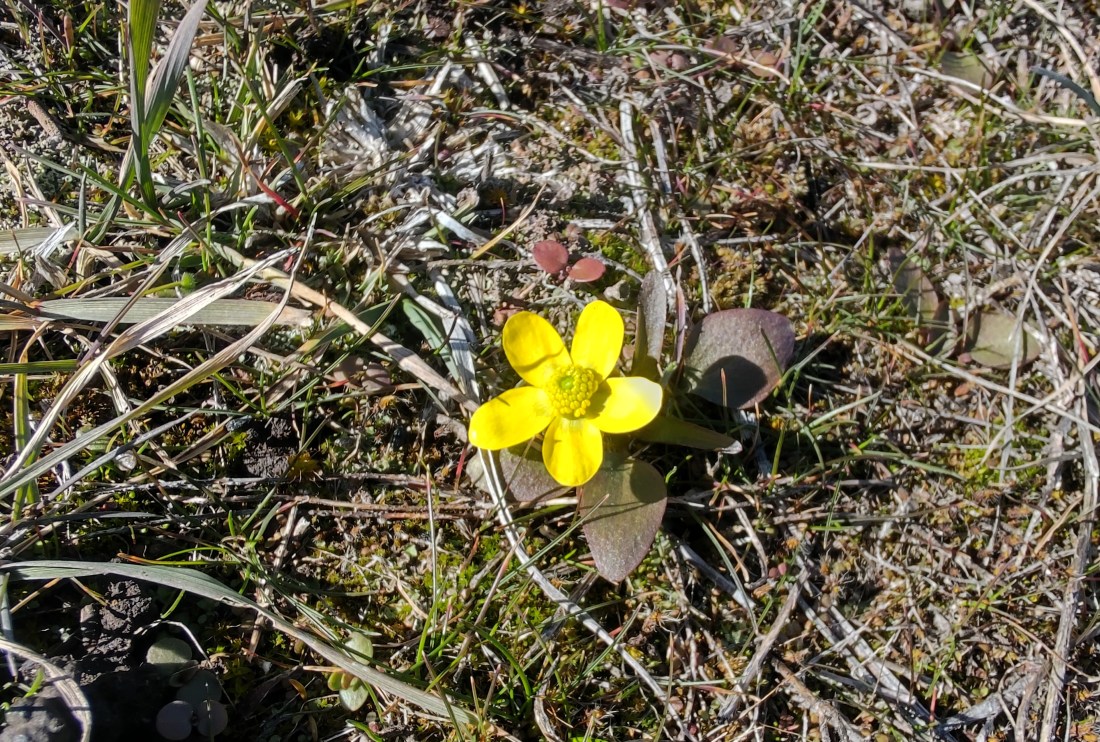
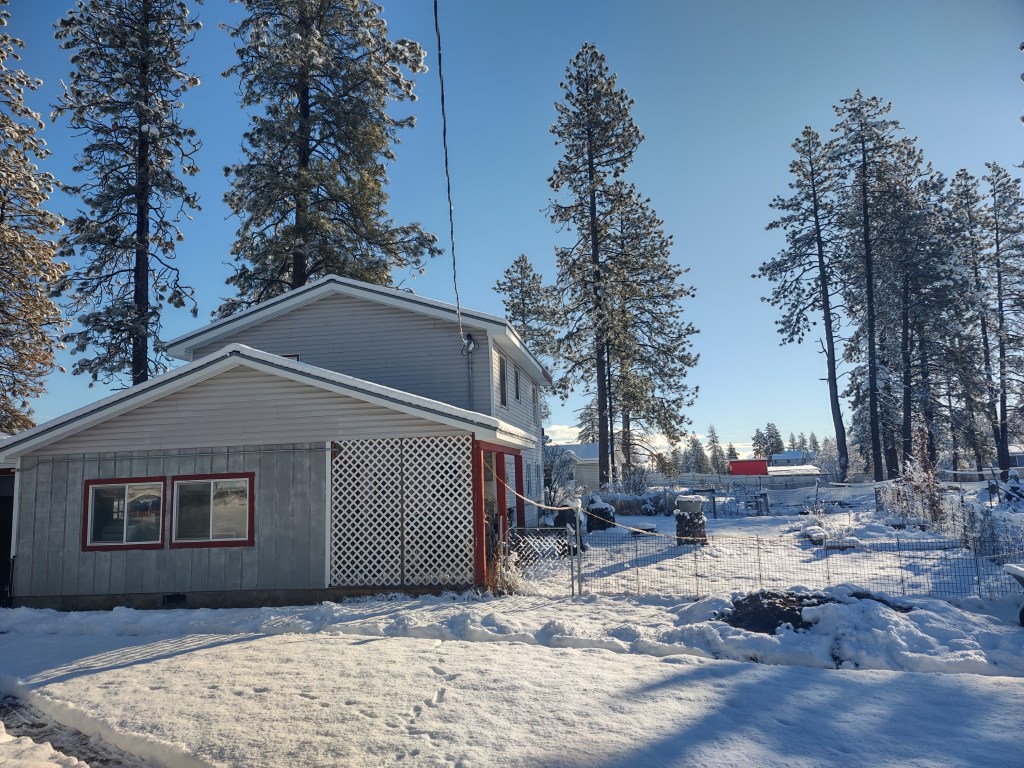
On March first, I took a picture of the first butter cups in the pasture.  On March 14th, we had 8 inches of snow on the ground.  Welcome to Spokane!

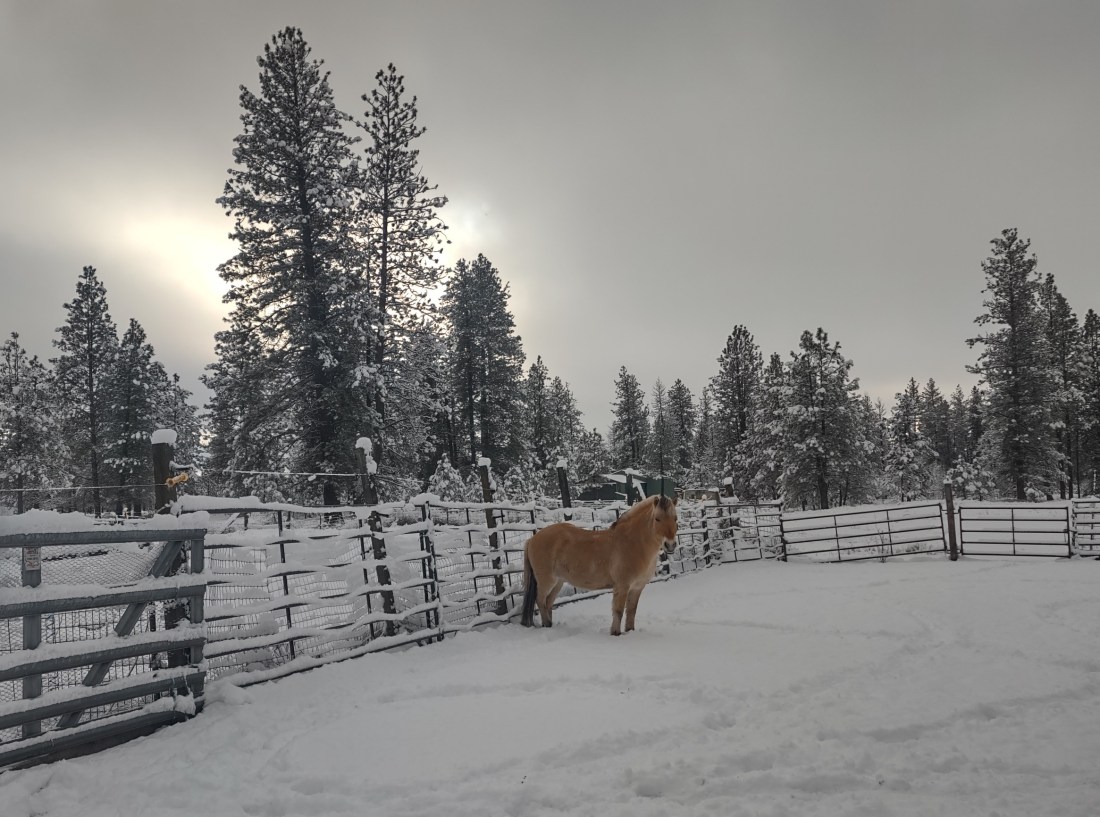
Every winter is different.  We have mud years, deep snow years, deep freeze years, and winters that never seem to end.  This year we had the winter that never was, until March.  It was very mild, though we did have some freezing and a few light snow showers.  Of course, this was a winter where I purposely took a break from riding to spend more time writing.  It turns out, I could have ridden through much of the winter, but my horse didn’t care.  He likes to hang out. 

Now we are working through what is hopefully the last bit of mud season.  The garden is staring at me, as the weedy grasses are starting to come up thick as sod.  Mowing would be easier than pulling or digging up the roots.  The pastures are greening up, and the horses look longingly over the paddock fences, clearly telling me they would be happy to eat the new grass down.  Green spring grass is like candy to horses, full of sugar, only to be eaten in limited amounts. 

Like the horses, I am craving leafy greens, too.  It’s a nice change from craving potatoes all winter.  And trying to deny those cravings.  As a friend says: Moderation in all things, including moderation.   I can live with that motto.  Now and then I can satisfy a craving by allowing myself tater tots and chicken tenders for dinner.  As long as I also honor my other cravings for more healthy food.

They Don’t Make ‘Em Like They Used To

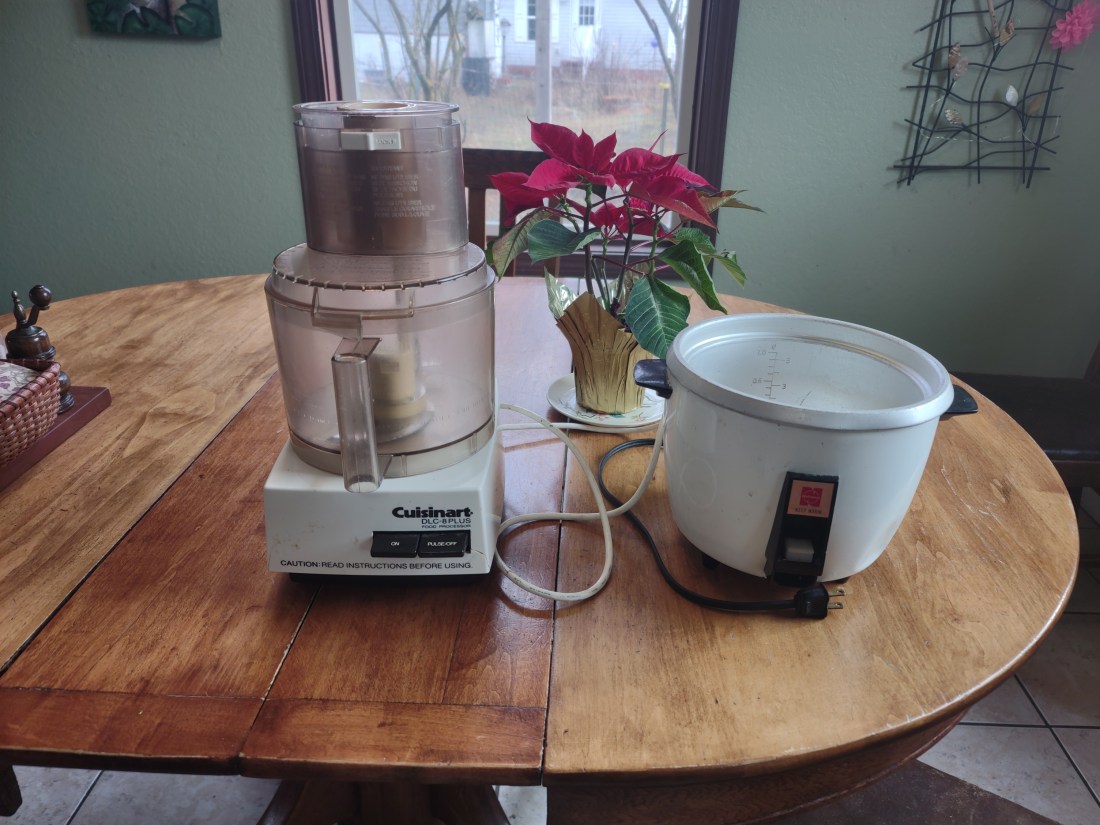
It finally died.  The rice maker that I received as a wedding present went kaput.  We were married in 1986.  This is 2026.  We’re calling that an even forty years.  (Technically, it’s probably 39.5, but one should always round up. Unless it’s your age, then round down to the closest 0 or 5.)  That rice keeper just kept on keeping on even after we broke the glass lid a few years ago.  Luckily, one of my saucepan lids mostly fit so we used that.   And then, yesterday, I dropped the rice cooker.  It wasn’t a big drop, just out of a lower cupboard shelf.  But I think I insulted it.  It stopped working out of spite. 

I received another appliance as a wedding gift: a Cuisinart food processor.  Before I got that lovely machine, I only had a knife, a big bowl, a blender, and a wooden spoon to mix and chop all things.  My dad, a gourmet cook, thought every kitchen should have a good strong food processor.  That was probably a spendy gift at the time.  There were many cheap versions around then, and my Dad splurged on a nice one.  That machine is still working well forty years later.  It’s not beautiful; there’s a big crack on the plastic front that catches on things when I lift it in and out of the cupboard.  But I use it frequently.  There is nothing like it for grating cheese, slicing veggies thin, or even mixing and kneading bread dough.  I still have the cookbook that came with it, decorated with pizza sauce stains on the pizza dough recipe page.  Every time I use it I think of my dad.   I hope I don’t drop it and break something deep inside.  Like my heart. 

I’m not sure I’ll replace the rice cooker.  I know how to cook rice on the stove, and I’m not convinced I can find a cooker that will last another forty years.  I am gradually simplifying our lives by decreasing the things we own.  When the last coffee maker broke after only having had it for one year, we went old school with a French press.  And, bonus, I’m drinking less coffee because it is just a little more difficult to make a large amount of coffee when the French press only holds three cups.  A friend calls that friction.  If there is more friction (work) involved in doing something, you tend to do less of it.  If I kept my red wine out in the barn, and had to walk outside to refill my glass, I would probably drink less of it.  But the mice would be giddy.     

Slip Sliding Away

I don’t know why nearly every time I start to write something, an old song comes to mind.  I’m really not that musical!  The title song isn’t really about driving in a snow storm, but maybe it is.  You can find the lyrics here, https://www.paulsimon.com/track/slip-slidin-away/ if you want to mull them over with me.  There’s a lot of story in the ballad, but also metaphors.  Perhaps slip sliding away as you approach your destination is a metaphor for the current situation in this country.  Stop sliding!

Back to the snow.  Two weeks ago, we finally got a taste of winter.  Of course, I was in the Spokane Valley at an evening mending workshop when the squalls hit.  All the phones in the room starting buzzing with the emergency notice of poor visibility due to snow.  What could I do, I had to finish mending a pair of jeans with a worn split near the back pocket.  After the mending, we had to clean up, and by the time we all got to our cars in the parking lot, it was squalling away. 

I’ve done a lot of challenging drives from Spokane Valley to my home west of Spokane during my time here.  This was a good one, in that the snow was beautiful, fluffy, and coming down thick.  And it really was hard to see, especially as I drove further west and out of the city lights.  I followed the tracks of the car ahead of me and hoped they didn’t slide into the ditch where I would follow.  My neighborhood is often worse than the city, it’s a little higher, and a lot less traveled, and it takes a long while for the snowplows to get there.  The last few roads before my house are narrow, dark, and rural.  I drove slowly and only had a few wobbles.  I was barely able to see the correct corners to turn on in the dark snowy night.   Oddly, my last hill, the one that is often a skating rink that you have to hit the gas to make it up, only had light snow.  I think the pines along the road caught the snow.  The pine trees were looking out for me that night. 

I made it home without slip sliding away into the ditch.  It was still snowing big fluffy flakes.  I was happy that winter was finally giving us an appearance.  I was also happy I was retired, and could reschedule my outings for the next day, and go for a walk in the snow instead of a drive. 

Radio Interview

On January 9, 2026, I was interviewed on the Page Turner Show on KYRS (Thin Air Community Radio).

We chatted about my past books and publications and current projects. It was a fun chat! You can find it on the Interviews page of my website here: https://michelleeames.com/links/

Or, you can find it here https://archive.kyrs.org/ (look for it by date January 9, 2026). Or do a search for the Page Turner Show and listen to other local writers, too.