Bit by Bit

In the Gambia, West Africa, when you come upon a person as you are walking, you must greet them with several traditional greetings.  You ask how the day is, how the family is, do they have peace?  The answer is always some version of “there is peace”, or “they are there only”, indicating that all is well with the family and the world.  We have greetings here in the U.S., too, but our traditions are much shorter.  “How are you?”  “Fine, thank-you.”  The Gambian greetings, and the American greetings, have standard answers.  When we ask, “How are you?” we are not expecting to hear about one’s life history, or health conditions, or employment status.  The real story may come later in the conversation, after initial pleasantries, but at first, we are just letting people know that we see them and wish them well.   

In the Gambia, one of the typical greetings is to ask, “How is the work?”  The answer in Mandinka is, “Doman doman.” Meaning bit by bit, slow slow, or little by little.  I have embraced this idea of working on things slowly, a bit at a time.  It really has become my favorite philosophy.  

I think of this in the spring as the projects start stacking up.  The garden already needs weeding, and I haven’t even planted it yet.  I need to find someone to re-roof the barn.  I need to clean the barn.  And then there is the ever-present need to shovel manure or clean the dog poop out of the yard.  I just bought a complicated drip irrigation kit that I need to figure out and set up in the vegetable garden.  The more I get done, the more things I see that need doing.   The task list never ends.  When I start to feel overwhelmed, I remember the Gambian greeting.  All I can do is work on the irrigation system, bit by bit.  Work on the clean-up tasks, slow slow.  Dig up the garden beds, little by little.  Work my way down my task list, doman doman.  I think we need to add this to our typical American greetings, too.  “How’s work?” “Bit by bit. I am on it slow, slow.”  It is the answer to all questions.

Aged

This essay was published in Flyway, Journal of Writing & Environment, in 2010.  It is not so much about mothers on this Mother’s Day weekend, as it is about grandmothers and aging in many species.  I will note that I am much more “aged” today, than I was when I wrote this. 

[image from http://www.pexels.com]


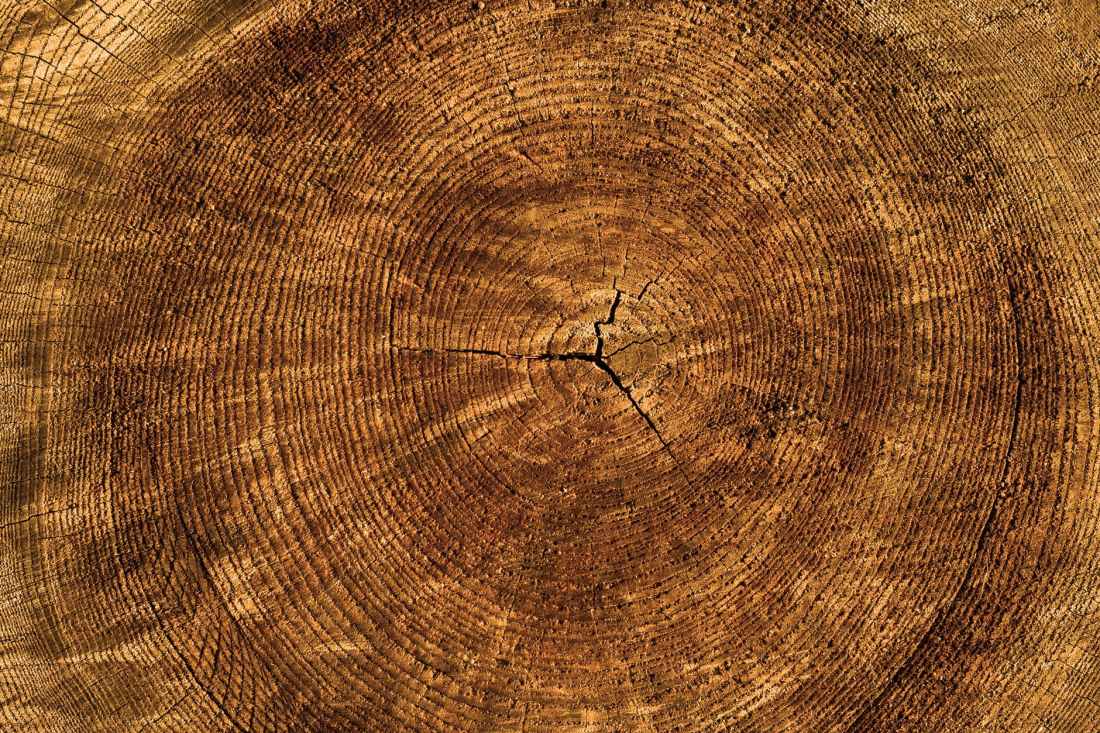
Half my life ahead, and half behind, if I’m lucky enough to live to the age of my grandmother.  What wisdom will I gain with each birthday?  Wrinkles increase like the rings on a tree, some years thicker than others.  Biology tells us our goal is to live, eat, grow, reproduce, and pass on our genes.  There you have it, life at its simplest.  But what of the growing old part?  Are we still necessary, or are we just taking up space?  What good are grandmothers?  Or, to be a little less biased about it, what good are elders? 

Anthropologists suggest that elders are necessary to carry the wisdom of the culture, to share their life skills with the younger, risk-taking generation.  Grandparents help with the care of grandchildren (or grand-whales), increasing those relatives’ survival and thereby better ensuring the continuance of that grandparent’s genetic line.  Other than that, grandparents eat food, take resources from the young, and they repeat their stories over and over. 

The ocean quahog is the oldest known animal.   Rings on an ocean quahog clam found off Iceland aged it to between 405 and 410 years old.   What good is a clam grandmother of 400 plus years? At that ripe age, it shows it is a highly successful individual.  And, those successful genes have been passed on through spawn many times over.  If sexual maturity began at 12 or 13 years, and there are multiple spawnings in a year, that’s, well… the math eludes me, but that’s a whole lot of generations of little fertilized clam swimmers, some of which might actually survive the larval stage and embed in the silt, growing into very old clams themselves.  What might the elderly clam have seen in her protected deep bed: whales, giant squid, phosphorescence in the midnight waves, dredgers raking up the ocean bottom.  Maybe only the animals that hide from us in deep dark places can reach a ripe age without our eating them, and then only if our dredgers miss them.  For we eat most things, one way or another.  Sometimes we eat the things that eat the other things; but we humans are skillfully ravenous. 

At the most basic level, a gene’s goal is to reproduce itself.  But in humans, our big brains get in the way of reproduction for reproduction’s sake.   While many of us do reproduce as much as we can during much of our life, purposely or not, others of us choose to measure success in a different way: through the gathering of material possessions.  Perhaps in that way we more closely resemble a pack rat: the one with the most shiny things in the nest wins.  But, is there an advantage to amassing shiny things?  Who inherits the pack rat’s nest?

Pack rats, while not noted for being particularly old themselves, do leave their “middens” or nests as records of the past.  The pack rats gather plant materials, sticks, and any other unusual thing they can carry into a brushy pile.  They then excrete a thick urine that acts like a varnish, over time preserving the seeds, twigs, or other gathered knick-knacks into a layered fossilized mass.  Some desert middens have been radiocarbon dated to be as old as 50,000 years, or perhaps older; that’s as far back as carbon dating goes.  Paleobotanists and other scientists use the botanical gifts left by grandmother pack rats to study plant communities and climate change.

At 46, my age is measured by a piece of paper, and birthday candles.  I am nothing compared to the bowhead whale.  One was recently killed in an Eskimo subsistence hunt and found to have an old bomb-lance harpoon fragment embedded in the bone; the harpoon design was traced back to 1890.  That centenarian whale had lived to watch her brethren dip low near extinction and start back up the population curve.  She lived through the last days of whaling for oil, then whaling for baleen, all to feed the human need for things, like corsets, for my great-grandmother to wear.  The whale lived through oil being discovered in Alaska, and pipelines, and tankers bigger than the biggest whales, all needed to make bigger and faster and prettier things to line our nests. It wasn’t until 1946, when this bowhead grandmother was more than 50 years old that the International Whaling Commission began to regulate harvests around the world.  It wasn’t until 1971, when she was 80 or so years old, that Green Peace was organized, with their in-your-face whale protection tactics.

In addition to harpoon remains, a whale’s age can be gauged by changes in aspartic acid in the eye lens; scientists using this method estimate bowheads living up to 200 years.  Age may give these survivor whales and their kin advantages through passing on learned behaviors: locations of good eating areas, knowledge of migration seasons and migration pathways.  The Bering Sea stock of bowheads follow pack-ice as it advances and retreats.  Their 3,600-mile polar migration takes them along Russia, Canada, and Alaska; through the Bering Sea, the Bering Strait, the Chuchki Sea, the Beaufort Sea, and off Point Barrow.  These grandmother whales are examples for us in staying power.  They have simple needs: finding food, reproducing, and caring for their kin.  Even in this arctic environment, it sounds more sane than our usual frantic lives.

The bristle cone pine is a high desert tree in the Great Basin region of the United States.  Knobby, stooped, and bulging at the midline; they look a little like some senior citizens I know.  Foresters age living trees using an auger coring device that drills into the trunk and pulls out a long narrow dowel of wood, displaying the tree rings, yet hopefully allowing the tree to survive.  In 1964 a geology student studying climate and ice ages used a coring tool on a bristlecone pine on Wheeler Peak in Nevada.  His auger jammed, and rather than lose the tool, he sawed off the knarly trunk.  A horizontal slab off this tree displayed 4,844 annual rings.  A later dendrochronologist found the same tree to be even older: 4,862 years.  That was the oldest dead bristlecone pine.  The oldest still-living bristlecone, named Methuselah, is more than 4,600 years old  in the White Mountains of California.  But what do these ancients teach us, other than to count our years carefully?  They survive in a harsh arid climate, in low nutrient soils, and grow very slowly, adding a quarter of a millimeter to their girth each year.  They show us that by holding tough, we can make it through the tough times, and all times are tough times.  They show us that even the harsh spots on this earth are important, and they teach us to look back.  What happened 4,600 years ago?   Mesopatamia and cuneiform writing; the cradle of western civilization.  Have we really changed so much since then?  Today, that middle eastern cradle is in a tough time, and economic and social change is moving slowly, at what seems like a millimeter a year. 

Annual cycles, annual circles. Fish age is measured by counting growth rings on otoliths, a small bone in the fish’s ear.  A yellow-eyed rockfish lived to 190 years, missing the nets, the fish fries, and salt-cod barrels, until in 1999 she became a data point in a catch survey, and her otolith was removed for later analysis.  These rock fish grow slowly, becoming only a moderate size despite their centuries.  If they grow so slowly, they likely take many years to reach reproductive age, and are prone to over-fishing. Typically, we over-fish, we change species, we overfish again.  How fast are we fishing out ancient stocks for processed food and fertilizer?  Who will speak for a goggly-eyed rock fish, and the next creature up the web?

Even human teeth show rings, enamel in layers, displaying days, years, and major events.  Our births, hungry times, and puberty can all be seen on electron x-rays.  Our teeth read like a biography.  If only wisdom was guaranteed to get deeper with the layers of time.

I believe it’s our weapons that age us more quickly.  Ivory-carved harpoons progress to bomb-lances, progress to even more efficient killing machines.  We perfect our techniques until we are really good at wiping out species.  We wait until the species or substance is rare, and the costs make it hard to keep up the hunting, catching, dredging, drilling, mining.  Only then do we hear voices of caution, those whale lovers in zodiacs, cutting between the whale and the high-tech harpoons.  For the whales, we mostly stopped, but its the stopping point we have trouble seeing.  We sail right past the caution signs until its almost too late to throw out the anchor.   My grandmother said:  “Moderation in all things”.  While I think she meant don’t eat too much sugar, or drink too much alcohol, or put too much butter in the clam chowder; I broaden that idea to the things of the earth.  If we show moderation in our use of all things, then they may still be there when we need them.  A hundred years, two hundred, four thousand.

It seems we are all searching.  Scientists recently found black corals off Hawaii that are more than 4,000 years old.  The living polyps on the edge of the coral are only a few years old, but they have been continually growing and accreting layers on their underlying skeleton.  Yet another reason to harvest our oceans slowly, and carefully.  Another lesson in moderation, to use caution if we fish with bottom trawlers, and to hesitate before buying coral jewelry.  As my grandmother and Aldo Leopold believed, we need to save all of the pieces.   My grandmother saved cottage cheese cartons in cupboards, piles stashed away in case she needed them some day.  I hope I grow old and wise and wrinkled, and that there are enough important things still stashed in earth’s cupboards.   I hope each generation grows wisdom on the layers of wisdom that came before, like polyps on a skeleton of coral.  Today I listen for all the grandmothers, human or otherwise, telling the lessons of the past.  Sometimes I hear them whispering in the wind between the aspens.  The aspens grow in a ring, from roots radiating out from their original ancient clone, concentric rings of history.

That Crochet Hook is a Crock!

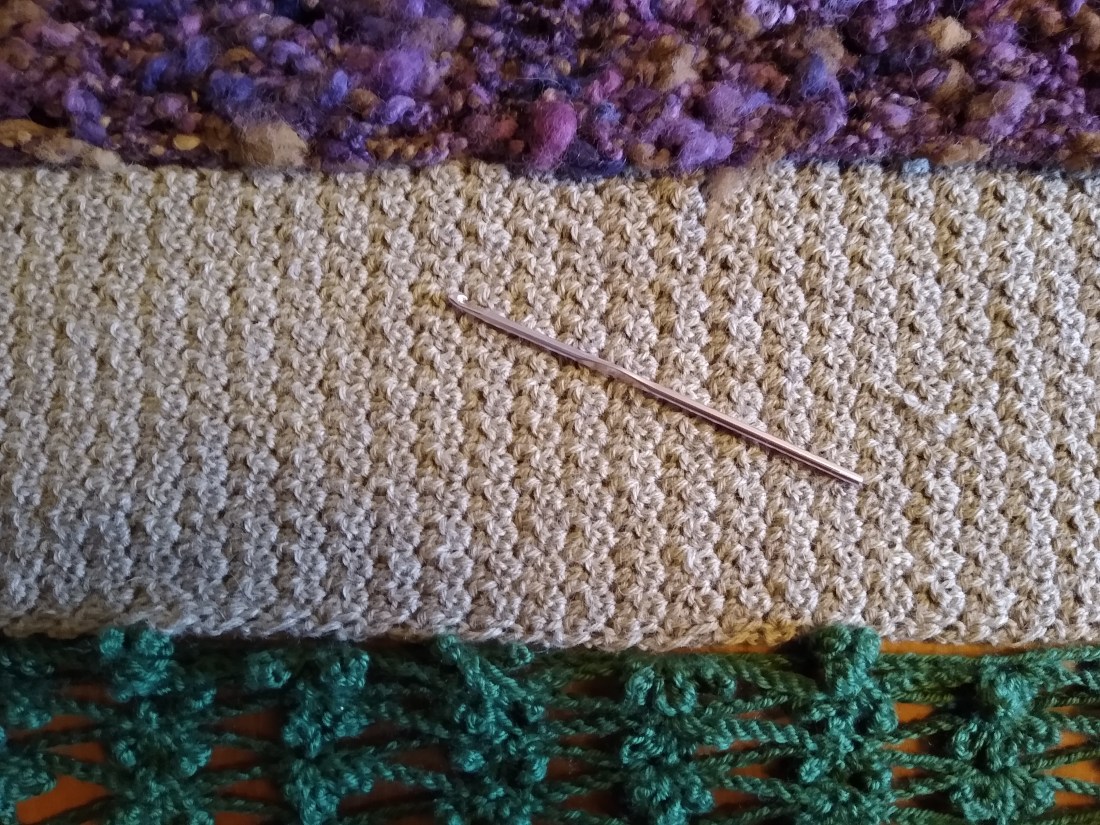
I saw an ad for a rechargeable electronic crochet hook.  It counts your stitches, and your rows.  It has a visual display, a recharging cord, and changeable hook sizes.  And its pink!

Everything about that is wrong.  Handwork is for hands, not electronic devices.  I am a crocheter.  I regularly lose count of rows and stitches, but that is part of the art and skill and frustration.  You aren’t really crocheting unless you have counted your stitches, lost count, and started over again.  That is part of the meditation technique… carefully counting and focusing, looking down and thinking only of the stitch, the yarn, and how godawful long this simple scarf is taking. 

Crocheting also tests your visual and spatial skills.  Is the scarf getting narrower as I go?  Better count again.  Must I skip the first stitch in the row, or put a stich there?  Is it getting wider as I go? Crochet also tests your English language and instruction reading skills.   What did that woman mean by that last sentence in the instructions?  What does the acronym hdc mean anyways?  And once I figure out it means half-double-crochet, how do I do that again?  Focus, meditation, feeling the yarn, moving the fingers, frowning at instructions. That is crochet.  Making mistakes is also crochet.   A wise woman told me that a piece without a mistake is unlucky.  Let’s just say I have a lot of luck coming my direction.  There is no place for an electronic gizmo to check my work, that would mess up my luck! 

Now I could see buying a beautiful hand-carved crochet hook.  Or a thick ergonomic crochet hook that nicely fits my hand.  Maybe even a lovely, organized kit with each size hook in a separate pocket.  But wait, I could crochet that myself!  In my spare time with the right set of instructions during the winter when I don’t want to be outside.  But I won’t be buying any electronic tools that supposedly make things easier and instead drive me crazy when I misplace the charger.  Yarn and hooks do not require batteries.  Leave well enough alone.     

Happy Earth Day!

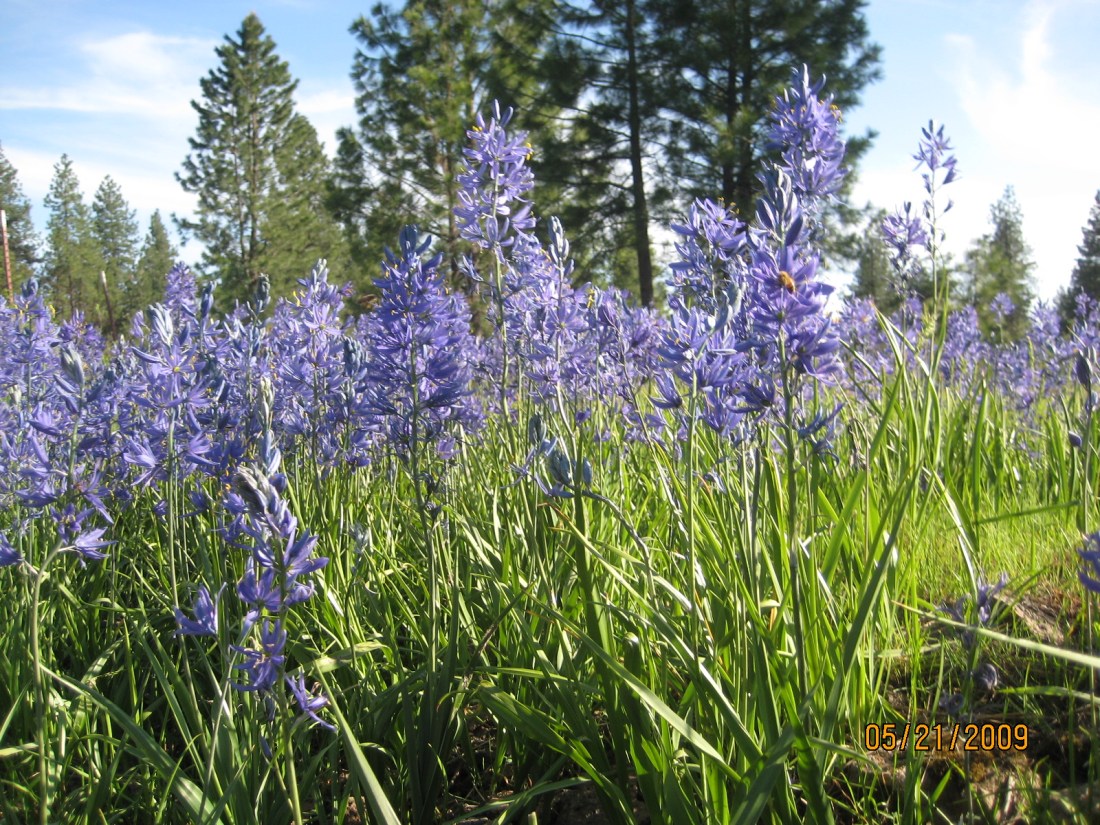
Earth is my favorite planet.  I love everything about this planet we call home.  I love when the purple camas blooms in the spring and the fuzzy native bumble bees buzz from flower to flower.  I love when the wild phlox blooms amidst the balsam root (sunflowers) in our pine forests.  I love hearing the redwing black birds trilling in the wetlands and seeing moose and coyotes in my neighborhood. 

I worry about our earth and all her plants and animals as the climate changes.  I worry as the climate warms that wildflower bloom timing and hummingbird migrations will be mis-matched, and the hummingbirds will decline.  I worry that our river’s spring flow timing will be changed due to less snowpack, and the high flows will not match the return of the salmon or will blow out the redds (salmon eggs in the gravel).  I worry about the robins and other birds suffering in our long strings of 100 plus degree days.  I worry about us and the wildlife losing our habitat and homes to increased and prolonged wildfire seasons.

I try to change my worry to solutions, even if they are small solutions. 

I try to use less stuff, especially unsustainable plastics.  I try to remember my shopping bags, or to leave a store without bags when I forget.  If I end up with plastic bags despite my best intentions, I reuse them.  I rarely buy plastic garbage bags for the house; I use what I have for kitchen garbage liners. 

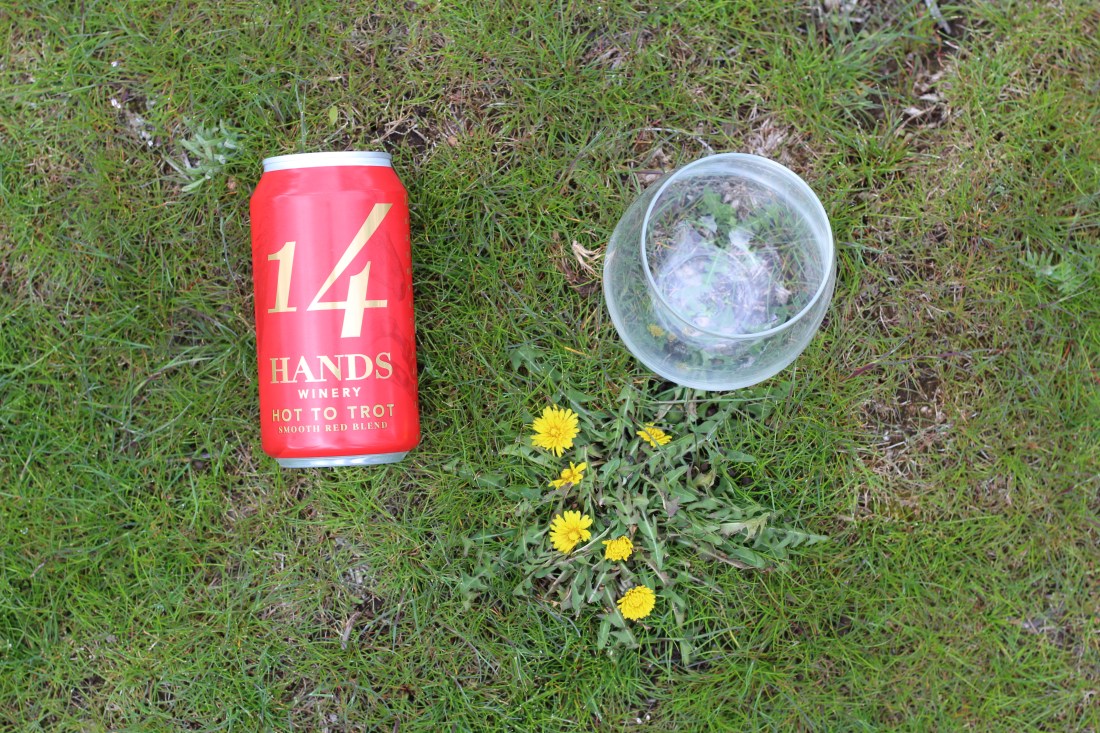
We keep recyclables and take them to the transfer station.  However, I have learned that much of what is called recyclable, isn’t actually recycled.  So again, I try to reduce.  Corrugated cardboard and aluminum cans are quite recyclable, however.  So I often drink wine out of a can instead of a bottle.  Hot to trot wine in a can is perfectly decent, plus there is a horse on the label!  Well, there used to be a horse on the can.  Furthermore, the can is the perfect size to stop me from drinking more than I should. Reducing consumption of wine can’t hurt; good for the earth and good for me.

In my garden I am planting flowers for the pollinators and the bumble bees.  I am also slowly changing one part of the vegetable garden to permaculture and edible landscaping, with herbs, berries, and bushes that are not tilled up each spring.  Even if I don’t eat all the berries, the birds will.    I am letting the dandelions thrive in my lawn.  I love the bright burst of yellow against the green, and I love the perfection of the round feathery seedheads. So do the goldfinches. 

In my house I conserve energy by turning down the heat, especially when a room isn’t being used.   I have replaced our water heater with a more efficient on-demand heater, and I bought a more efficient pellet stove last year. 

I try to carpool to events with friends when feasible, and not only do I save gas, I get to chat with my friends.  I own a fuel-efficient car.  I admit I also drive a fuel hungry (maybe I should call it ravenous) truck to haul my horse, but even there I minimize trips or double up with a friend’s horse or horse trailer when possible.  Should I call this trailer-pooling? Ride sharing for Riders?

Earth day is a time to reflect on how I can better reduce, reuse, recycle… but mostly reduce.  In short, I try to buy less stuff, and will often buy used stuff instead of new stuff.  I can support the birds and the bees with flowers, native plants, and edible landscaping.  I can reduce my carbon footprint in many more ways than I have listed here; heck, one could write a book about it.  I try to be purposeful and consider my choices and the impacts of those choices.  My goal is to do what I can to keep some of the resources of this beautiful earth for my children and grandchildren to enjoy.   Plus, it’s for the birds.

Baby It’s Cold Outside

Mark Twain said, “The coldest winter I ever spent was a summer in San Francisco.”

This saying needs to be revised to: “The coldest winter I ever spent was April in Eastern Washington.”

I write this on April 14 as once again little white flakes are drifting down from the sky. The wind chill in the past two weeks has been, well, frigid.  This would normally be the time to start getting miles on my horse, and putting the garden in.  Instead, I am hunkering inside. At least I can catch up on my writing.  As I write this, the sound of the heater fan is hard to separate from the sound of the wind howling outside.

I do remember experiencing snows in April before, especially in the Cascade Mountains, but also down lower in the Columbia Basin.  I remember when we first moved to Spokane from western Washington, and I experienced “thunder snow” for the first time. I love thunderstorms, and thunder with snow was very cool.  Literally. I wouldn’t mind a little thunder snow now since those storms roll through quickly and then are gone. Instead, the cold fronts this spring are just hanging on, taunting us, keeping us inside.

I used to ride in frigid weather, but I find myself wimping out more these days.  I rode yesterday, but it was a short ride on the property.  My horse Vali and I are going stir crazy.  As we rode in the paddock, he kept looking through our fence line trees to the neighbor’s yard. Vali was looking for the neighbor dog to come running up, so he would have an excuse to shy and bolt a few strides.  It’s an ongoing game that I am tiring of, but at least it gave me something to work on, keeping his focus on me, instead of simply riding never ending trot circles in the dirt. We need to get out on the trail.

My horse doesn’t sweat much under the saddle like other horses do, I don’t know why, maybe it is his thick strong draft horse skin.  I’ve also never seen him shiver like many thin-skinned horses, not even in the coldest windy wet weather.  Fjord horses are built fjord tough.  Cold does not bother them.  Why do other horses shiver?  It warms them up by making the hair stand on end to better insulate them.  If your horse is shivering, feed them grass hay.  The digestion of the fibrous hay warms them up.  If they continue to look miserable move them to a barn or put a blanket on.  My fjord horses meanwhile will be happily standing out in the weather with snow piling on their backs and ice crystals forming on their whiskers. 

I do carry a light horse blanket in my trailer for use after lessons, when my horse is sweaty (only on his chest and neck) and the air is cold.  I blanket him just to haul him home and keep the wind chill under control in my open trailer.  I carry a big orange slicker in my trailer, too, in case I misjudge the weather at a trailhead or forget my lighter raincoat.  I have a space blanket in my emergency kit in my saddle bags, along with matches and a candle.  Like a horse, if I am cold, I need to eat so I carry a bag of emergency peppermints.  I don’t like being cold, and it can be dangerous if you are too cold for too long. So on the trail I am prepared for an emergency overnight in the woods with supplies for food and warmth.  Hopefully I won’t need to use them.  Hopefully spring will emerge out of our winter chill, and bloom like sunflowers under the pines.   

Power Spots

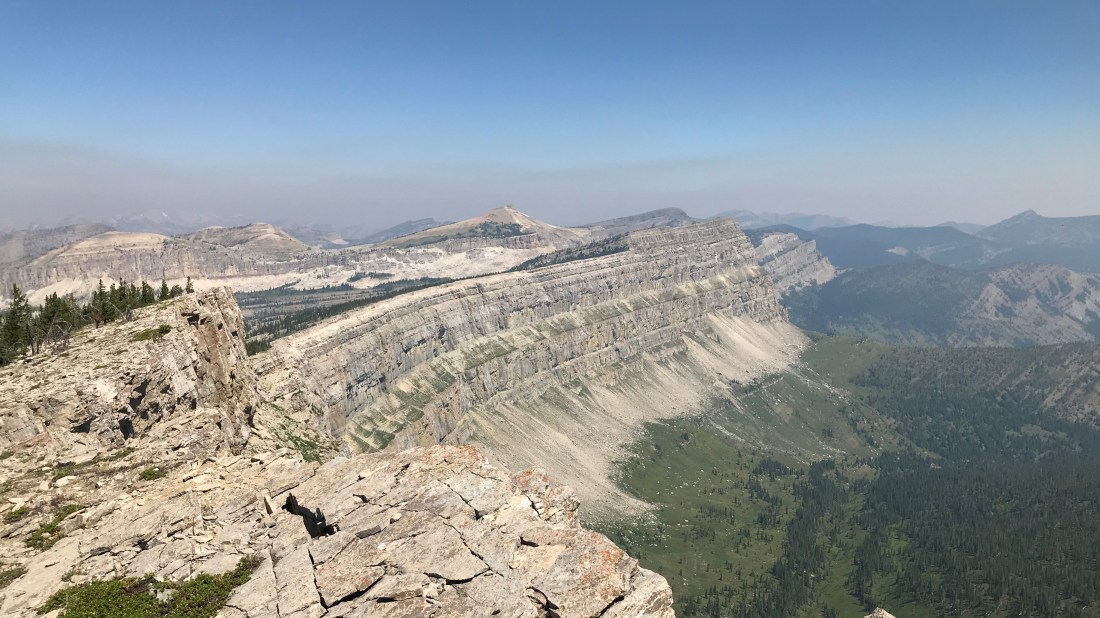
[Photo of the Chinese Wall, Bob Marshall Wilderness, by Natalie Griffith]

My old friend Kevin called them power spots.  They are places in nature that just feel good, sacred, powerful.   One power spot was up Wright Canyon, near Leavenworth, Washington.  Kevin and I sat up high on a big rolling granite ridge.  At least I think it was granite.  I think all big slabs of rock are granite, except when they are basalt.    I was only in Wright Canyon once, but the views of wave-like ridges and steep valleys were stunning.   This reminds me of the ridges in the Teanaway, awesome rounded hills of rock (sandstone I learned, after calling them granite).  Most of my power spots are big dramatic rocks with a view. 

Power spots.  You know them when you feel them.  One of my power spots is a ledge overlooking the Spokane River, not too far from my house.  It is the top of a basalt cliff where we ride, you turn off the trail to get to the edge.  Don’t get too close, because, you know, edges.  The spot is open, bright, and has some small sage brush, rare in this area.  You can see forever, the river glistens far away, and you can sniff a twig of crumpled sage.  You feel people have stopped and looked there before, for millennia.

Rivers and creeks with deep dark pools, spots of calmness between the rushing water are also power spots for me.  Especially where they run through narrow tall canyons and cliffs.  It’s the rocks again.    Lake Creek has one of those spots.    You have to find the spot; it’s not on the trail.   That may be part of the pleasure of power spots, the journey of finding them for yourself. 

My friend recently traveled to Sedona and visited a vortex.  I was in Sedona once and loved the red rocks and the pools of Oak Creek.  In Sedona, the vortexes are supposed to be places of spiraling energy.  Is it real?  Is that what I feel at my own power spots?  I don’t know.  One scientist thinks that the vortexes are meditative spaces.  There are no unusual electric or magnetic waves at the sites.   However, the scientist believes mountains and mesa tops with a grand view give us perspective, making our problems seem smaller.  While other sites down low in valleys, canyons, and caves help with introspection by limiting our focus on the immediate surroundings. 

I like this idea that the broad vistas help us see the metaphorical big picture, and the smaller closed places like river pools in a canyon help us turn inward.  All I know is my power spots calm me, they help me breathe deeply, and they feel good.  I feel closer to nature, and closer to the people who have walked those trails and climbed those rocks long before me. 

Source:  http://www.redrocknews.com/2015/11/27/sanders-scientifically-explains-sedona-vortex-sites/

Other Moths I Have Killed

In keeping with the previous invertebrate post, here is a poem about moths.  This poem was published in Earthspeak, an online magazine, in March of 2012.  Unfortunately, the magazine website is dead.  Much like the moth in the poem.


Other Moths I have Killed

Moth magic:
lint with wings,
a flying up of downed dust, 
a re-ordering of disorder,
entropy reversed.

Flutter under my shirt, 
brush of fuzzy air, 
I squish the irritation, 
my touch breaks the spell.
Wings dissolve
to gray shimmer 
on my fingertips, 
moth powder drifts 
back to unswept corners.

Math and Manure Management

By Michelle Eames


A horse produces about 50 pounds of manure a day, or 7 to 9 tons of manure per year. I always think I am not very fit and don’t exercise enough, but I do shovel manure most days. My horses are in paddocks, or sacrifice areas, most of the time. They graze for an hour or more a day in the pasture; I don’t shovel manure out of the large pasture. So if we assume I clean up only two thirds of their manure from two horses times 8 tons (she reaches for the calculator…) the work output results in about 10.6 tons of manure shoveled per year. I use a pitchfork, wheelbarrow, and/or sled. That’s a lot of weight bearing activity!


Now I should time my shoveling work and calculate the calories burned. Then, in celebration, I can treat myself to ice cream! I found a website with a blog by Claire Dyett. In her blog Claire determined 10 minutes of stall mucking burned 76 calories, 30 minutes is 228, and hard mucking for an hour is 460 calories. How many calories are in a hot fudge sunday? A quick google tells me that a two scoop sunday at Baskin Robins is 530 calories. Hmm. The math isn’t telling me what I want to hear. I will need to add some effort to my typical half-hour shoveling scenario.


The same article explains that a slow trail ride burns 100 calories an hour, a fast galloping ride is 240 calories per hour, and an energetic schooling session in the arena could burn 360 calories. Neither I nor my horse are really energetic, so we will calculate with the slow trail ride rate. A 3 hour ride, plus a half hour manure mucking session, gives me only 376 calories. Hmm. Still haven’t earned my hot-fudge sunday. I looked for some other sources to see if I could back up my claim that I should have a daily hot fudge sunday just because I want one. Other sources gave pretty similar calorie counts for horse activities. Dang it.


Okay, what if I add a walk. One source says I can burn 100 to 200 calories with 30 minutes of brisk walking. Now we’re talking. So I would need to do a slow 3 hour trail ride, a half hour of shoveling manure, and a half hour brisk walk for 576 total calories burned to cancel out my 530 calorie sunday. Of course, my walks often start out brisk and get slower as I go. And if I am dragging one of my mellow fjord horses along on my walk, we are definitely not brisk.


So, unfortunately, I determined I should probably skip the daily hot-fudge sunday. I wonder how many calories are in a glass of wine, instead? Red wine: 125 calories. Okay, the math works on that one! Excuse me while I find a corkscrew.


Sources:
https://www.horseillustrated.com/eco-friendly-horsekeeping
https://practicalhorsemanmag.com/lifestyle/green_horsekeeping_tips_071810-11499
https://www.spillers-feeds.com/1145-2/ [Claire Dyett blog]
https://www.medicinenet.com/

Birds and the Little Critters

By Michelle Eames

Last year, my first year of retirement, I decided to learn and relearn native plants and mushrooms.  I’m still not a skilled botanist or mycologist, but it was fun to take the time to look closely at the plants and ‘shrooms, and appreciate their forms. 

This year, I thought I would focus on birds.  I have always been a poor birder.  I never really made the time to study them, and somehow missed ornithology in college.  However, after buying a good pair of binoculars, and pulling out the bird books, I have instead been inadvertently drawn to invertebrates. 

Did you know that even seed-eating birds rely heavily on caterpillars to feed their young?  And many moths and their caterpillars are host-plant specific, only living on one species of native plant?  Insect populations are crashing as we remove native habitats.  Without the insects, and caterpillars, we will lose our birds.  However, there is hope.  We can replant native species.  Even in small areas.  Even in cities.  All this I learned from a virtual presentation by Dr. Douglas Tallamy.  See more information on replanting native species and the resultant increased diversity here: https://homegrownnationalpark.org/.  Gardeners can save the world!   I haven’t read Dr. Tallamy’s books yet, but they include:  Nature’s Best Hope, Bringing Nature Home, and the Living Landscape (co-authored with Rick Darke). 

Another book that has increased my interest in invertebrates is Sue Hubbell’s Waiting for Aphrodite:  Journeys into the Time Before Bones.  She is a wonderful writer, and pulls you into the world of invertebrates, including millipedes, earthworms, horseshoe crabs, fireflies and bees.  Why have I never heard of this author?  Amazing what I can learn when I turn off Netflix and take time to read. 

I’m still working on my birds, though.  Last week we had four killdeer near our seasonal pond.  Do killdeer eat caterpillars?  Why yes they do, see the source below.

Killdeer, Charadrius vociferus

Diet: Mostly insects. Feeds on a wide variety of insects, including beetles, caterpillars, grasshoppers, fly larvae, many others; also eats spiders, earthworms, centipedes, crayfish, snails. Eats small amounts of seeds as well.

Source: https://www.audubon.org/field-guide/bird/killdeer