Blog

Just Say Yes to Drugs

After the broken arm, and after the angry nerve got less angry and my fingers and wrist were working again, a honeybee swarm settled on a corner post of our horse pen.  At first it looked like a giant clump of moss, grown up overnight along the wooden post.  At a closer look, it was clearly bees.  I know just enough about bee behavior to recognize that the blob of bees was protecting a queen, and if I didn’t bother them, they wouldn’t bother me.  Luckily, I’m not allergic to bees, so I was comfortable with the idea of live and let live. Or be and let bee.

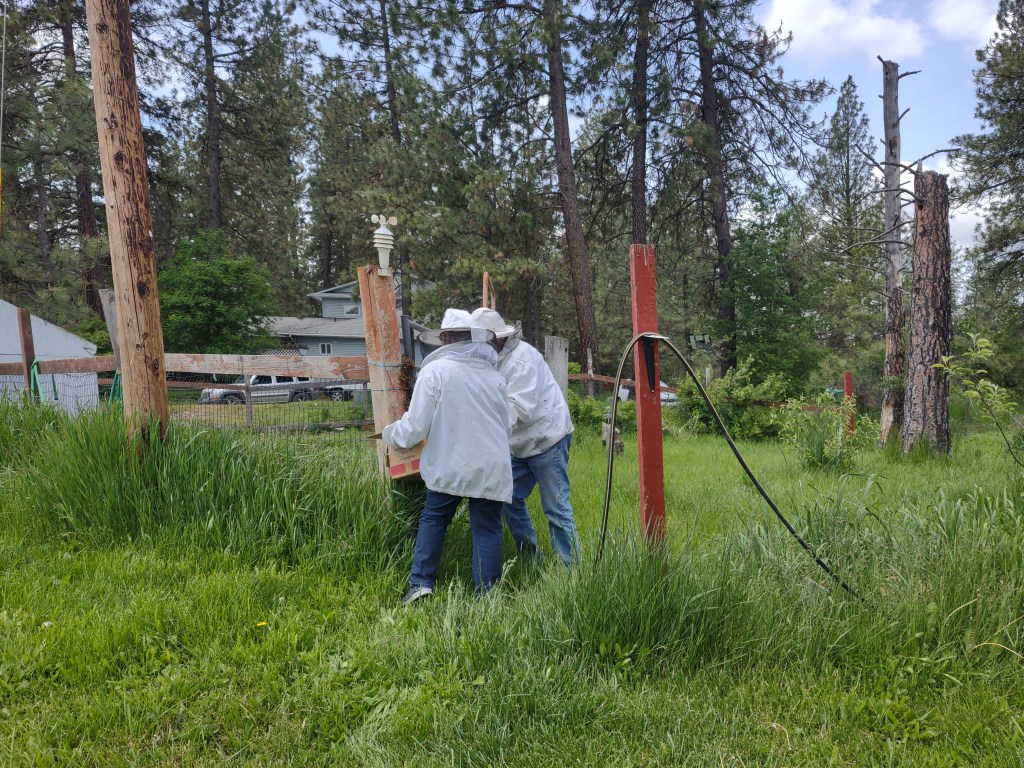
I did call my bee-keeping neighbors, and the husband-and-wife team came over to transfer the swarm to an empty hive at their place.  My family and I were fascinated, and watched from a distance as they suited up into their white protective gear with mesh over their faces.  My neighbor then reached his gloved hand in to the mass of bees for the queen, pulling, pushing, and brushing the bee clump down into a cardboard box.  The bees came down in big blobs, and only a few started flying around.  Once most of the swarm was moved into the box, my friends closed it up and carried it back to their car.  I came closer to chat, and used a stick to swish a few extra bees off their bee jackets.  One disgruntled bee flew off and landed in my hair.  As I tried to gently brush him away, I got stung on my forehead, above my right eyebrow.  Ow!

I knew the sting would hurt and swell.  But I didn’t think the swelling would move down to my eyelids like it did, giving my eyes the appearance of pig-eyes.  I didn’t think my eyes and forehead would still be swollen 48 hours later, despite popping Benadryl like candy.  This was an unusual response for my body.  Typically for me, a bee sting hurts, swells, then goes away quickly.  I wasn’t particularly worried about potential for anaphylactic shock, but I still was vigilant to notice any changes to lips, mouth, or throat.  There were none.

In thinking back, though, I remembered a few significant rash and swelling reactions in the past.  Once, during our Peace Corps stint in the Gambia, we helped with a field study evaluating different varieties of sesame seeds.  Our job was to help harvest, dry, and weigh the production of the plants.  Sesame plants have fuzzy hairs on them like tomato plants.  My body did not like those little pricklies.  My whole face swelled up, including my eyelids.  My angular face became round while my eyes peeked out of puffy slits.  Benadryl (and time) was the answer then, too.  And staying away from sesame plants.

Still, I can’t get over the changes in my body these days.  The unpredictable responses.  The wimpy bones.  The stronger reactions to bee stings.  The inability to sleep through the night.  My body was always strong and tough over the years.  Generally, I got sick, then I got well. Except that one time I caught Typhoid in West Africa…that’s another story.  Now I wonder, where did my strong and supportive body go?  Why is my body reacting so dramatically at this age, even though my brain is sure that I’m still twenty-three? Whose body is this, anyway? 

Sigh.  There must be a metaphor, a moral, or a lesson in here somewhere related to the swarming bees:

  • To make the old hive stronger, you have to kick out a new queen now and then. Nope.  That doesn’t feel right.   
  • To get a little honey, you have to put up with some bee stings.  That’s better, but it doesn’t really connect to my wimpy body situation. 
  • Don’t mess with the old queen, or you’re going to get insect-butt-kicked by her drones.  We’re getting closer. I like that sentiment.  I can be the bossy queen when needed and tell my drones what to do. 

Still, I’m not finding a lesson that clearly links to my weak body.  Therefore, to conclude this blog with a deep philosophical thought, I must fall back on an old saying we learned in the Peace Corps:

  • Just say yes to drugs! (As in antibiotics, or antihistamines, or anesthetics for arm surgeries…) 

Sometimes, your body just needs a little help from the medical or pharmaceutical community.  Much like swarming bees need a little help from the bee-keeper community. 

Writing for My Audience

Know your audience, they say, in all of the “How to Write” essays and websites; then you can successfully market your books to that audience.  But my audience keeps changing as I write.  I tend to hop from humor, to poetry, to essays.  My styles and subjects vary widely.

There is the horse-people audience; where I can reach out to our commonalities and our love of horses.  My humorous memoir about living with horses sells best in a local tack shop.  

There is my home-town audience.  When I had a reading in my hometown of Blaine, Washington, I shared about what the town used to be like when I kept my horse in our back yard.  I pointed out that the current grocery store location used to be a big hay field where one of my stories occurred. 

When I had a reading in a Coeur d’Alene, Idaho, bookstore, I shared some of the humor from my book, and focused on the broader audience’s common love of animals, and what animals teach us.

Another time, when I joined a panel with more literary-style poets and writers, I read a short prose piece from my book, to better illustrate the many ways of writing about animals, and how our relationships with animals can be used as metaphors for other things.  I also reached out to a more literary audience when I shared information on my short collection of fire poems in Triple 23.  Poetry readers are yet another audience that can be different than humor or memoir readers.    

I can’t decide if my eclectic writing style is a blessing or a curse.  If I only wrote humor, I could market that humor and immediately jump into writing another similar book.  Yet the poems and essays in my brain want to be written and heard, too.  Recently I saw writing described as “an expensive hobby” where only a relatively few writers make a lot of money.  I’ve decided to embrace that idea.  My hobby of writing is a second expensive hobby after my hobby of horseback riding. 

Like jumping my horse over fallen logs in the woods, I jump from audience to audience as my writing proceeds.  Just as I explore different riding disciplines with my all-around horse, I explore different writing disciplines.  I will be the all-around writer and rider.  When mixing Western and English styles of riding, I use the term “Wenglish”.  When I’m writing humor, essays, and poetry, I need a new term.  Maybe “Hum-ess-try”?  How about “Po-ess-um”?   Oh, that last word can be condensed to “possum”!  I think I need to write a poem about opossums. 

[photo credit pexels.com]

Another Published Article in Mary Jane’s Farm Magazine

Mary Jane’s Farm magazine once again was kind enough to publish an article of mine: Overalls Beat All, p. 29, in the June-July 2024, issue. This issue is on newsstands now. I hope you enjoy the magazine.

I can’t share that article from the current issue yet. Instead, I’ll share my last article, Feeling Her Oats, that was published in the April-May issue of Mary Jane’s Farm magazine. The theme for that “Keeping In Touch” section of the magazine was “Pony Up”.

Feeling Her Oats

The phrase “pony up” means to make good on a debt. However, as a horseperson, I focus on the word “pony.” To me, pony up means to mount up and ride. It reminds me of other sayings that started with horses, or that can apply to horses. Such as, “Don’t look a gift horse in the mouth.” This phrase originates from the fact that you can tell a horse’s age by looking at the wear on its teeth. Generally, only old horses are given away, so don’t look if you don’t want to know. Don’t ask if the gift is too good to be true. Young horses are expensive; you need to pony up substantial money for a good young horse.

Another phrase is “Don’t go against the grain.” I was taught to brush a horse with the grain of the hair, following the growth along the neck, over the back, and then dipping where the hair turns down in front of the flank. You brush with the grain because if you brush the wrong way, it may tickle the horse. And a ticklish horse may surprise you with a kick.

Paper has a grain. Paper tears and folds more easily in one direction than the other. The grain of the paper comes from the way the wood fiber was laid down when the paper was made. Wood has a grain, too. If you are carving, or even just whittling, the flakes will come off smoothly in one direction, while in the other direction, they will break off in jagged chunks. Always follow the grain of the wood with your knife, and always whittle away from you. I know this; my family usually cringes when I pick up a sharp knife. This reminds me of another saying: “A dull knife cuts worse than a sharp knife.” I have the scars to prove this.

Sand has grains. Sand grains flow with gravity, or with the wind. The tiniest grains can make a large dune. Just like the tiniest effort can make a change in the world. Rice is a grain, but in that case, you need to “separate the grain from the chaff,” or focus on the important stuff. Then there is salt: “Take that with a grain of salt.” Don’t always believe what you hear. Or better yet, don’t believe something unless it comes “straight from the horse’s mouth.”

Oats are also a grain. A horse that is “feeling its oats” is very rambunctious, as if it had sugar for breakfast and is full of energy. Sometimes, if a horse is feeling its oats, the rider gets dumped. Then the expectation is to “get back on the horse.”

I tried this recently, after an unplanned dismount. I insisted on finishing the ride because I follow through on commitments. But then I felt my injured hand swelling up inside my leather glove and the pain got worse. When I saw the lumps on my wrist, I decided that getting back on the horse was overrated. After a visit to the doctor and a diagnosis of a broken bone, I relearned another old saying: “Rest is the best medicine.”

Unfortunately, a rest for me means a rest for my horse. When I finally get back to riding again, he is likely to be feeling his oats. Hopefully, the next time I pony up, I will stay in the middle of the saddle and won’t need to revisit getting back on the horse. I am optimistic that instead, we will be calmly putting one hoof in front of the other and riding off into the sunset.

[Photo Credit pexels.com]

May 10 is Buy a Horse Book Day

May 10 is International Buy a Horse Book Day. I have so many horse books in my collection, and have read so many over the years that it’s hard to pick a favorite. But I really like Jane Smiley’s fiction books: Horse Heaven, and Perestroika in Paris.

Of course, you could celebrate this wonderful day by buying my humorous memoir, Riding Lessons, Things I Learned While Horsing Around. If you would like a signed copy, and you’re within the U.S., I’ll provide free shipping through May 16. Send me an email to m.eames.writer@gmail.com and we’ll figure out the details.

Otherwise, you can request the book through a bookstore, or purchase the paperback book or Kindle ebook on Amazon at this link: https://a.co/d/9UTMcNb

Tell me about your favorite horse books! And happy reading!

A Podcast Interview on Authors Over 50

I was interviewed on Julia Daily’s podcast, Authors Over 50. It was like talking to an old friend. I hope you enjoy the interview about my first book, Riding Lessons, Things I Learned While Horsing Around, and my writing life and process in general. It is on youtube, and you can find it on the links below, or look for the Authors Over 50 podcast on Amazon Music, Spotify, Apple Podcasts, or Google Podcasts.

https://youtu.be/_rfL-2_DXYI

Growing Old is Not for the Faint of Heart…

But it’s better than the alternative. An old friend used to say that. I’m understanding it more and more.

I still find it hard to believe, but a week ago I fell off my horse and broke my arm. Again.  The left arm this time. 

It was just a spook, a quick forward move that I can usually ride. And it was just a fall onto grass, a fall I have done in my home pasture many times before. It usually hurts, but I don’t usually break.  These are new times in my life with horses.

I have gotten support, advice, and help from friends and family. The most obvious advice is never to ride bareback in the spring. Or never to ride bareback, period, since I’m old, and my balance isn’t what it once was. But I’ve also heard of other riders with injuries and falls this spring. More than one of us are spending the spring healing. It’s weirdly reassuring that I’m not alone.

The support has come in many forms.  A friend helped me haul my horses to a vet appointment this week, while I pointed and advised and told her which of my look-alike fjord horses was which.  Other friends offered any help I may need. My husband and son have been waiting on me, feeding me, and feeding the horses.  My poodle, Cookie, has been keeping me company on the couch.  The cats, however, have been indifferent and aloof.

It’s been a wakeup call, that I cant ride and play like I could when I was 16. Or 26. Or even 56. Horses have been the place where I can find my inner teenager, and just goof around. Now it’s the place where I have to find my inner cautious senior citizen. Safety before fun. The saddle is my friend.

I want to get through this healing journey quickly, but it was a displaced break, and will take time. Surgery, screws, and plates were involved.  It’s hard to live in the moment, when I want to fast forward and figure out what kind of therapy I need and start exercises to get stronger. Instead I am forced to embrace the wisdom and patience of age, and breathe through the tweaks of pain. Because it’s better than the alternative.

[photo credit pexels.com]

Rain Coats and Feeling Oats

Mary Jane’s Farm magazine once again was kind enough to publish an article of mine: Feeling Her Oats, p.26, in the April-May Issue. This issue is on newsstands now and has several horse-related articles in addition to the usual fun and interesting farm, garden, and cooking articles. It’s a great issue!

I can’t share my article from the current issue yet. Instead, I’ll share my article, Rain Coats, that was published in the last Issue (Feb-Mar) of Mary Jane’s Farm.

Rain Coats

Where I grew up, it was all about the rain.  We had spring rains, summer rains, fall rains, and cold winter rains.  Rain at 34 degrees is so much colder than snow at 32 degrees.  It’s so wet!  As a kid I would put on my coat with a hood and stand under roof lines or gutters.  I would close my eyes and imagine I was standing under a waterfall in the jungle. 

We rarely used umbrellas, they just got in the way. When I moved to Seattle for college, I had to get an umbrella.  It was for self-defense, to be used as a buffer.  As a tall person on sidewalks full of mostly shorter people, other umbrellas came at me at eye level.  Walking on crowded sidewalks between classes was dangerous, you could lose an eye!  Umbrellas are challenging though; one has to remember where you left the dripping wet umbrella when entering a building and remember to pick it up again on the way back out. I lost many umbrellas by walking out a different door.  Some days in Seattle were two-handed-umbrella days, with wind strong enough to invert an umbrella.  They rarely went back into shape.  Those days, a raincoat with a hood was better. 

I eventually became a bike rider, and changed my foul weather gear to a rain poncho and rain chaps.  Did you know that bikes without fenders toss up a line of muddy water on your backside during rainstorms?  Fenders are necessary.    

My husband and I eventually landed in Eastern Washington, on the edge of a desert.  Instead of year-round rain, we get regular thunderstorms.  There is so much drama: a dark bank of stacked clouds, then a breeze, then a gale ahead of the storm, crack of thunder, flash of lightning, and if we are lucky, a downpour.  If we aren’t lucky, wildfires. We can even have thunder-snow in the winter. I love thunderstorms, they don’t usually last long, so you can often avoid being out in the downpour.  But I still enjoy popping outside with a raincoat and a hood, listening to the rain drum down on my head.

My raincoats got better over the years. I learned that boaters and fishermen use entirely waterproof rain gear made from a thick plastic-type fabric.  Those work great for horseback riding, too, because you aren’t exerting too much.  But for hiking or walking, Gore-Tex raincoats work the best, they are effective at keeping rain out and breathable to let sweat out. 

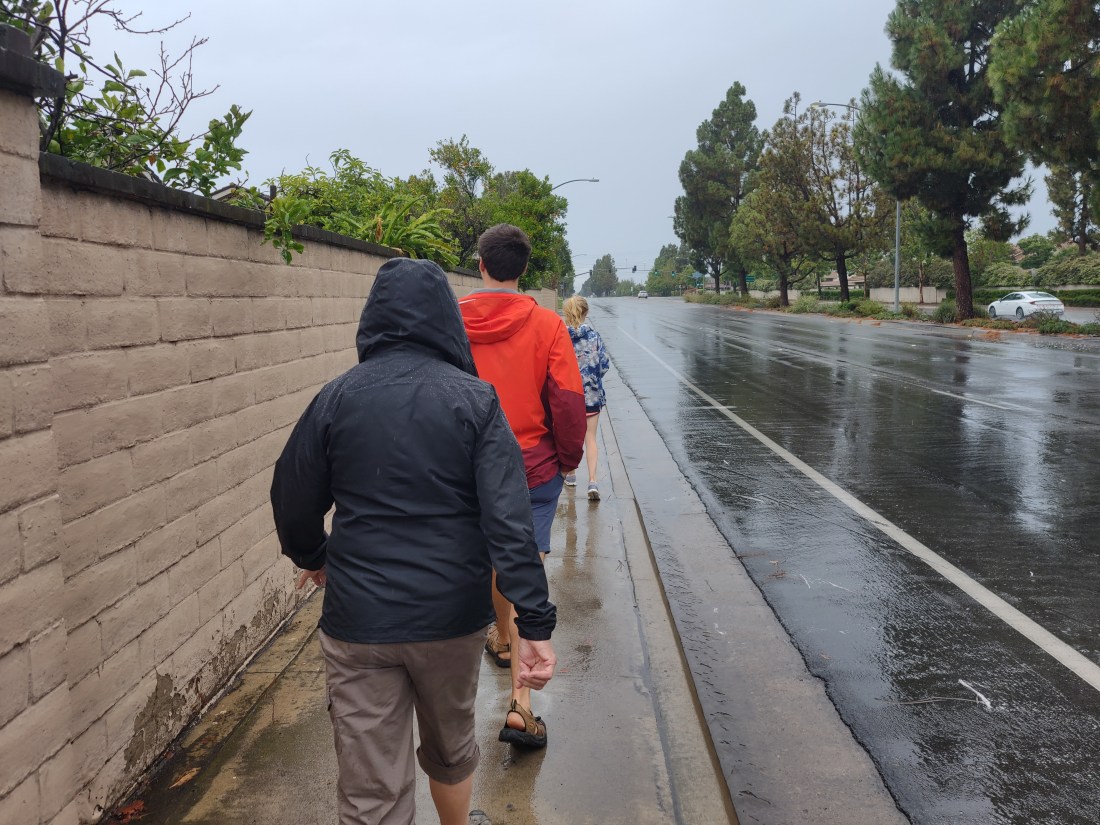
When I visit cities, though, I want something with style.  I’ve always looked for, but never found, a bright colorful flowered raincoat.  Preferably on sale, or from a thrift store.  I found a cool rain hat once that turned out to leak like a sieve when used in the rain.  I did find a black jacket with a hot pink lining and a pink zipper.  That would have to do for my city coat until I found something brighter.  I took that jacket with me on a trip to San Diego and tested it in a tropical storm.  It is not a good rain jacket, it’s more of a rain sponge.  It took two days to dry out after a walk in the deluge.  The hunt is on again, for a bright and cheerful raincoat, preferably with flowers, that actually repels the rain.  And once I find the right jacket, I will need to plan a trip to an exotic locale, maybe with a jungle and a waterfall, to test out my new coat. 

A Leap in Time

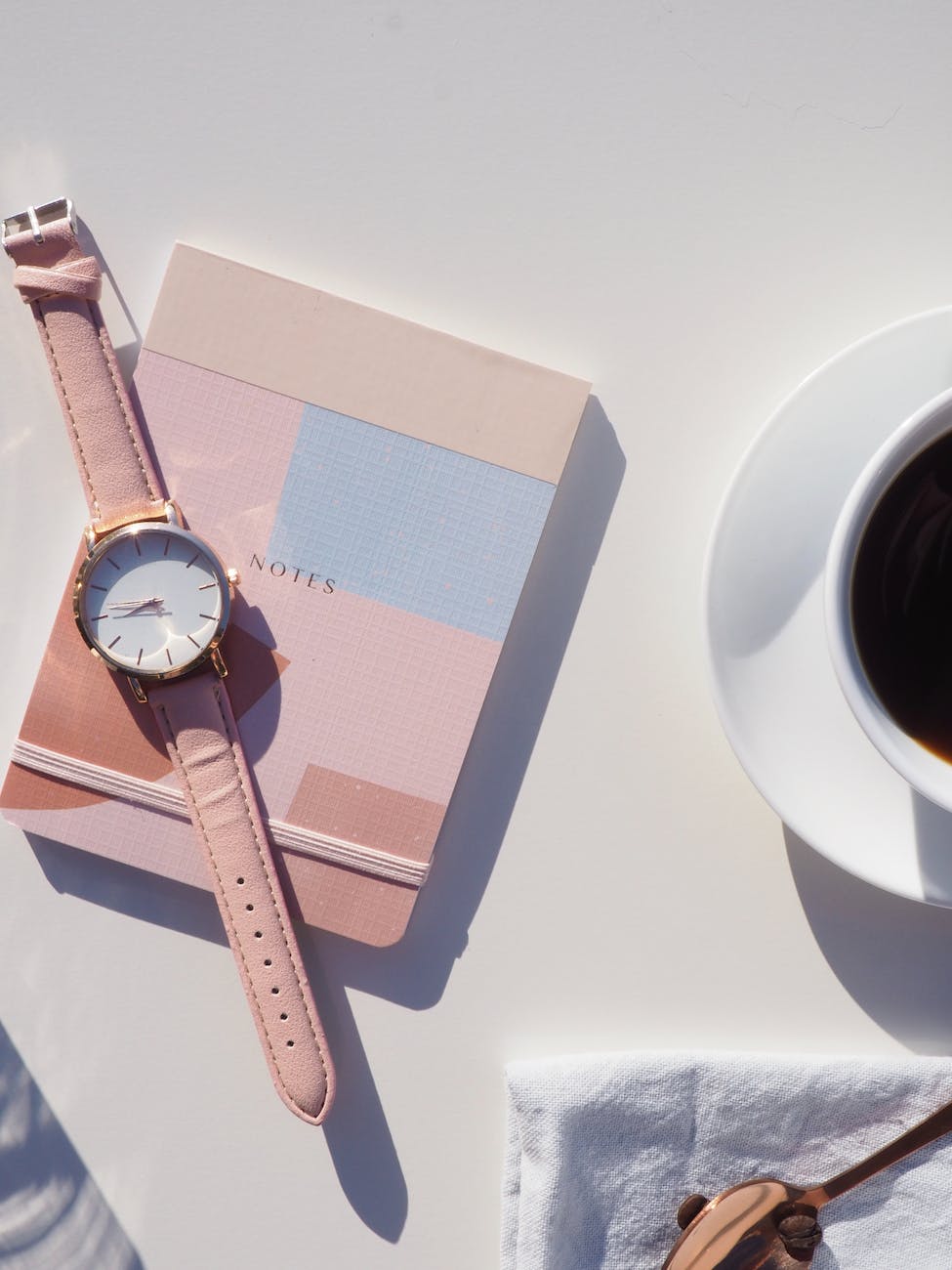
This essay is a blast from the past, written way back when, when the kids were little, and I was juggling all aspects of a working mom’s life. Also, I was wearing a watch, not relying on my phone for time and date, so that tells you how old this piece is.  It does seem appropriate for February 29 on a leap year. 

Ten minutes off my morning schedule pushes the kids twenty off theirs.  Any blip in routine has an exponential effect on their morning.  If they don’t get going on time, I don’t get going on time, and we’re all late.  It’s leap year and the calendar says March 8, my watch says March 9, it’s been off for more than a week and I have no idea how to reset it.  It doesn’t really matter, since between work, kids, and gardens I can barely keep track of days anyway.  

I can tell the seasons by the sun and the weather, but the days of the week confuse me.  Christopher asks me each morning, “Is it a stay-home day?”  I have to think.  I rewind yesterday for hints of today.   Do I have a meeting?  Did I get up early enough to drive to wherever I’m supposed to be, by whenever I’m supposed to be there?  Do I have time for a coffee on the way to work?  Must I get to work on time, or will a few minutes late go unnoticed?  If my muscles hurt from too much yard work, it must be the weekend. Or Monday.

Christopher gives up on my thinking frown and goes to ask his older brother.  Mac knows the days, he knows the schedule, and he can do math in his head.  He could probably reset my watch if I could remember to ask him.  I remember my kids’ ages, but not my own, and I have to think twice about their birthdays.  Mac’s is so symmetrical, born at 4:27 pm on  April 27th.  Or was it 4:28 pm on April 28th?  Christopher’s is May 9, I think, or that’s our friend Amber’s, and his is on May 11.

After juggling five days of work, schools, and music lessons I live for the weekends when I can slow down.  I like to watch plants grow.  This week the cactus seeds started in their tiny terra cotta pots.  Last week Johnny-jump-ups.  I pretend to grow seeds for the kids’ education, but it’s really for the magic.  Who knows what kind of cactus will germinate, or which ones will die from my kind over-watering. The Farmer’s Almanac recommends following the rules of astrology and planting when the moon is in Cancer, Scorpio, or Pisces.  But I simply use the paper calendar sitting by our table-top nursery with its calm rhythm of days printed on a grid.  It’s almost too late to start the peppers; less than six weeks until the last average frost date.  The earth, the sun, and the moon still tell the plants to grow, the tides to move, the days to shorten, or to lengthen.  They give seasons of fasts and seasons of harvests.  There is the day to plant the squash when the nights remain above 40 degrees, the day to rest on a lawn chair when the afternoon first reaches 70, and the day to cover the tomatoes when the first frost threatens in fall. 

Why do we have a leap day to add confusion to my barely coping routine?  Leap day of leap year, the extra day added to make our calendar match the Earth’s orbit.  The Romans had the Julian calendar; Julius Ceasar borrowed it from the Egyptians.  But it wasn’t quite right; they had to keep adding leap days.  In 1582, Pope Gregory the XIII put his best people on a review of the calendar, and implemented a more complicated leap day system, skipping the leap days on most of the beginning century years.  But to get the holidays back on schedule, they had to adjust by about 10 days.  Catholics at the time fell asleep on October 4, and woke up on October 15.  Eleven days in a single night on the word of a pope.  A loss of eleven days in the harvest month to gain the Gregorian calendar. What’s in a day, be it Sunday, or a week from Wednesday?  Today if the church or the government took away our days we would protest, not for the artificial shortening of our lifespan, but for the permanent loss of one weekend.  Two less days of rest and kids and gardens. 

Then there is the day to go on daylight savings time.  Another confusion of timing.  One more disruption to my diurnal clock. One more challenge to getting the kids up and out on time.  And my darn watch again.  Each spring, I plant seeds to grow into violets and then forget to water them.  Time and my memory can be the driest peat.  If I studied the theory of relativity, I’m sure I could really have time figured out.  Or I could let someone else do it, who has more time and inclination, someone who can do math in his head, and then write a book that simplifies the theory to plain English. Then I’ll read the book, in my spare time. Right after I read the owner’s manual for my watch. 

One day I gained a quarter of an hour.  That morning, I left my house at 7:45 for my half-hour drive to work and arrived at 8:00 am.  Where did those 15 minutes slip in from?  Where is that time warp on Interstate 90, and how can I hit it again?  If I could just find those extra minutes each day, I promise I wouldn’t waste them.  I’d spend them usefully and efficiently; I’d put in a load of laundry or tidy up the kitchen… or more likely I’d just have another cup of coffee, read the paper, and still leave late for work. Whatever the time of the morning, the name of the calendar, or the day of the week, I’m always waiting for the next thing, the next season, the next birthday, always reading ahead.  Some days I need to remember to stop looking at my watch, finish my coffee, hug my kids, and go outside and pull the weeds.

[Photo credit pexels.com]