Blog

How to Self-Publish a Book—Michelle Style

A famous writer, when asked how to write, answered:  Butt in chair.  Okay, it looks like several writers and bloggers have used that, or borrowed that, but I’m giving the quote Anne Lamott, because I like her.  Anyhow, as I’m about to publish my first (self-published) book, I’m reflecting on the process.  It was a long process.  So the first rule of book writing by Michelle Eames is:

Allot Yourself a Lot of Time

It feels like I’ve always written, starting way back in high school, though my writing has often happened in fits and starts.  I journaled with pen and ink by hand.  I moved the good stuff to the computer, slowly over time.  I have mostly evolved to writing directly on the computer now.  Thank you, high school typing classes!  As I look back at the early drafts of the bits and chapters in Riding Lessons, Things I Learned While Horsing Around, I notice some of the first computer versions were dated 2002.  But some pieces were undoubtedly written before that. Eventually, I had enough on the horse and humor theme to start to pull it together into a longer work. 

Vacation from Work to do Writing Work

When you get a lot of pieces of your book ready to compile into something big, spend some focused time on pulling it all together.  I remember spending most of one Christmas vacation working on finishing and compiling some pieces, and then a government furlough, and then finally retirement. Even with that vast space of time floating in front of me upon retirement, it still took a lot of time to finish the book.

Try Publishers, Expect Rejection 

Once I had a solid draft together that I liked, I started sending it out to mainstream publishers.  This is done by researching the kind of books the company publishes, and then sending query letters with sample chapters to the editors.  The research is time consuming.  The waiting for answers, and more often non-answers, is time consuming.  I sent queries out to 10 potential publishers over a year and a half and received no positive responses.  I did get one complimentary note, along with the “no thank-you”.  Animal humor is a bit of a niche market, and I am not a famous writer. Yet.

First Readers, First Sharing

Decide to self-publish but decide to do it right.  First, make sure more people than your mother actually like the book.  Share with “Beta Readers”.  My beta readers included a horsewoman (my aunt), and a non-horsey friend.  Both were avid readers.  And both were obviously biased, but I made them pinky-swear to be honest in their assessments.  In short, they liked the book.  And they helped with editing, a lot.  Incorporate the edits. 

Start Building Your Market Early

After receiving a wonderful birthday gift from my son, an interview with a successful self-published fantasy writer, I asked the author all about marketing and process.  She recommended developing a website and a following on social media.  With my son’s help, I started a website and blog.  Turns out, I like blogging.  This was not a hardship. 

Learn to Wait and Wait Some More

To continue your professional journey, hire an editor, thereby beginning to dig the deep hole of writing and publishing costs that you may never recover from.  Learn how much editors cost (a lot!).  Ask previous teachers and published writers that you know.  End up with a friend of a friend that is new to editing, so moderately priced.  Hope for a quick turn around so you can get this book out the door and down the road in the next week or so.  Then wait for her more sane schedule.  Incorporate the edits.

Find a Publishing Company that Helps Self-Publishers

After receiving only rejections from mainstream publishers, get more serious about self-publishing.  Ask local writer friends how they did it.  Research some more.  Find self-publishing blogs.  Read them.  Eventually, follow the advice of friends and find a local publisher that does layout, some printing, and talks you through the self-publishing process.  Read your manuscript draft one more time and find more edits.  Fix the edits.  Finally share the draft, photos, and cover ideas with the local publisher.  [Gray Dog Press, you are worth your weight in gold!]  Continue to study how Amazon works for paperbacks and ebooks, and Ingram Spark for distribution to retailers and libraries.  Wait some more.

Start Small with a Small Business

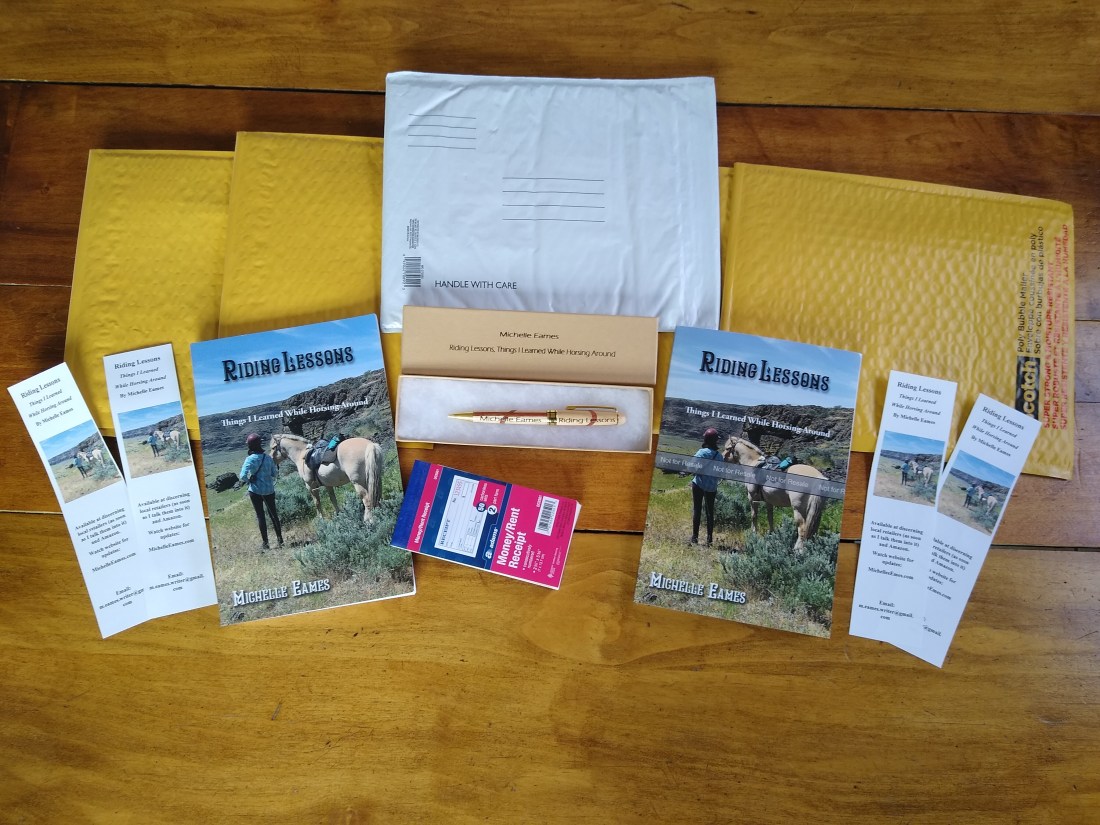
After talking to published writers, artists, friends, and googling self-publishing sites, determine it’s in your best interest to get a business license.  This is in part to claim potential losses on your income taxes. Pay for state license.  Notice that there seems to be a lot of costs, and future income from your book may be low.  Buy fun things at the office store, like a receipt book. 

Review. Edit. Repeat.

Receive a pdf copy of the laid-out book. Read it from front to back, and again from back to front.  Ask a friend to read it.  Find more typos and edits and improvements.  Ask publisher to incorporate edits.  Wait some more.  Finally get a “proof”, an actual printed copy of the paperback book.  Ask someone from your writer’s group to do a final proof-read.  Find more typos, edits, and improvements.  Resignedly, ask publisher to fix these new edits.  Hope that all mistakes are now found.  Determine that you are done reading the book, and now will only review for big layout problems.  Wait some more for the printing of the first run of the book.

Become a Book Market Analysis Guru

Before the final printing, the publisher asks for a price to list on the back cover.  Time to do some more serious research, instead of saying, “Oh, I dunno… fourteen bucks?”  Visit the local bookstore and ask staff about prices.  Look on shelves.  Look up similar books on Amazon.  Compare prices for paperbacks and ebooks.  Actually find an author who writes books similar to yours, compare her prices.  Lose sleep over final pricing.  Summarize your findings with your writers group and ask their advice.  Follow their advice.  Sleep again.

Find out how to write a book description.  Find out how to use key words in the book description.  Keep long lists of people who want the book, people you will email when complete, potential Facebook and blog posts, and potential local retailers.  Become the queen of spreadsheets to track all of the future steps and tasks once the book is published. Also track costs.

Become an Electronic Upload Guru

Once the local publisher provides digital layouts for Amazon Kindle Direct Publishing (KDP), and Kindle ebooks, figure out how to upload to Amazon.  Review electronic “proofs” from Amazon.  Find layout mistakes on the ebook.  Request edits from publisher.  Upload again.  Pay for an actual paperback proof from Amazon.  Wait for arrival, despite having payed extra for the quicker shipping option.  Pause on Amazon until proof received.  Tap fingers on desks and feet on floor while waiting.  Butt is still in chair while checking the shipping tracking link several times a day.

Then, the publisher finishes the electronic documents for Ingram Spark paperback and ebooks.  Upload to their more complicated system.  Pay them some money.  Wait for their review before hitting “Publish” button.  All while waiting for Amazon proof, and while waiting for the local publisher print run. 

Finally receive Amazon paper back proof.  Determine it’s fine.  Push the “publish” button on Amazon KDP page.  Wait for their review and their “go live” date. 

Finally Publish and Become a Publicist [This should happen next week!]

Pick up the first 100 printed books from the publisher.  Take a moment and celebrate with a shot of whiskey.  Ceremoniously sell the first book to a friend. Give her a receipt because you are a small business, and you have a receipt book.  Then get back to work.  Start mailing out promised gifts, promised signed copies, and working through that marketing spreadsheet.  In between marketing steps, think about the next book.  Place butt in chair.

How to Find an Agate

Go to your favorite beach. Hold a moon-snail shell to your ear.  Hear the agates calling you in soft waves.  Sift thumbnail sized rocks between your fingers, pushing past the dull layer to the dark damp colored layer below.  Look past the seaweed rocks, sunset rocks, deep-water-black rocks, white shell rocks, shooting star rocks.  Look past all the colors of the northern lights, night sky, and gray waves.  Find the gem layer: turquoise rocks, ruby rocks, jade rocks, sandstone shining with diamonds.  Set aside the frosted blue beach glass, and smooth-edged porcelain, all tamed and returned by the ocean.  Dead shore crabs guard the real agates, pinchers at the ready.  

Rest.  Feel the waves of agates calling you.  Lift each possibility to the sun to check for clarity.  Throw the opaque almost-agates back to let them ripen longer in the sea.  Look up at the logs, the sand-rubbed smoothness, the ants.  Begin to gather shells with holes in them instead; look for some beach string to make a mermaid’s necklace.  Watch for sun glints on agates, on waves.  Fill your pockets with treasures, driftwood bits, and more colored rocks.  Who cares about the agates today.  Tomorrow, find a sunny beach.  Sit down by the driftwood.  Look for agates. 

Sneaking Up on Writing

I remember long ago being out for a drive with my dad through the rural roads of Whatcom County.  Suddenly we were in the small town of Sumas. 

“How did we get here?” I asked, thinking we had been nowhere near this town.

“We snuck up behind it, so it wouldn’t see us coming,” Dad answered. 

The idea of sneaking up on a town and surprising it was somehow hilarious to me.   Like the town cares!  But this idea of sneaking up behind places became part of our family lore.  Why drive in on the main drag when you can sneak around from behind the hill?  Hmmm, as I think about, it, that may explain my adult aptitude in getting temporarily lost.  Regularly.      

Today I am sneaking up on writing about my hometown of Blaine, Washington.  I was in a slump.  You know how sometimes we think we are supposed to be doing a certain thing, at a certain time, and then, somehow, we don’t?  Or can’t?  After spending so much time writing humor, poetry, essays, I got it into my head to try to write a fiction novel.  Other people write novels, how hard can it be?  They’re just a long format, right?  I had planned to get started this winter.  I knew where to set the novel, in my hometown of Blaine.  I knew the scenes in the novel would include eagles, tide flats, harbors, and maybe an old dairy farm or three.

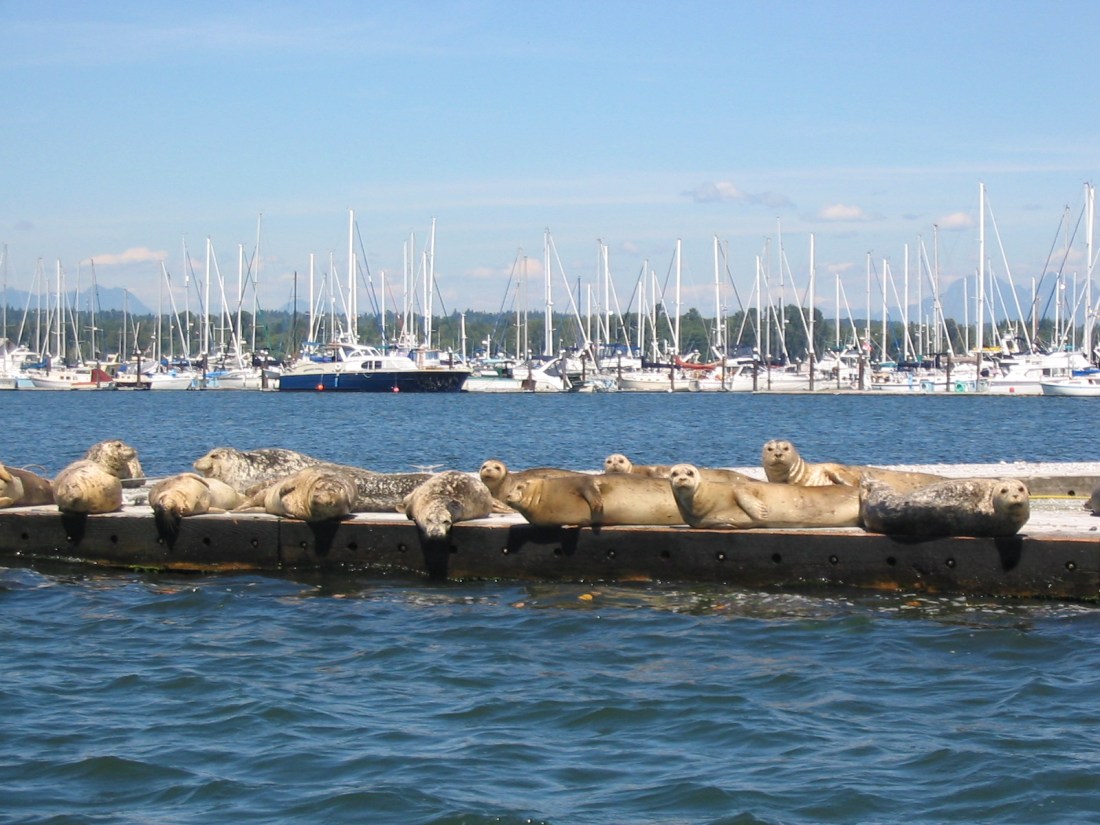
Yet there the idea sat, like a dead seal in the mud.  I mulled it over and pushed it around in my brain like a kid with a piece of driftwood poking at a carcass.  I thought it over in the middle of the night when I couldn’t sleep.  No plots announced themselves.  No characters introduced themselves.  The novel idea was beginning to rot.  Seagulls were loudly circling.  Still, my brain continued visiting Blaine, smelling the tide flats, looking across the harbor.  I have finally determined I don’t have a novel in me.

Once I abandoned that idea like a leaking boat, I started writing out a story my friend had told me about living in Blaine.   I was able to write a short, fictionalized scene.  Not a full story, and definitely not a good draft, but at least the start of something.  Or maybe the end of something if it doesn’t get better. Yet, getting started made me want to write more about Blaine.  I still don’t feel a large work of fiction headed my way, but at least I’m getting some writing practice in.  We’ll see what happens when I drive around Birch Point and sneak up on the scenes and stories of Blaine from the other side of the bay.    

It’s Getting Closer: My Book!

IT’S GETTING CLOSER!  Woops, was, I writing too loud?

I haven’t been blogging about my book-in-the-works, because I didn’t actually know what the publication schedule might be.  But it’s getting closer!  A local publisher, Gray Dog Press, is laying it out for me, and will do a small print run of the book.  Then I will figure out how to get it on Amazon (Kindle Direct Publishing) and IngramSpark (another book distributor).  It shouldn’t take too much longer, several weeks or a couple months, rather than my previous vague schedule which had been “someday”, or “years” or “no idea”.  And then my work begins: getting the book “out there”.

Riding Lessons, Things I Learned While Horsing Around, is a mostly humorous memoir about living with horses and learning from horses. As you will see, I had a lot to learn, made a lot of mistakes, and laughed a lot.  In addition to the humor essays there are a few serious pieces, some poetry, and some blog-like pieces.  Early readers have enjoyed the book, even the non-horsey readers.

Self-publishing is all new to me, so it’s taking some time.  I am learning so much!  My writing and non-writing friends are helping so much!  You know who you are—beta readers, a hired editor, photographer friends, instructor friends, trail riding friends, writing group friends, old friends, new friends, family…  Thank you.  We’re almost there! 

If you want an update when it’s done, follow my blog, or send me an email or message.  I’ll be in touch as the process continues.   

Woohoo! Did I mention I’m excited?

If I Sold Poems Like Airlines Sell Credit Cards

I would like to sell you this book of poems.  It’s a good book of poems; I’m a good writer and I work hard at my trade.  You won’t be disappointed if you like poetry.  It’s possible that even a non-lover of poetry will like my book, because I’m that good.  But wait, if you like my book you will want to read all my poems in the future—here, let me sell you a poetry credit card.  You need this credit card because if you sign up, you will get a discount on every future book of mine.  Of course, I’m a writer, not a credit bank.  But don’t let that worry you, because some other outside entity is managing it, and you will sign your life away to get my future poems half off.  Just know your credit will always be golden with me.  I may or may not write a poem for your future destination, but if I do, you will have that card to take full advantage.  I may or may not write a poem to fit your eventual travel dates, but if I do, you will have time to enjoy it.  Sign up now, and you will get a companion poem and a place to hide your baggage.  Or my baggage.  For a short time, I offer a bonus of three poems on topics you aren’t interested in.  I’m sure you’ll get some mileage out of those.  Don’t worry though, someone is making money, and it’s not the poet.  Just giving credit where credit is due.  

(Photo credit Chris Frederick)  

That Winter

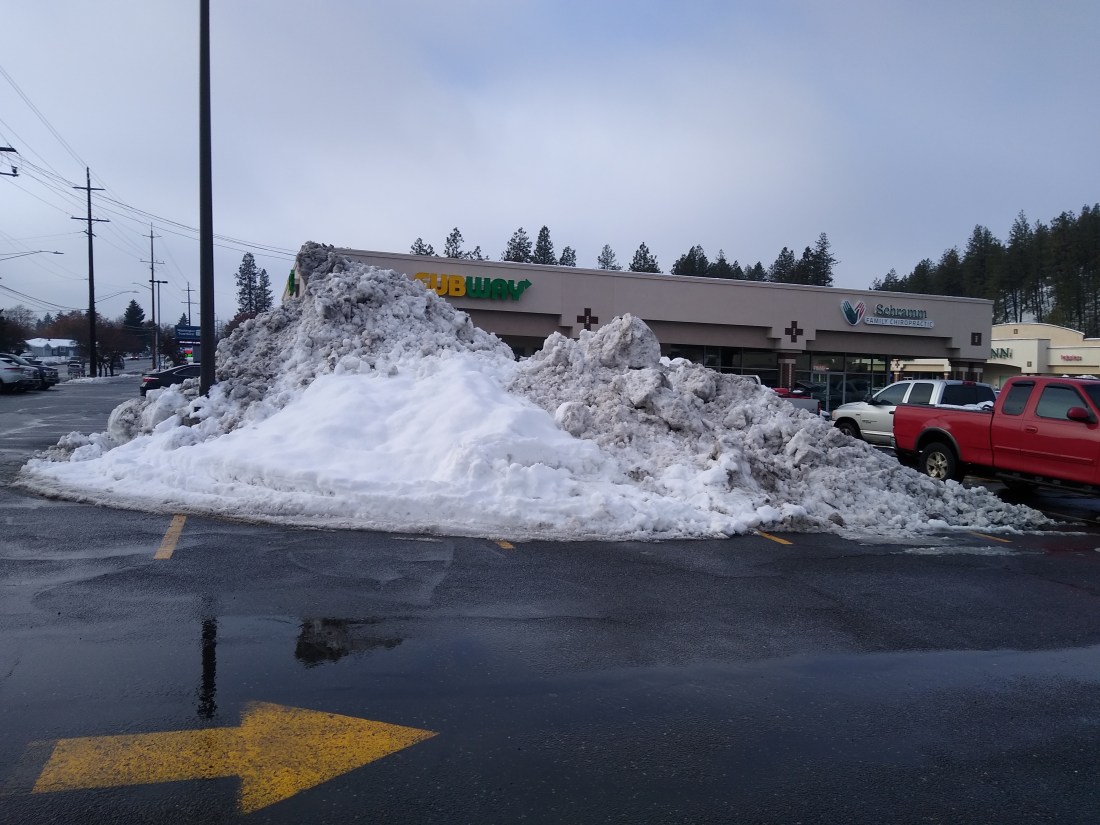
I wrote this poem during that other bad winter, when the City of Spokane pushed all the snow into the center lanes of the arterials, and you couldn’t change lanes downtown except at intersections. It made for interesting driving, for sure. The snow piles in parking lots began to dwarf the buildings. The photograph I have from this year doesn’t do it justice, but you can start to imagine icebergs on the parking lot sea. During that bad winter building roofs were collapsing from the weight of four feet of snow. We aren’t there yet this year, but the winter is still young.


That Winter

Icebergs in parking lots—
imagine them tipping over 
top-heavy 
between waves of rudderless cars at the mega-mall. 
That was the beginning of something long: 
one long worry.

Let Me Die in the Winter

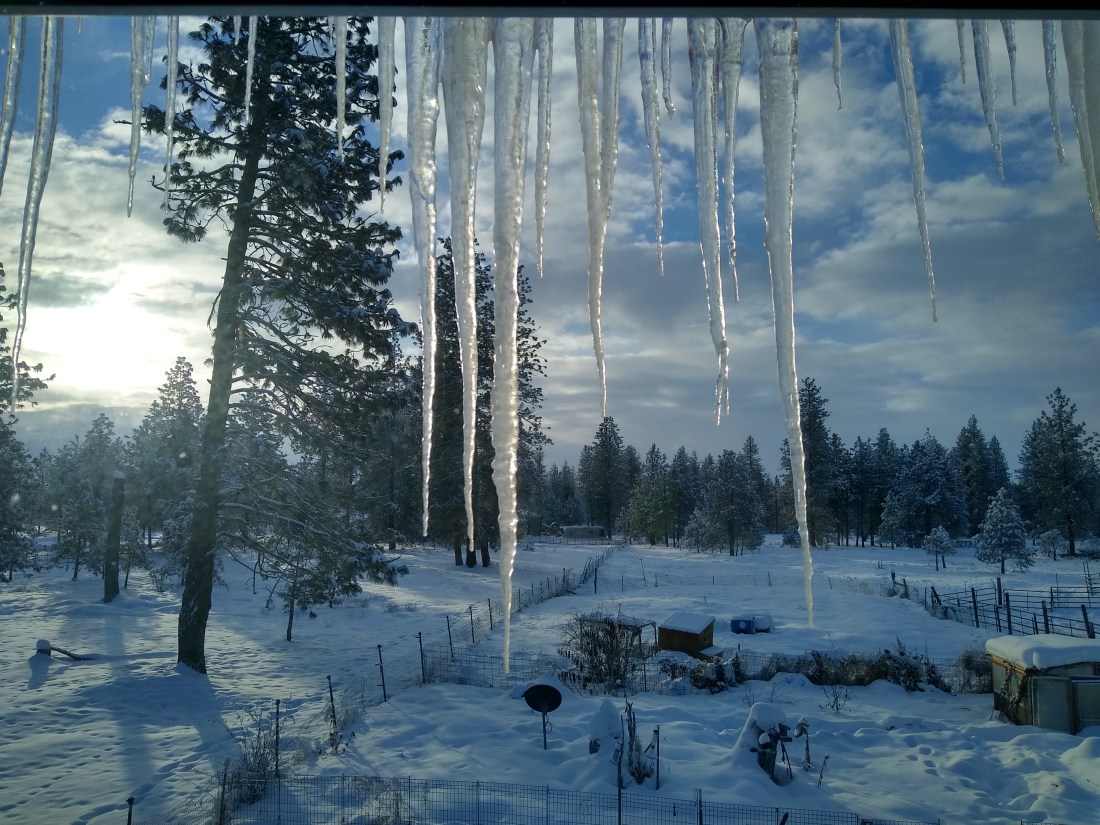
As I look through my old pieces of writing, I find that I spend a lot of time complaining about the weather. I love being outside normally, but I am not a winter sports enthusiast, and winter often feels like a time to just get through. It was 4 degrees this morning, and it’s getting colder tonight. Winter is upon us this solstice day. But the sun is out!

Let Me Die in the Winter

It’s not really living.  Let me die in the winter when the mud pulls my boots off my feet and the rain floods the low spots and all my leathery skin mildews.  Let me die like my neighbor’s old horse when my teeth get worn and I have trouble chewing hay; hip bones push out through my fuzzy winter coat.  Put me out of my misery with a well-placed shot before the real cold makes my arthritic knees ache even more.  Let me die after the apple harvest, when I remember the sun and sweet tastes of summer, but before the ice needs breaking on the horse troughs, before the driveway needs shoveling to get the car in the garage.  Every time I go outside my fingers and toes scream, despite spending fifteen minutes adding layers in hopes of warding off the chill. Let me die in the winter when the nights are so long and clear that the moon and stars shiver in frigid air.  Let me die in the winter when snow softens angles and sweetens the earth, crystals of sugar, my mittened hands sculpt new white clay, and everywhere is shades of blue and light.  Wait.  Let’s not hurry this.  The days are getting longer.  I can make it to spring.

Isolation Room

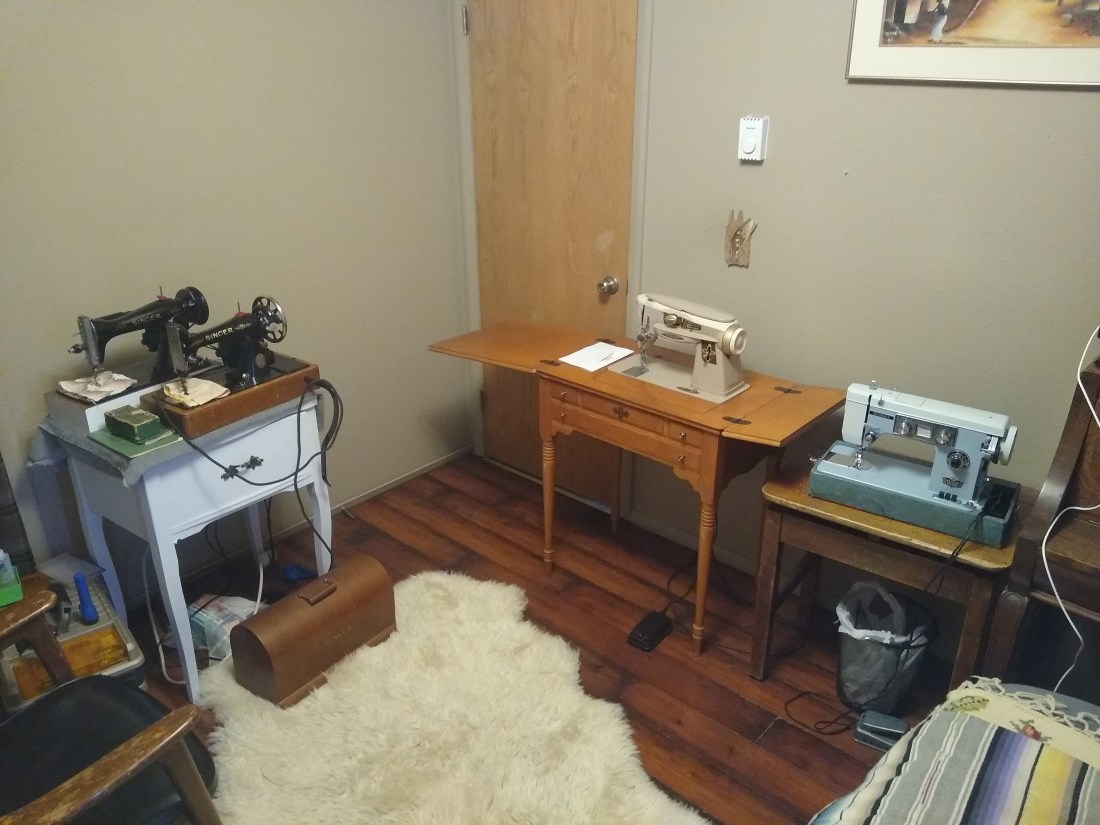
And I finally caught it. Covid.  It wasn’t a bad bout, probably because I was vaccinated and boosted and boosted again.  But I still isolated in my house, and away from my family.  Gramma hunkered in her house next door, and my adult son stayed with a friend.  Both my son and my mom had Covid before, and did not enjoy it, so they avoided me.  Doug lived mostly downstairs.  I, on the other hand, hung out upstairs, in the office and the sewing room.  Mostly the sewing room because the twin bed in there is way more comfortable than the chaise lounge in the office.  And by sewing room, I mean sewing machine room.  Let me take a moment to count the sewing machines.  Eight.  Eight sewing machines if you include the White up in the closet that is really a parts machine due to a broken gear deep inside its guts.  I am slowly, bit by bit, learning how to repair sewing machines, but I don’t do broken gears.  That would be the equivalent of open-heart surgery. I don’t do major sewing machine surgery. Yet.

When I am sick, and for me the Covid was like a bad cold, I don’t do creative work.  I don’t write poetry or essays because my brain is sluggish, as if it is filled with old varnished sewing machine oil.  But, when I am stuck in a room by myself with Facebook and YouTube, and eight sewing machines, I can definitely learn how to repair. My brain can still handle the step-by-step process of do this, then do that.  Seriously, I believe the only thing the internet and social media are really good for is showing us how to fix things.  And fixing old mechanical things keeps them out of landfills. Plus, it’s fascinating to learn how the machines work.

This week I fixed the Rocketeer.  I always wanted a Singer Rocketeer because they are so cool looking, as if the Jetson’s made a sewing machine.  That machine was giving me problems over the last few months, and I was really stuck and not progressing when working on it a half hour at a time.   But since I was basically locked in a room with it for several days, I had a whole lot more patience to watch you-tube videos to figure things out.  She now sews.  The bobbin winder winds.  And with the help of a vintage sewing machine Facebook group, I was even able to fix the broken hinge on her nose-door.  The machine’s name is Irma, because I found a cool handmade purse in the same thrift store as the sewing machine, and it had a label inside, “Made by Irma”.  Do you suppose Irma actually used that Rocketeer to make the purse?  Maybe.  Anyhow, I need to do some touch up paint on Irma, and a little cabinet restoration.  Then she is ready for a new home.  I thought I would love her, and keep her forever, but I love my other machines more.  Irma has to find a new home to make room for my next foster machine. 

Off and on during my Covid isolation, I also worked on my Dressmaker 2000 vintage machine.  She is strong.  She sews like a hungry draft horse turned toward home after a long trail ride: steady, focused, and nothing slows her down.  The Dressmaker does not have a name, but she is a keeper.  She did have a little problem with the bobbin clutch.  That’s the mechanism that stops the needle running when you wind the bobbin.  I tried to fix it while sick and isolated, but I couldn’t get the handwheel off.  I tried liquid wrench, heat from a blow drier, sewing machine oil, hammering… nothing budged it.  Eventually, after my isolation days were over, I made it out to a hard-ware store and bought a cool gizmo called a gear puller.  Once I figured out how to use it, the handwheel slid off smooth as a fried egg off Teflon.  Now that she does everything, the blue beast of a machine needs a name for sure.   Blue Bell?  Blue Beast?  Blue Whale? Dierdre the Dressmaker?  Maybe just Tank, because she sews over anything.  I shall have to think on it some more. 

I have three keeper vintage machines, and my son has two.  So, of the eight machines currently in the sewing room, I need to find homes for three.  The other machine I worked on while holed up was a Singer 15-90.  Gosh, it took some time and some serious internet surfing just to figure out what exact machine model it was. This machine is one of those old, classic, retro looking, black Singers.  A 1946 version with an electric motor.  We got the machine cheap, $13 at an estate sale.   After buying a belt, a new electric cord and foot controller, and some other small parts, we have $61 into this machine. My goal on these machine restorations is to break even, or to make a small profit to plow back into the machine rescue fund.  I’m not sure we will break even on this one.  But she sews nicely, and all the parts work, even the bobbin winder clutch.  This machine does not have a name, the next owner can have that privilege.

So the Rocketeer, the broken-gear White, and the 15-90 need to go.  Another machine I am keeping is Frankie, a gorgeous green vintage White sewing machine.  Frankie is short for Frankenstein because I brought her back from the dead.  She, along with the Dressmaker, came from a friends’ house when they were doing a big clean out.  Frankie was my introduction into the repair world.  Through Frankie we found a cool local repair shop that helped us with the final parts and pieces to get her running.  Machine repair takes a village.  

As I learned about all of the vintage machine types, I decided I really wanted a hand-crank machine.  This is a machine that is not electric, and rather than being in a big foot-powered treadle cabinet, it is a portable machine that runs by a hand-crank.  You crank with your right hand and guide the cloth to the needle with your left hand.  I don’t know why I’m so intrigued with those non-electric machines, but I am.  I finally found one locally, she is a Singer 99, and her name is Agent 99.  She works, no repairs were necessary.  Next time the electricity is out, I will be able to sew.  My son also has a treadle machine, a Minnesota, named Minny.  And he has another Singer 99, but it is electric.  That is my next project.  You begin to see why the sewing machine room is a little over-full right now. 

One would think I love sewing.  I know how to sew, but it’s not my passion.  I really like the machines, the engineering, and figuring out how they work.  In our throw away society this is a way I can push back and keep some wonderful machines out of the land fill.  If I can also repair some clothing, sew a boat cover out of tarp, or upcycle some wool sweaters, well, the more power to those machines.  Except for when we don’t have power.  Agent 99 has those days covered, too. 

I Felt Like I Could Be Again

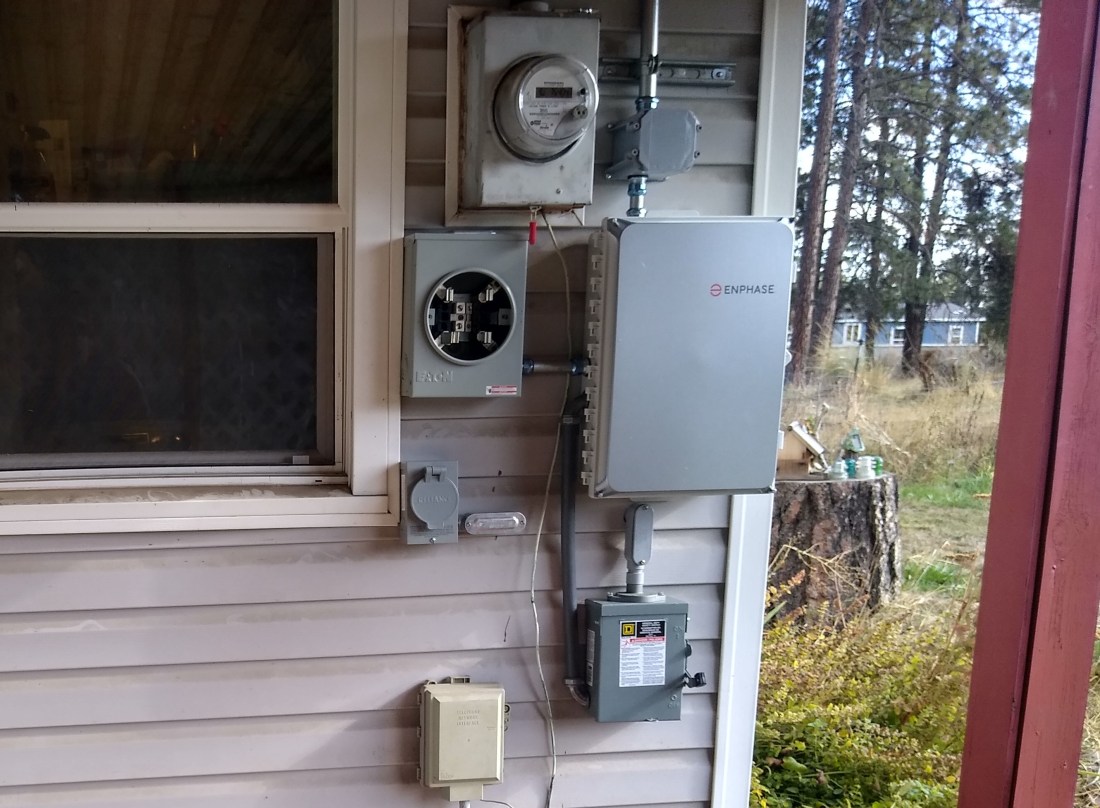
Yesterday was a day without electricity.  We are having solar installed, and the workers had to revamp and replace our electric panel.  No power in the house.  I planned ahead and laid out some paperwork to do, including voting.  My cell phone worked, and I could do a bit of internet surfing on a slow connection.  But seriously, it was nice not to.  Any googling on judges running for office could wait until the next day.  Netflix could wait. The day ran at a slower unconnected pace. 

I did some outside work, shoveling manure.  I decluttered a couple rooms.  I ran a couple errands.  But I did not feel tethered to the internet, constantly checking Facebook or watching depressing news headlines.  I felt like I could breathe for a day, with less worry.  

I wrote a card to a friend, the paper kind, with a pen.  I did use my computer for writing, running on battery power.  But writing is less a connection with the outside world and more a connection with my inner thoughts.  I felt like I could think again. 

We still had running water, because there was power at the well house, and we could still flush toilets.  We had heat upstairs, with our propane stove.  We had battery powered radios for music.  But we also had quiet, in between the clunking and pounding of the workers.  I felt like I could hear again. 

I opened all the curtains to let the light in, brightening the dark rooms with natural light.  I felt like I could see again. 

I plowed through a pile of junk mail and read some magazines.  I started a new book before my introspective day was done.  I felt like I could read again. 

I might institute days like this weekly, or monthly.  Turning off TVs and internet, and just being.  I felt like I could be again.

Granite

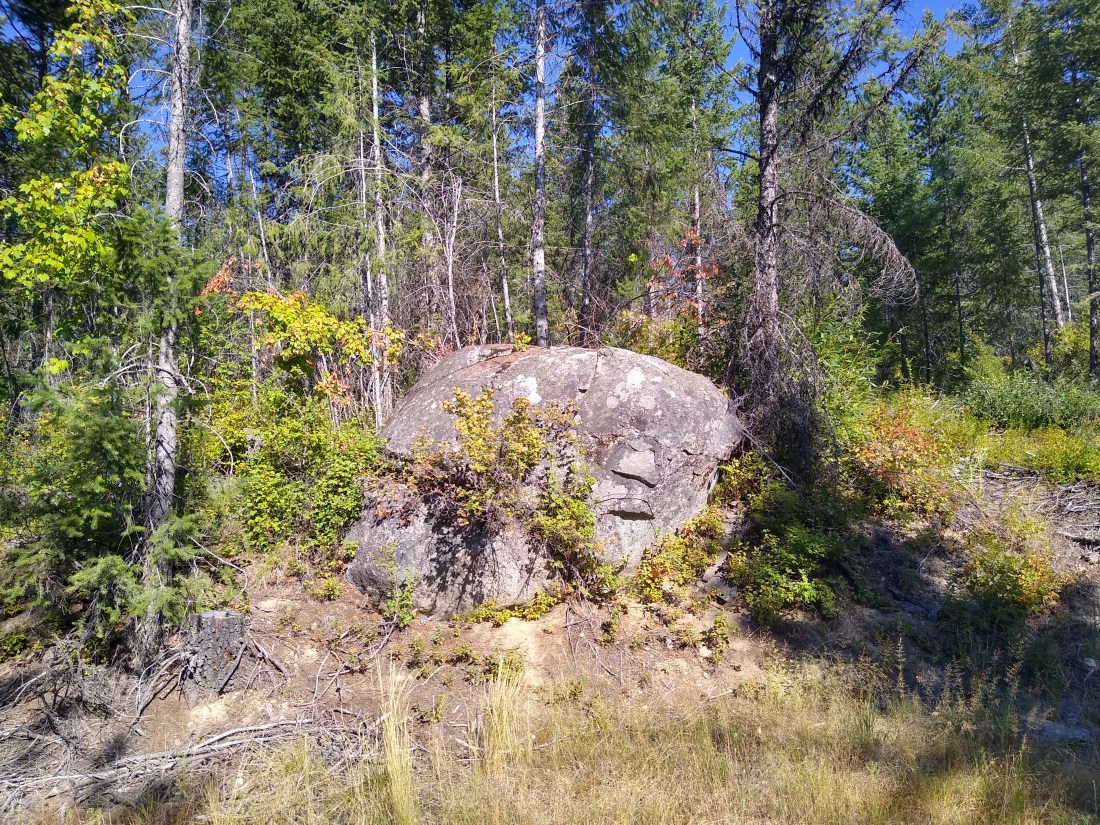
I am a glacial erratic.  Can you see that scratch on my lower backside, where the glacier pushed me across bedrock?  So heavy, it made a groove.  It itches, and I can’t reach it.  Sometimes the wild rose scratches me there; it feels good and green.  I came from the mountain, pushed down hill then carried over land.  I was dropped into this field of pebbles. The only thing I have in common with my neighbor rocks is our igneous beginning.   Sometimes I think I can smell the sulfur from the volcano that formed me, but it turns out to be smoke from yet another wildfire. I can see for a long way, from the past, then across that valley to the river.  I am here for the duration, too heavy to roll, unless they build a road over me, or there’s another ice-age.  Time is short, and long, when you are made of granite.  Just forming took an eon.  That journey was amazing, though.  Thrust up from below the mantle, then solidifying and cracking, a small piece of a big mountain. The glacier ride was a breeze, just 10,000 years or so ago, a blip in my lifetime.  Now I watch.  Seasons change.  Trees grow, trees die. Cougars used to rest on me, now the lichen grows.  Freezing and thawing rounds off my edges a granule at a time, but I figure I’ll be here for a while longer before I erode down to join the soil.