Here’s another article published by Northwest Horse Source. Thanks NWHS! I feel like I should be writing some blogs on some other topics, not just my silly horses. I’ll work on that. In the meantime, here you go!
Category: Uncategorized
Don’t Do Stupid Things
Thanks again to Northwest Horse Source for publishing my article! The link is below.
Book Review and Recommendation: Africa Is Not a Country, Notes on a Bright Continent, by Dipo Faloyin
I bought this book, because a sentence on the back cover stated that it “engages in the heated debate over which West African country makes the best jollof rice.” In the Gambia, the West African country where my husband and I volunteered in the Peace Corps, that dish is called “benachin”. And I could see why folks would argue over who makes the best version of that rich and savory rice and tomato dish. It is a delicious comfort food. While I might argue with the author about which country wins the cooking contest (oddly, he argues for his country of origin, Nigeria), I learned a lot about the ancient and modern history of countries in Africa from his book. Despite spending time in West Africa, I knew next to nothing about the history of the Gambia, and other countries throughout the continent.
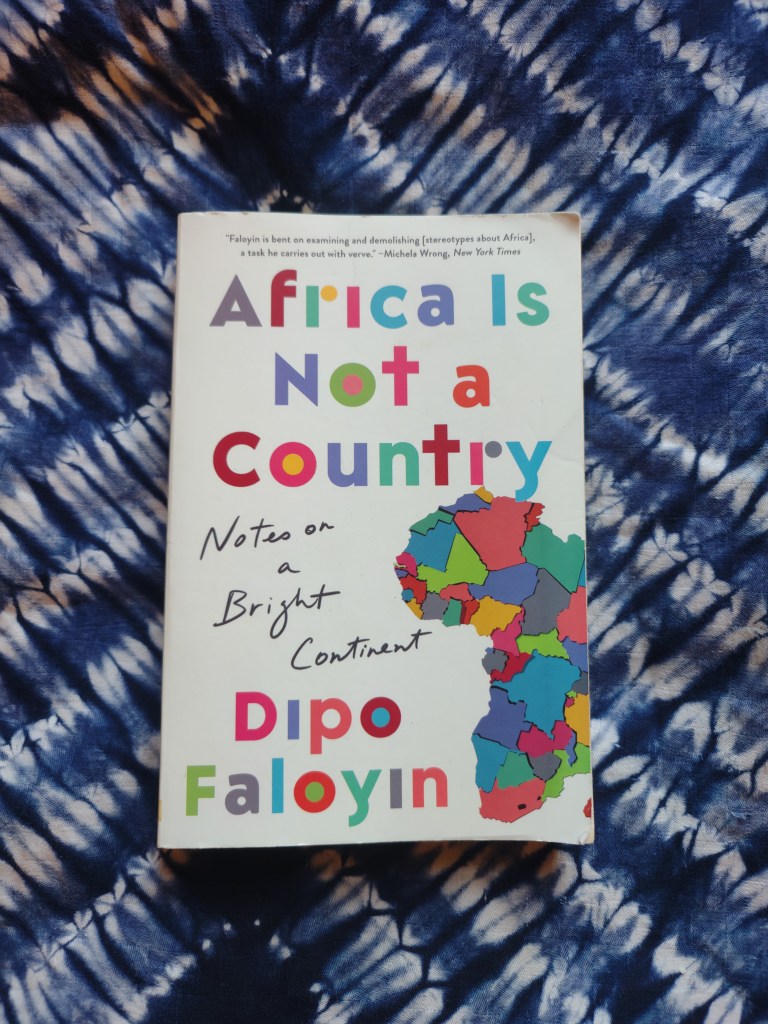
Faloyin details the history of how many African countries came to be, and how arbitrary their borders were (and still are). The borders were set up during a conference of European countries arguing over a vague map, and carving up the African continent for economic and power reasons. Those borders split ethnic groups and great kingdoms. It was a divide and conquer scenario, and the book shares the history of the cruelty and greed of the European governments and their proxy private companies and colonial governments. When the people in the individual African countries started gaining independence from their colonizers, they agreed not to renegotiate the borders, thus maintaining many of the historic tensions between ethnic groups.
Faloyin shares examples of heroic independence fighters, who became authoritarian dictators once in office. He discusses the continuing governing challenges, and examples of successes in governing. He notes the stereotypes we westerners have of Africa in general, and the push-back from the artists, writers, and movie makers across the continent, and from the African diaspora across the globe.
I learned a lot that I wish I had known before I went to the Gambia with the Peace Corps. I knew that France and Britain decided the borders of the Gambia and Senegal (and the Gambia definitely has an arbitrary boarder, ~10 kilometers either side of the Gambia River and completely surrounded by Senegal). But I never fully understood the strange challenges of having many of your relatives and ethnic groups separated by borders, and having a nation forced on you. Emphasis on force.
I highly recommend this well-written, funny, entertaining, and thought-provoking book. While I don’t typically gravitate toward books of history, it completely pulled me in. The history is fascinating and explains and describes some of the continuing challenges, and also successes of various countries across the vast continent of Africa.
To Ride or Not to Ride (That is the Hardest Question)
Northwest Horse Source was kind enough to print another article of mine. The link is below.
How to Dress For Success
Thanks to Northwest Horse Source for publishing another article of mine! Please take a look. Here’s the link:
A Letter to My Rookie Self
The Horse Rookie website has a series for a “Letter to My Rookie Self”. I sent in a letter from my 61 year old horse person to my earlier 14-year old horse person. They were kind enough to publish it! Enjoy!
Poetry Reading August 17
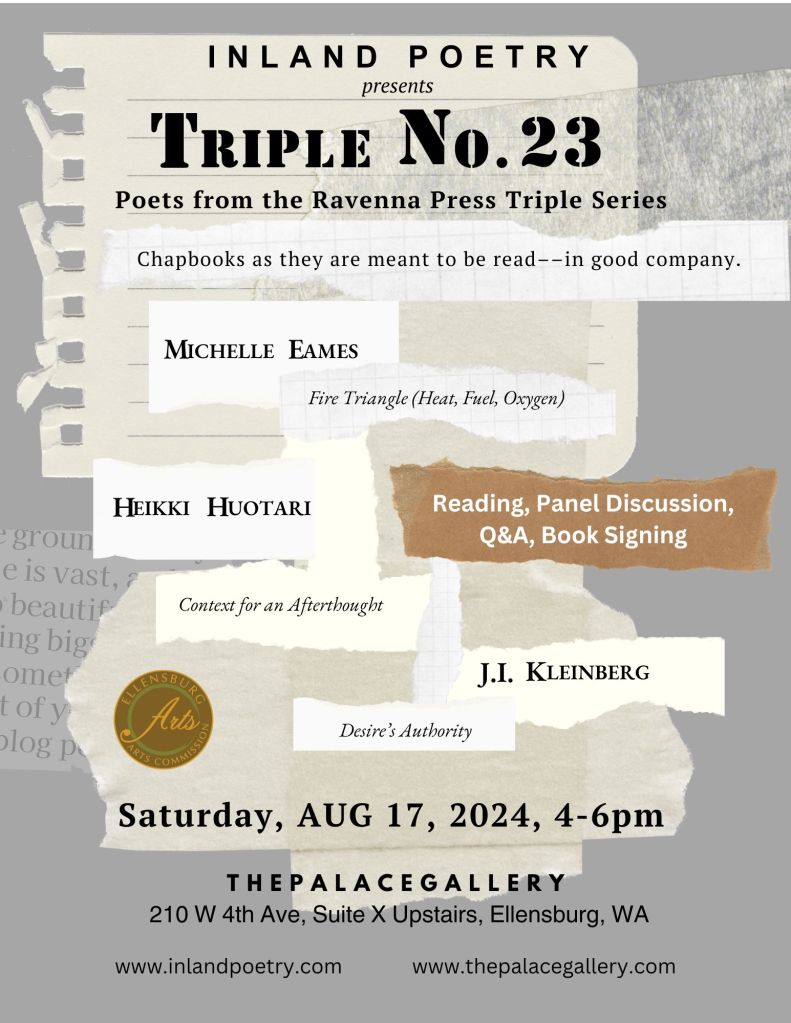
On August 17, 2024, Inland Poetry is hosting a reading for poets of the Triple No. 23, in Ellensburg, Washington. This will include me and my portion of the book: Fire Triangle (Heat, Fuel, Oxygen). If you’re close, come and join us!
Don’t Act Like a Horse
Thanks to Northwest Horse Source online magazine for printing my article, Don’t Act Like a Horse. Here’s the link:
Overalls Beat All

Mary Jane’s Farm magazine has published a new article of mine, Bird Music, on p.26 in the August-September issue of the magazine. This issue is on newsstands now, take a look!
I can’t share that article from the current issue yet. Instead, I’ll share my last article, Overalls Beat All, that was published in the June-July issue of Mary Jane’s Farm magazine.
Overall, it was a rough time when I broke my arm after that unplanned dismount off my horse. It was my right arm, my dominant hand, and simple things became difficult. Especially buttoning and zipping up my jeans. Oddly, that season of the broken arm, when I was less active, my jeans started shrinking, becoming even harder to fasten. Why do jeans do that to us?
Long ago when my oldest son was little, I had a pair of bib overalls. The cool striped ones, like farmers wear. Or railroad engineers. I even had the matching railroad-style hat, and a wooden train whistle. One must respect the whole outfit, especially when raising boys. I would wear those loose-fitting overalls often and I usually left one of the over-the-shoulder straps undone. Because why buckle it when I’ll just have to undo it later when I go to the bathroom? Bib overalls stay up fine with just one strap.
My mom remembers visiting during that time and dressing my son, a toddler, in his own little overalls. She started to fasten the second strap over his shoulder, when he clearly told her, with a few mispronounced words, that it wasn’t done that way. Overalls were to be worn with only one strap. Like mother, like son.
Flash forward again to the time of my broken arm. I no longer had overalls, and was wearing stretchy pants, sweatpants, and even slacks, because they were easy to pull up and fasten with one hand. I’m really not a slacks-wearing girl these days, and the wind blows right through those lightweight pants. I missed my jeans. I mentioned to my family how overalls would work well given my limited dressing abilities.
My husband searched all over town for overalls in my size, long length. He found some plain blue denim overalls, gave them to me as a birthday gift, and they actually fit! I was happy to have them, and of course only used one shoulder strap, because that is the way we do things in this house. Also because of laziness, and because I only had one working hand. I wore those new overalls for a week straight. Then my husband surprised me with another pair of overalls: purple, with vegies printed all over them! I will be dressed in the height of style while gardening this year.
Now that my arm is recovering, I’m back to jeans, at least some of the time. But I’m still wearing those comfy overalls with one shoulder strap undone, sometimes on purpose and sometimes because the one side doesn’t clip very tightly anyhow. A few times my friends have reached over to fasten the clip for me, making me laugh. I guess they don’t recognize a fashion trendsetter when they see one.
[Photo credit: pexels.com]
How to Plan a Trip, Without Really Planning
There are many things I am good at. Such as procrastination. I am also good at doing things at the last-minute. Having a rough day and needing a glass of wine with little notice? I’m your gal. But planning ahead, especially far ahead, is not a skill of mine. Planning dinner parties stresses me out (unless it’s last minute, and potluck, then I’m great).
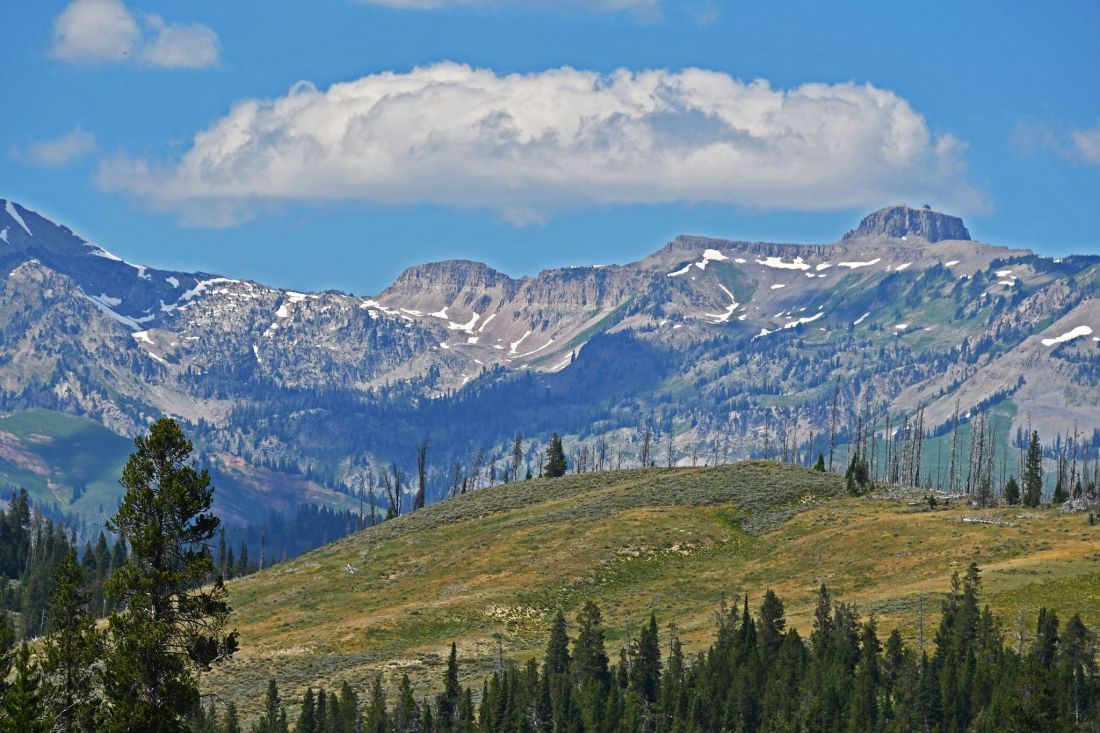
So how then do I plan long trips or exotic vacations? I let other people do it! I just got back from a week-long trip to Wyoming. It was a long time in planning, and most of the planning was done by my travel-partners-in-crime. My friend Katy found a forest service cabin with horse corrals and rented the four-nights. It was a location half-way between my house in Spokane, and Katy’s house in Colorado. Katy made the cabin reservation months and months ago. She knows how to plan.
Cindy, my road-trip-travel-partner, found and made reservations for lodging at our half-way point in Deer Lodge. That’s why they call it Deer Lodge, because there is lodging. Actually, there is very little lodging there, but we still got a room.
I did have to find horse-boarding for my horse, since initially I had planned to bring him, but didn’t want to haul the whole trip in one day. I found the horse lodging by checking in with one of my Facebook groups that had a lot of good-hearted horse people on it. One of these friends recommended the overnight stable in Deer Lodge (maybe it’s really named for horse lodging?). Turns out, for various reasons I didn’t haul my horse… okay, it was just one reason, the stupid broken-arm-recovery-period. Anyhow, even with just a passenger car, we still stayed in Deer Lodge, because it was halfway into the 10-hour drive. And 10 hour drives through our western states somehow turn into 12-hour drives or more.
You might now be thinking that I contributed next to nothing toward the trip planning and relied entirely on the good graces of my friends. And you would be mostly right. Except for the food part. I planned the food, bought the food, and packed the food. Once I was there, I cooked dinners, and made sure folks had choices for their breakfasts and lunches. Why didn’t this stress me out like dinner parties do? Because camping food is simple, and easy. It’s more like pulling things out of the pantry, and people just showing up and eating. Plus, I got to practice my Dutch-oven cooking. Usually when horse camping, I am too tired to put the time and effort into Dutch-oven meals. But I wasn’t riding; Cindy and Katy were, so I made one Dutch-oven dish. A fudge cherry cake. It was yummy. It’s my specialty. And there’s fruit in it, so it’s good for you.
I admit that I have, now and then, planned whole trips ahead of time, and those trips turned out fine. But I really don’t enjoy the planning part. It’s way more fun when it’s a group effort and everyone does one part of it. And I bring the makings for dessert.
[Photo Credit Cindy Miller]
Note: “The name “Deer Lodge” comes from the Deer Lodge Mound, a 40-foot-high geothermal formation at the site of present-day Warm Springs State Hospital. The mound’s shape, with steam issuing from the top, resembled a large medicine lodge, and minerals in the water attracted large numbers of deer, so Indians in the area referred to the then-prominent landmark as the Deer Lodge.” Source: https://www.fs.usda.gov/main/bdnf/about-forest
 Michelle Eames