I was interviewed on Julia Daily’s podcast, Authors Over 50. It was like talking to an old friend. I hope you enjoy the interview about my first book, Riding Lessons, Things I Learned While Horsing Around, and my writing life and process in general. It is on youtube, and you can find it on the links below, or look for the Authors Over 50 podcast on Amazon Music, Spotify, Apple Podcasts, or Google Podcasts.
Category: Uncategorized
Article in Northwest Horse Source
Thanks to The Northwest Horse Source online magazine for printing my article, Shoveling Manure Adds Up. See the May issue of the magazine here (article on page 2). https://nwhorsesource.com/may-2024/

Growing Old is Not for the Faint of Heart…
But it’s better than the alternative. An old friend used to say that. I’m understanding it more and more.
I still find it hard to believe, but a week ago I fell off my horse and broke my arm. Again. The left arm this time.
It was just a spook, a quick forward move that I can usually ride. And it was just a fall onto grass, a fall I have done in my home pasture many times before. It usually hurts, but I don’t usually break. These are new times in my life with horses.
I have gotten support, advice, and help from friends and family. The most obvious advice is never to ride bareback in the spring. Or never to ride bareback, period, since I’m old, and my balance isn’t what it once was. But I’ve also heard of other riders with injuries and falls this spring. More than one of us are spending the spring healing. It’s weirdly reassuring that I’m not alone.
The support has come in many forms. A friend helped me haul my horses to a vet appointment this week, while I pointed and advised and told her which of my look-alike fjord horses was which. Other friends offered any help I may need. My husband and son have been waiting on me, feeding me, and feeding the horses. My poodle, Cookie, has been keeping me company on the couch. The cats, however, have been indifferent and aloof.
It’s been a wakeup call, that I cant ride and play like I could when I was 16. Or 26. Or even 56. Horses have been the place where I can find my inner teenager, and just goof around. Now it’s the place where I have to find my inner cautious senior citizen. Safety before fun. The saddle is my friend.
I want to get through this healing journey quickly, but it was a displaced break, and will take time. Surgery, screws, and plates were involved. It’s hard to live in the moment, when I want to fast forward and figure out what kind of therapy I need and start exercises to get stronger. Instead I am forced to embrace the wisdom and patience of age, and breathe through the tweaks of pain. Because it’s better than the alternative.
[photo credit pexels.com]
Rain Coats and Feeling Oats
Mary Jane’s Farm magazine once again was kind enough to publish an article of mine: Feeling Her Oats, p.26, in the April-May Issue. This issue is on newsstands now and has several horse-related articles in addition to the usual fun and interesting farm, garden, and cooking articles. It’s a great issue!
I can’t share my article from the current issue yet. Instead, I’ll share my article, Rain Coats, that was published in the last Issue (Feb-Mar) of Mary Jane’s Farm.
Rain Coats
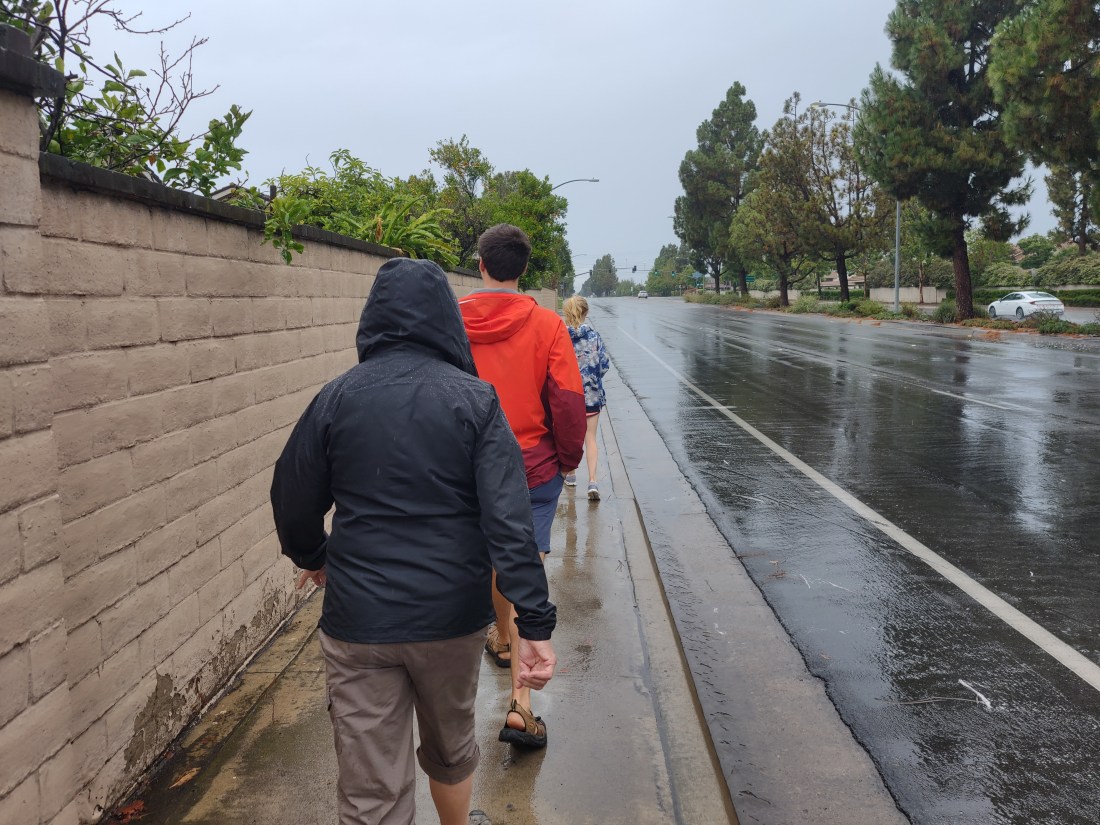
Where I grew up, it was all about the rain. We had spring rains, summer rains, fall rains, and cold winter rains. Rain at 34 degrees is so much colder than snow at 32 degrees. It’s so wet! As a kid I would put on my coat with a hood and stand under roof lines or gutters. I would close my eyes and imagine I was standing under a waterfall in the jungle.
We rarely used umbrellas, they just got in the way. When I moved to Seattle for college, I had to get an umbrella. It was for self-defense, to be used as a buffer. As a tall person on sidewalks full of mostly shorter people, other umbrellas came at me at eye level. Walking on crowded sidewalks between classes was dangerous, you could lose an eye! Umbrellas are challenging though; one has to remember where you left the dripping wet umbrella when entering a building and remember to pick it up again on the way back out. I lost many umbrellas by walking out a different door. Some days in Seattle were two-handed-umbrella days, with wind strong enough to invert an umbrella. They rarely went back into shape. Those days, a raincoat with a hood was better.
I eventually became a bike rider, and changed my foul weather gear to a rain poncho and rain chaps. Did you know that bikes without fenders toss up a line of muddy water on your backside during rainstorms? Fenders are necessary.
My husband and I eventually landed in Eastern Washington, on the edge of a desert. Instead of year-round rain, we get regular thunderstorms. There is so much drama: a dark bank of stacked clouds, then a breeze, then a gale ahead of the storm, crack of thunder, flash of lightning, and if we are lucky, a downpour. If we aren’t lucky, wildfires. We can even have thunder-snow in the winter. I love thunderstorms, they don’t usually last long, so you can often avoid being out in the downpour. But I still enjoy popping outside with a raincoat and a hood, listening to the rain drum down on my head.
My raincoats got better over the years. I learned that boaters and fishermen use entirely waterproof rain gear made from a thick plastic-type fabric. Those work great for horseback riding, too, because you aren’t exerting too much. But for hiking or walking, Gore-Tex raincoats work the best, they are effective at keeping rain out and breathable to let sweat out.
When I visit cities, though, I want something with style. I’ve always looked for, but never found, a bright colorful flowered raincoat. Preferably on sale, or from a thrift store. I found a cool rain hat once that turned out to leak like a sieve when used in the rain. I did find a black jacket with a hot pink lining and a pink zipper. That would have to do for my city coat until I found something brighter. I took that jacket with me on a trip to San Diego and tested it in a tropical storm. It is not a good rain jacket, it’s more of a rain sponge. It took two days to dry out after a walk in the deluge. The hunt is on again, for a bright and cheerful raincoat, preferably with flowers, that actually repels the rain. And once I find the right jacket, I will need to plan a trip to an exotic locale, maybe with a jungle and a waterfall, to test out my new coat.
A Leap in Time
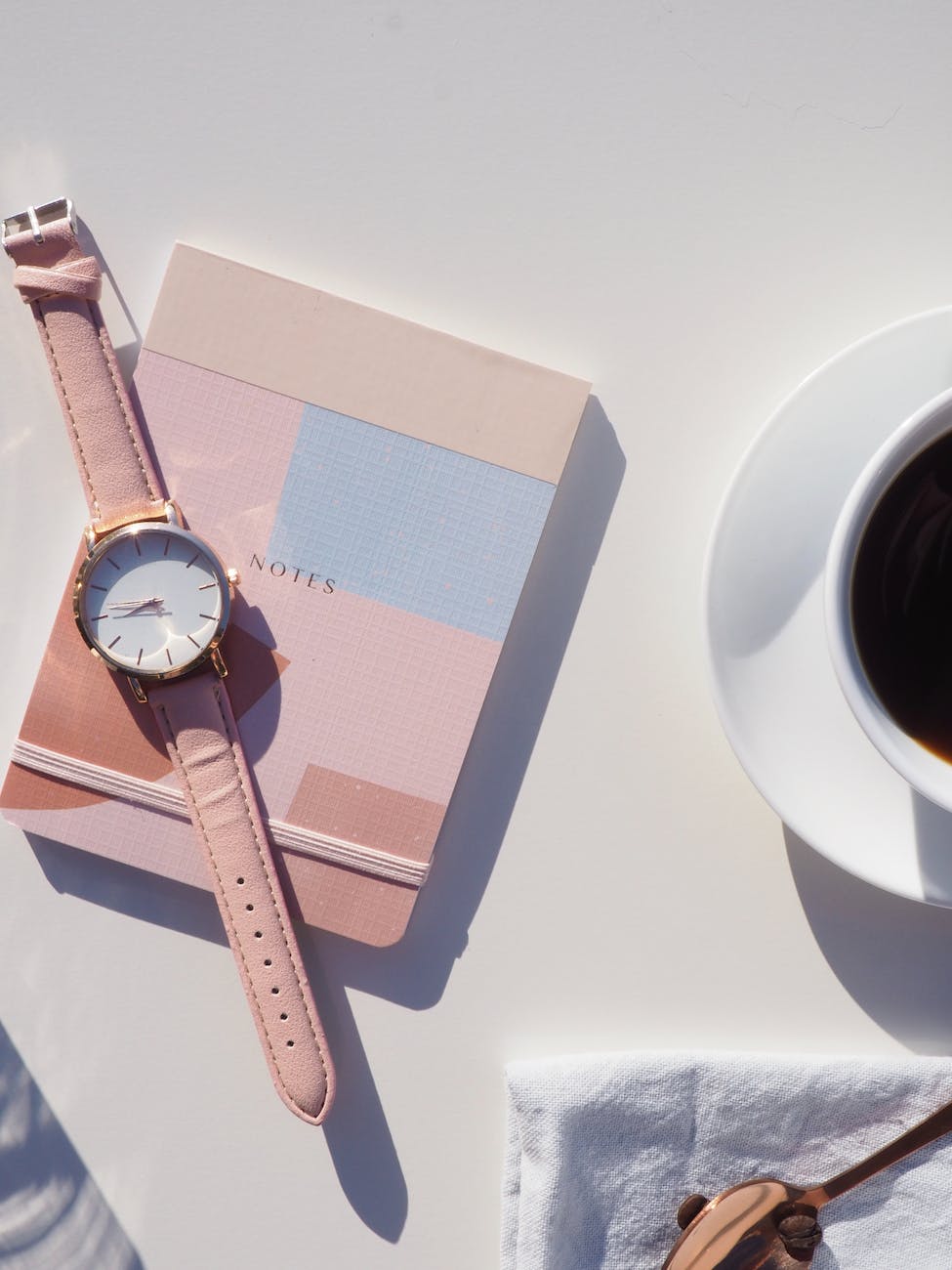
This essay is a blast from the past, written way back when, when the kids were little, and I was juggling all aspects of a working mom’s life. Also, I was wearing a watch, not relying on my phone for time and date, so that tells you how old this piece is. It does seem appropriate for February 29 on a leap year.
Ten minutes off my morning schedule pushes the kids twenty off theirs. Any blip in routine has an exponential effect on their morning. If they don’t get going on time, I don’t get going on time, and we’re all late. It’s leap year and the calendar says March 8, my watch says March 9, it’s been off for more than a week and I have no idea how to reset it. It doesn’t really matter, since between work, kids, and gardens I can barely keep track of days anyway.
I can tell the seasons by the sun and the weather, but the days of the week confuse me. Christopher asks me each morning, “Is it a stay-home day?” I have to think. I rewind yesterday for hints of today. Do I have a meeting? Did I get up early enough to drive to wherever I’m supposed to be, by whenever I’m supposed to be there? Do I have time for a coffee on the way to work? Must I get to work on time, or will a few minutes late go unnoticed? If my muscles hurt from too much yard work, it must be the weekend. Or Monday.
Christopher gives up on my thinking frown and goes to ask his older brother. Mac knows the days, he knows the schedule, and he can do math in his head. He could probably reset my watch if I could remember to ask him. I remember my kids’ ages, but not my own, and I have to think twice about their birthdays. Mac’s is so symmetrical, born at 4:27 pm on April 27th. Or was it 4:28 pm on April 28th? Christopher’s is May 9, I think, or that’s our friend Amber’s, and his is on May 11.
After juggling five days of work, schools, and music lessons I live for the weekends when I can slow down. I like to watch plants grow. This week the cactus seeds started in their tiny terra cotta pots. Last week Johnny-jump-ups. I pretend to grow seeds for the kids’ education, but it’s really for the magic. Who knows what kind of cactus will germinate, or which ones will die from my kind over-watering. The Farmer’s Almanac recommends following the rules of astrology and planting when the moon is in Cancer, Scorpio, or Pisces. But I simply use the paper calendar sitting by our table-top nursery with its calm rhythm of days printed on a grid. It’s almost too late to start the peppers; less than six weeks until the last average frost date. The earth, the sun, and the moon still tell the plants to grow, the tides to move, the days to shorten, or to lengthen. They give seasons of fasts and seasons of harvests. There is the day to plant the squash when the nights remain above 40 degrees, the day to rest on a lawn chair when the afternoon first reaches 70, and the day to cover the tomatoes when the first frost threatens in fall.
Why do we have a leap day to add confusion to my barely coping routine? Leap day of leap year, the extra day added to make our calendar match the Earth’s orbit. The Romans had the Julian calendar; Julius Ceasar borrowed it from the Egyptians. But it wasn’t quite right; they had to keep adding leap days. In 1582, Pope Gregory the XIII put his best people on a review of the calendar, and implemented a more complicated leap day system, skipping the leap days on most of the beginning century years. But to get the holidays back on schedule, they had to adjust by about 10 days. Catholics at the time fell asleep on October 4, and woke up on October 15. Eleven days in a single night on the word of a pope. A loss of eleven days in the harvest month to gain the Gregorian calendar. What’s in a day, be it Sunday, or a week from Wednesday? Today if the church or the government took away our days we would protest, not for the artificial shortening of our lifespan, but for the permanent loss of one weekend. Two less days of rest and kids and gardens.
Then there is the day to go on daylight savings time. Another confusion of timing. One more disruption to my diurnal clock. One more challenge to getting the kids up and out on time. And my darn watch again. Each spring, I plant seeds to grow into violets and then forget to water them. Time and my memory can be the driest peat. If I studied the theory of relativity, I’m sure I could really have time figured out. Or I could let someone else do it, who has more time and inclination, someone who can do math in his head, and then write a book that simplifies the theory to plain English. Then I’ll read the book, in my spare time. Right after I read the owner’s manual for my watch.
One day I gained a quarter of an hour. That morning, I left my house at 7:45 for my half-hour drive to work and arrived at 8:00 am. Where did those 15 minutes slip in from? Where is that time warp on Interstate 90, and how can I hit it again? If I could just find those extra minutes each day, I promise I wouldn’t waste them. I’d spend them usefully and efficiently; I’d put in a load of laundry or tidy up the kitchen… or more likely I’d just have another cup of coffee, read the paper, and still leave late for work. Whatever the time of the morning, the name of the calendar, or the day of the week, I’m always waiting for the next thing, the next season, the next birthday, always reading ahead. Some days I need to remember to stop looking at my watch, finish my coffee, hug my kids, and go outside and pull the weeds.
[Photo credit pexels.com]
Reading at Well-Read Moose on March 6
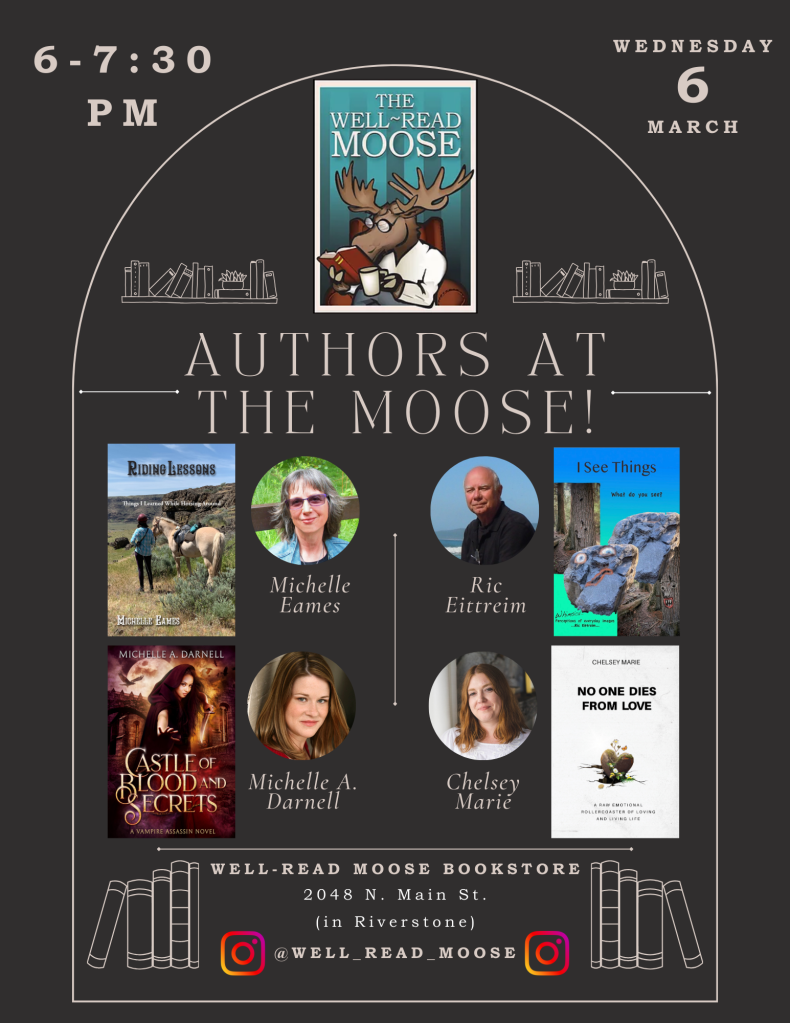
I’m excited to be one of four authors giving a short reading and Q&A at the Well-Read Moose in Coeur d’Alene, Idaho, on March 6, 2024, at 6PM. Come and listen and find some new books! You can never have too many books.

What’s the Buzz about the Third Person?
First there is “third person” as a point of view, where the writer is the narrator and tells a story using the names of people, and the pronouns he, she, or they, in the text. “First person” is from my point of view. I am my favorite narrator. There is also “second person”, where the author is writing about you, the reader. I find this a confusing way to write, and I’m sure you’ll forgive me for not going into detail on that point of view at this time.
Second, there is “third hand” where information is passed on through several sources before reaching you. Third hand information can be unreliable or exaggerated, like the game of gossip. While looking up a few definitions for this blog, I also found another kind of third hand, a robot-like stand with clips to hold things still while working on them. I kind of want one, I figure I can always use another hand around here.
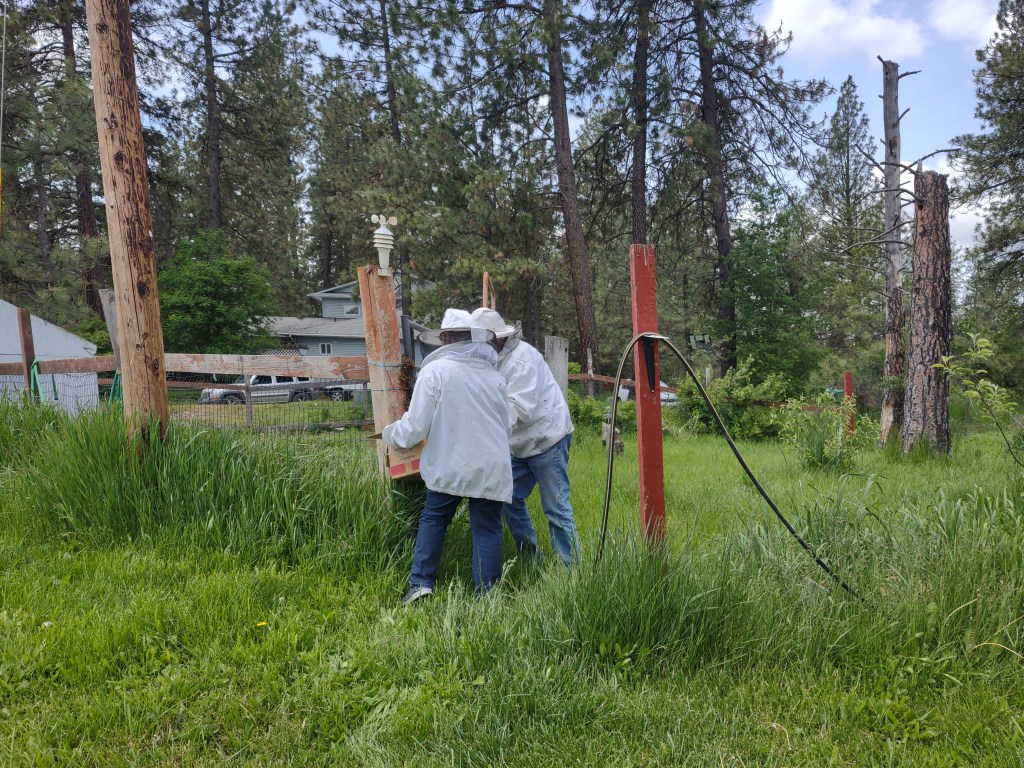
Finally, there is the “rule of the third person”. I learned this rule from my husband, a wildland firefighter, that worked in the forest a lot. The fire crew typically walks single file on their way to a work site, or an active fire. The third person rule is relevant to bees and hornets. The rule goes like this: The first person walking close by a ground nest or hive wakes the bees up. The second person walking by a ground nest makes the bees mad. The third person gets stung. A lot. Anyone after the third person runs like hell away from the angry bees hopefully avoiding being stung.
I think of this rule regularly during hikes or rides in the summer, since I tend to prefer being at the end of the line in a small group of people or horses. There comes a point in summer, we’ll call this bee season, where we minimize off-trail riding just in case there is a bee’s nest under the logs our horses are stepping over. Or, if we still are determined to go cross country in late summer, I will guide my horse in a different and parallel path from the others, so that each of us is only at the first stage of waking the bees up, hopefully avoiding the third stage of angry bees. I also watch the ground a lot, looking at flowers, mushrooms, and watching for dark buzzing insects crawling out of holes.
I’ve yet to be on a horse stung by a bee, or bees, while riding, but I’ve seen it happen, once with some not-very aggressive bees. My friend’s horse reacted to stings by hopping around, but the rider rode it well, and lived to tell the tale. I have however, heard (third hand) stories of yellow-jackets or hornets attacking several horses at once, with resultant bucking, bolting, and dumping of riders. I’m crossing my fingers that this doesn’t happen to me, or if it does, that my stoic draft pony will not react too badly.
In the meantime, maybe I need to change-up my perspectives a bit and try to be the first person on the trail and let someone else bring up the rear for a change. The second person might be you, followed by the third victim, I mean person. Hopefully the third person will be alert to the buzz and choose her own path with her unique point of view.
[photo credit: pexels.com]
Note: I actually appreciate all of the bees, wasps, and hornets, though many I prefer to keep at a distance. They all have their place and their jobs in nature. Of course, my favorite bees are the fuzzy native bumble bees, that will sting if they have to, but are usually not aggressive. They are necessary for pollination of so many plants. Learn more about bumble bees here: https://www.xerces.org/publications/identification-and-monitoring-guides/bumble-bees-of-western-united-states
It Was Cold Fur Sure!
It’s funny how horse people start talking about horse blankets as soon as it gets a little cold. There are different philosophies about blanketing horses in the winter, and there are many good reasons to blanket—but my fjord horses don’t need it. Their fur is thick and long, and if you snuggle your fingers into their puffed-up fur on a below zero-degree day, it feels toasty warm. They don’t complain, they are made for cold. They do tell me that they need more food, though. They also tell me the same thing in the summer.
You would think it would be the same for one of my barn cats, Squeaky. He also has a thick coat of fur; it looks as thick as the fjord horses. But once it gets cold out, say below 20 degrees, he moves into the house at night. Maybe his feet get cold. But he comes in grudgingly, spending a bit more time each day. He really dislikes being contained. I’m sure he’s claustrophobic. He is torn between freedom, and warmth. Eventually warmth wins. In the coldest of cold weather, he claims his place on our bed. But he doesn’t sleep through the night. And when he gets up to eat, or use the litter box, he tells us about it. He meows in his squeaky voice. He requests our presence at two in the morning, to make sure his food bowl is filled, or to open the door to let him out before he instead decides to run back upstairs. Or sometimes he just wants a little comradery, a quick pet before allowing us to go back to bed. Often, I don’t really mind the short late-night visits with the cat. I don’t sleep well anyhow, and I’m okay with a walk around the house in the middle of the night. It’s an excuse for a drink of water, or to use the toilet, or to peak at the thermometer– and really, it’s very calming to pet a cat in the middle of the night. Although I admit it would be a lot more calming if I didn’t have to leave my warm blankets to do so.
On the fifth night of the recent arctic blast, I think Squeaky was starting to go stir crazy. He woke me up around midnight, so I could check his food bowl. He woke me up a bit later, to pet him. And then he spent some time chatting with the dog. Eventually he got my husband up at two am, or maybe it was three. My husband will typically catch the cat and shove him out the door, but Squeaky is sneaky and will instead run away back to the bed. There were so many meows that night, I almost feel like he was serenading us, or telling us stories about mouse-catching adventures outside on warm summer nights. Unfortunately, Squeaky does not have a melodic lilting meow. As you might guess from his name, his voice is harsh and off-key.
I think my husband and I were going a little stir crazy with the cold snap, too. Because neither of us got mad at the cat waking us up multiple times that night; he just made us laugh. When Squeaky does decide to spend a few hours straight in the bed, he is the best snuggler, curled up in a ball tight against our legs. He doesn’t even mind being shifted to one spot or another, as long as we pet his warm silky fur in the process. He gives us several meows in thanks, letting us know he appreciates those middle of the night check-ins and our short conversations.

The Snow and the Rain
The new Mary Janes Farm issue for February-March should be out today. I have an essay published in the issue: Rain Coats. There are several nice essays in the “Keeping in Touch” section, in addition to mine.
Below is my essay from the last issue, if you didn’t catch it in the magazine. It’s perfect timing to share, since we are supposed to get some serious snow tonight.
Snow Secrets
There is something completely satisfying about finishing the outside chores during winter evenings, then retreating inside to the warmth. Chores like making sure the horses are fed and bedded down, the water troughs are thawed, or just that last evening barn-check under the stars while taking the dog out for her late walk. The winter nights are so quiet, especially when it’s snowing.
I remember one night when the snow was falling gently, then coming down hard, then dumping even more. Soon we had six inches in the driveway. Usually, my husband volunteers for the snow removal duties, whether by shovel or snow-blower. I always thought it was just because he was a good husband, and it was a heavy and time-consuming chore. That evening, he was out of town and the snow clearing would not wait; I needed to get the car out in the morning. My boys were little, but old enough to leave unattended for a bit with books and toys to occupy them.
After dinner I dutifully suited up in snow pants, boots, hat, and mittens. I briefly considered the snow blower, and then looked at the texture of the light and fluffy snow– a shovel would do for this task. I grabbed the snow shovel, frowned at the expanse of driveway, then started in. I prepared for heavy work and sore muscles.
The first slide of the shovel across the driveway was smooth, like dipping a spoon in soft ice-cream. The snowflakes continued to fall, sparkling like sugar in the porchlight. I slid my second shovel path across the driveway, tossing the snow up at the end. There was only the sound of the scraping shovel. No kids, no TV, no cars driving by. I pushed the shovel again across the driveway, noticing how bright the snow was, with subtle colors of blue and gray softening nearby fence boards in the night. Soon I had my rhythm going, making steady progress down the driveway. Few of my jobs at home or work have such visible progress, this was an exception. Each push of the shovel made a difference, soon I was halfway through. I took my hat off. The night wasn’t too cold, and snowflakes landed on my eyelashes. I tasted the snow on my lips. I paused a moment, leaning on the shovel, and looked across the yard to see the horses watching me from their warm clean stalls. I took several rests, not because the work was so hard, but because the night was so serene. Bright snowbanks grew in the gray dark, a toss at a time. The air smelled clean and cold. I finished the job quicker than I expected, doing the barest minimum so I could get back inside to the kids and the warmth. But I hated to leave the stillness.
I discovered my husband’s secret that night. Shoveling light snow on a winter evening is a delight. Later that winter, I learned that snow-blowing had its own kind of repetitive satisfaction, guiding the machine while chewing through deep snow, watching it spray to the side. That winter though, our snow falls added up, and the delight of the job faded with time, weighed down by wet heavy snow. The work got harder and harder as the snowbanks grew higher and higher along the edge of the driveway. But I still remember that first snow, glittering and sparkling around me, flakes floating down and decorating my mittens on the shovel-handle, all sounds absorbed in the soft mounds of snow.
Happy New Year and Happy New Book Year!
My fire poems are finally published! Ravenna Press has published Triple No. 23, with poetry chapbooks (short collections) by three poets (including me!). I was so happy to receive a box with my copies on the Winter Solstice. It definitely brightened the longest night of the year. Read on for details, and how to get copies.
My section of the book is titled Fire Triangle (Heat, Fuel, Oxygen) and includes 16 poems related to fire and wildland fire fighters, with several accompanying illustrations titled Arbitrary Borders by John Burgess, a graphic artist.
The second section of the book is titled Context for an Afterthought with prose poems by Heikki Huotari.
The third section of the book is titled Desire’s Authority with poems by J.I. Kleinberg. This poet from Bellingham, Washington, writes collage poems, created with fragments of magazine text. (They’re pretty cool; I might have to try some.)
How to get copies:
Option 1: If you would like a signed copy of the book, you can message, comment, or email me, and we’ll figure out the best purchase process. The book is $12.95, and shipping within the U.S. is $5.00. But if you’re close, I can deliver or meet you somewhere. I’m happy to provide copies until I run out. Note that this option is the only way I get a bit of money, because, well, poetry.
Option 2: You can order the book from the publisher, here: https://ravennapress.com/books/series/triple-series/
Option 3: You can ask your local bookstore to get you a copy. And maybe they’ll order extras. And maybe lots of people will buy them, and maybe we poets will be famous!! But not rich. Because, well, poetry.
Option 4: It should be available on Amazon, too.
Again, Happy New Year and I hope you read lots of good books this year, including some poetry.