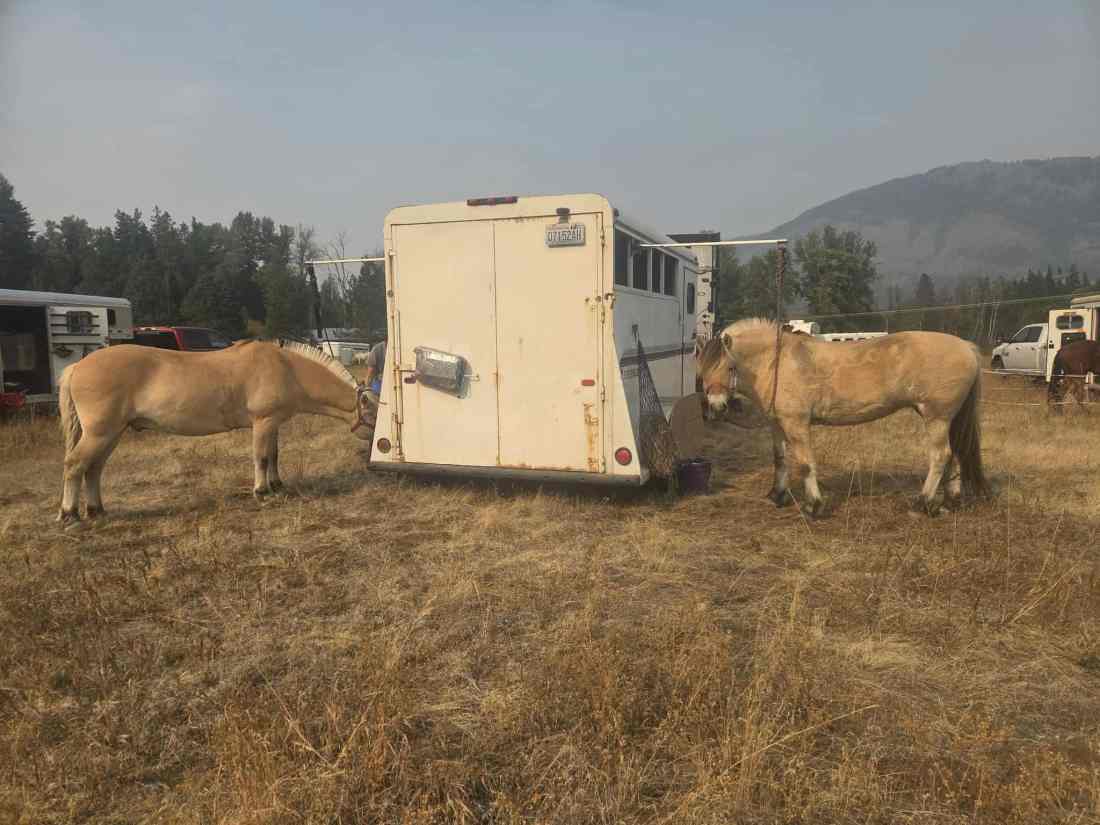
Uncle Vali’s Thoughts on the Big Ride

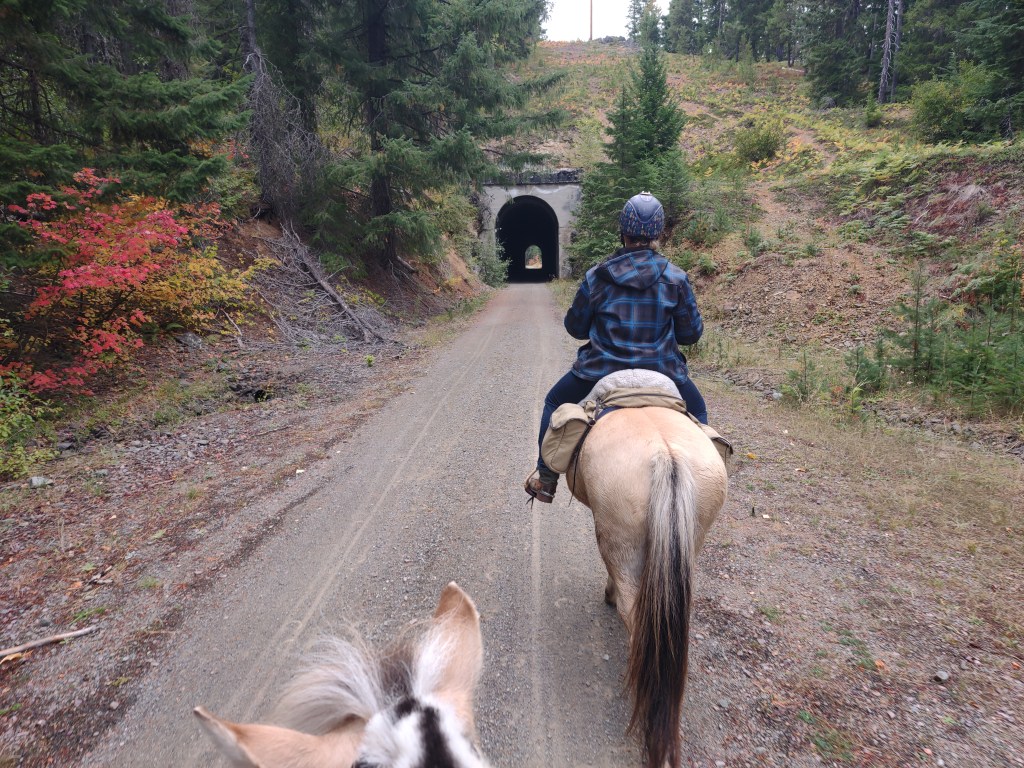
I’ve been quiet on my blog lately, mainly because I’ve spent a lot of time getting ready for, and then finally riding, a four day, 65-mile trip on the Palouse to Cascades Trail.  The ride was organized and facilitated by the John Wayne Pioneer Wagons and Riders Association. There were so many topics to write about during this time, such as: preparation and fitness for horses and riders, gear to pack, revamping my camper to work from solar power with a lithium battery so we could dry-camp for five nights, surprises along the route, and more.  However, my horse Vali nuzzled his way into the front of the line.  He wanted to share his thoughts on the ride.  So I have passed the lap-top to Vali to write this blog.    

Uncle Vali’s* Thoughts on the Big Ride

I like travelling and seeing new places.  It makes me happy, almost as happy as having a full hay bag and a bucket of water in front of me.  My needs are simple. I like new trails, too.  It’s fun to see what’s around the next corner.  My human thinks my extreme attentiveness means I might spook (and I might, because sometimes you just have to keep your humans and herd mates safe from danger) but mostly I really like to see new things.

On this camping trip, we horses stayed on high-ties, these pole and bungie things attached to the side of the horse trailer.  I have been on a high-tie before, but never for a whole night.  It’s almost as good as a small electric fence, like my human usually puts me in during our camping trips. I can move around with the long bungie rope hanging from the pole above, and I even figured out how to lay down.  But mostly, I could easily eat, so life was good.

My buddy Moyfried, though, thought the bungie rope was a delightful plaything.  She pushed and turned and pulled and tested until it finally broke on our second night after some harmless deer walked by.  She just came over to visit me on my side of the trailer to feel safe from what she thought were carnivorous beasts, but our humans were grouchy from being forced out of their snug camper.  I’m not sure what is so special about that camper, they can’t see the stars, but they sure like to be inside all night.  They must have really good hay in there.  And I thought I smelled beer one night.  I like beer, it’s made of grain. Moyfried escaped again on the third night.  The humans were extra slow to catch her that night. I think they needed more hay to help them relax afterward. 

This trip had some long rides.  Luckily Moyfried and I are very fit.  We rode lots of trails over the summer.  Moyfried can be a little goofy, and gets worried about some things.  She is a mare after all, and a young one at that.  We geldings are much braver, although a few times on the ride even I got worried and my human got off to lead me.  I like it when she leads me through scary spots.  I can relax with the knowledge that she will be eaten by the trolls first. Seriously!  One of the river bridges had a troll walking under it.  The humans thought it might be an elk, but elk are not scary and they do not live under bridges.  It was a troll.  My human went first on that bridge and we all survived, luckily. I would be sad if my human was eaten, but I’m sure the other human would let me live at her farm.

There were so many bridges, and they can make some scary hollow sounds, and sometimes they have a metal strip in front that clangs like a bell when our shoes hit it.  It is disturbing.  I finally learned how to carefully step over that metal part.  Also, sometimes the bridges have cracks in the surface!  Those cracks and openings were scary at first, because trolls can get their fingers through the cracks and grab our hooves.  We needed to lift our hooves very high over those cracks to avoid the trolls.  But, late in the day, we would get tired and the trolls would take naps and all the bridges were fine for crossing. 
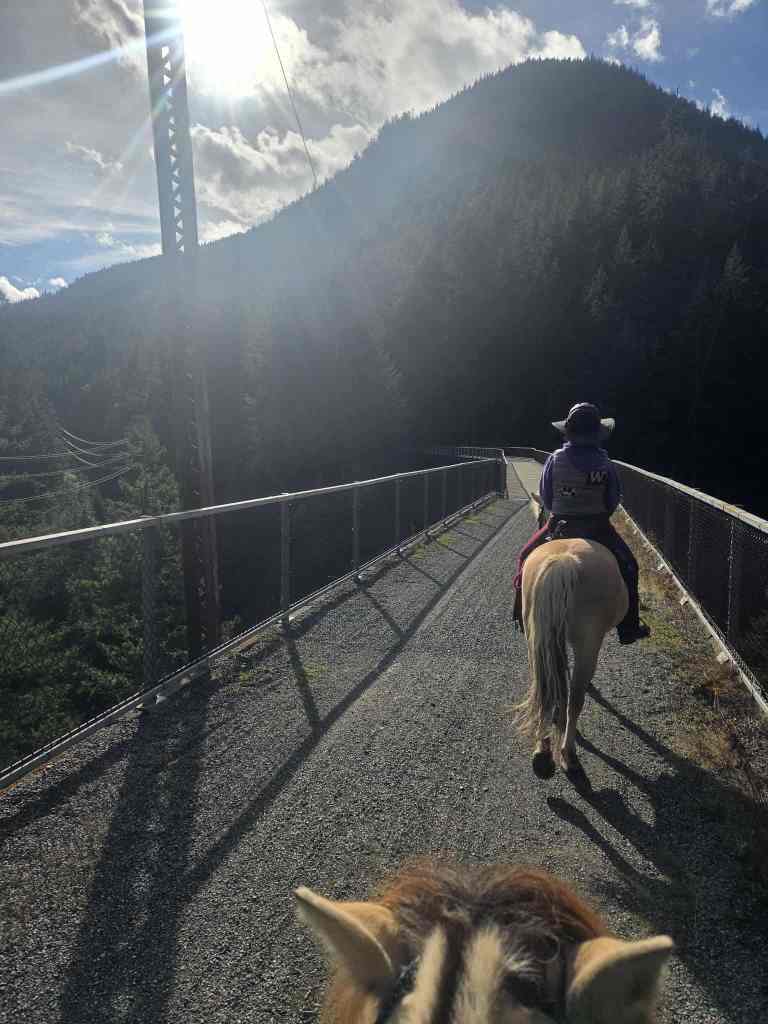
There were these new things on the ride called tunnels.  Tunnels are a dark hole in a mountain that we had to walk through.  The darkness is a little concerning, but the true horror was the echoing sounds coming out from way up ahead– like a bunch of loud horses and trolls drumming and singing. Badly. At the first tunnel I made my human go in front on foot. At the second tunnel I felt better; I didn’t see, hear, or smell danger so I let my human stay on my back.  On the last day, we started into a super-long tunnel.  The humans were saying it was an hour long at Fjord Horse speed.  An hour in Fjord time is the time it takes to eat a flake of hay in a haybag.  Oddly, they didn’t make us go all the way through that breakfast-length tunnel.   I could have done it!  But I was secretly glad that we didn’t.  I could tell my human didn’t like it.  Sometimes you have to give your humans a win. 

I don’t usually like the sound of big trucks, or rattling trailers, or far away loud noises.  But we spent a long time walking along this thing called Interstate 90.  I figured out that is where hay trucks and horse trailers go when they want to visit other far-away horses.  Once I determined that noise wasn’t coming from troll parties under bridges, I was okay with it.  It was kind of calming, like the sound of tractors mowing hay fields. 

My human thought that I would be worried when horses came up behind us, or passed us, or got out of sight during the ride.  But I wasn’t.  I had my buddy Moyfried beside me, and she had me, and we were a herd of two.  Our herd bond was strong.  Also, some of those other horses were weird.  A couple of the Arabs glared and called us “ponies” as they passed.  We are Fjord HORSES! Some of those flighty horses jigged and jogged for miles.  What a waste of energy. Don’t they know that these shoes were made for walking? Slow and steady wins the race.  We did walk pretty fast, though; our humans were surprised we had it in us.  Sometimes we walked slowly, too.   On the third day of the big ride we Fjords were in front for two whole miles!!  Of course we had started earlier than the others.  Eventually the faster sillier horses caught up and passed us.  We didn’t care, the views on that trail were stupendous!

There was a thing called a carriage pulled by two horses that our humans thought we would be scared of.  We were not, because we got to meet those horses the first morning.  They are steady and focused horses, and we respected them.  They had a job to do, and that was to pull a noisy rattling wagon with flags on the back.  We didn’t want to make their job harder by spooking when they came near.

Luckily the humans brought snacks in our saddle bags on the rides.  It’s a lot of miles to go without a snack.  You know the humans have food out when you hear that cellophane plasticky crinkling sound.  Sometimes they tried to hide the food from us, but we have good ears.  I always turn my head to get a tidbit.  Or I try to get some cookies from Moyfried’s rider.  I don’t know why they didn’t share the thing they called beef jerky.  It smelled salty.  I would have eaten it. 

Our longest ride was 19 miles (that’s more than six Fjord-hours).  I could have gone further.  But the humans were tired, so we quit.  Also, there was hay at the trailer.

At the end of our ride on day four, my owner took out this metal thing called a flask.  The humans took a drink, and then my human poured some on her palm for me to taste it.  I licked it up. And then I licked up a second taste.  They call it brandy.  I call it joyful juice, because the humans were joyful when they drank it.  It’s good, but not as good as beer.  Moyfried lifted her lip in disgust at the smell. She is too young to appreciate good joyful juice. But give me a couple more trips like this, and I’ll have her corrupted, I mean trained.

* Vali spent the 2025 riding season at my friend Solveig’s farm, where he earned his nickname, Uncle Vali, because he was an older finished horse that could be a good example to the younger horses and humans on the farm.   Turns out that he is more like the goofy uncle that is always trying to get the other horses in trouble. He starts the biting fests through the fences with the foals.  He taunts the stallion from two paddocks away and starts the galloping fence racing.  As Solveig says, he is like that uncle that loves the nieces and nephews but gets them thrown in jail during their jaunts and escapades.

[Photo credits Solveig Pedersen]
Publication News: Chicken Soup for the Soul; and a book drawing

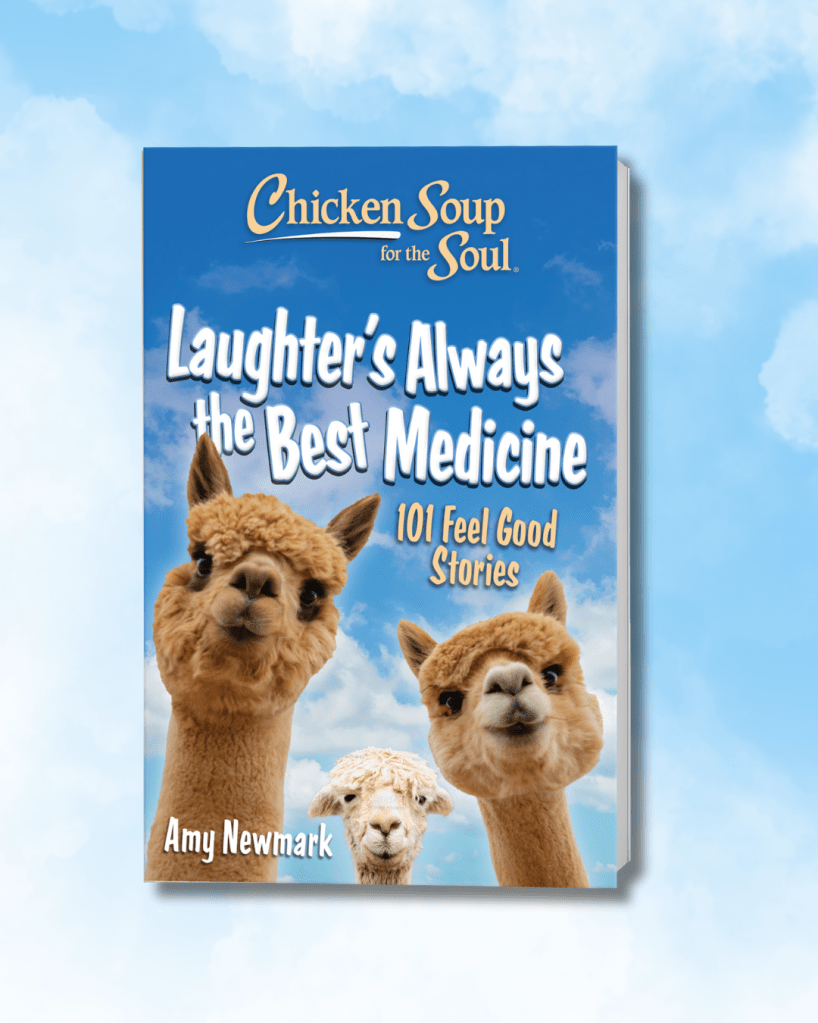
I’m excited to announce publication of my story in Chicken Soup for the Soul, Laughter’s Always the Best Medicine, 101 Feel Good Stories.  My true story is about a family fiasco of roasting a pig in a pit.  There are 100 more humorous stories by other authors in the book.  We all need a good laugh right now.

The paperback book will hit bookstores on February 18. See more here: https://bit.ly/4gczg9A

Just for fun, I am offering a drawing for a free copy of the paperback book.  All you have to do to enter is let me know in a message or a comment by February 27.  You can comment on this blog, comment on my substack (@Michelleeames), comment on Facebook (Michelle Eames Writer) or send me a message thru email (michelle@michelleeames.com) or Messenger.  The drawing will be held on February 28, 2025.   I’m sorry that the drawing will be limited to the U.S. only, due to prohibitive international postage costs. 

Speaking of money, I actually got paid for my story! It was a nice piece of change. Anyone can send in a story to Chicken Soup for the Soul. See their topics and guidelines here: https://www.chickensoup.com/story-submissions/possible-book-topics/. I’m sure I’ll send in more stories; making money is such a novel idea…

I Resolve to Have Goals (If I Feel Like It)

I don’t do New Years resolutions.  It’s not that I don’t believe in improving myself, it’s more that I don’t like to follow rules and expectations just because everyone else is doing it.  Just because it’s January first, doesn’t mean I must commit to an exercise program.  Instead, I might commit to an exercise program in October.  And finally get serious about it after Turkey Day, as I did this past year.  For me, resolutions are similar to spring cleaning.  Must I do it because everyone else is doing it?  No.  Spring is for outside work.  But I often do some serious cleaning and sorting in the Fall or Winter, when I’m spending more time inside and noticing the clutter.  It’s an opportunistic kind of cleaning, room by room as I feel like it.  If I feel like it. I have a high tolerance for clutter.  Eventually, though, the dirt and disarray gets to me, and I jump in for a serious clean.  Eventually, I get things done on my own time.

Nonetheless, I often revisit my writing goals and expectations in January.  I sometimes keep the goals in my head and I sometimes write them down.  But I don’t call them resolutions.  They are more of a plan for the year.  My writing goals include general intentions, and then those are broken down into specific attainable steps. The general goals can be vague, and by themselves overwhelming, for example, “Publish a new book”.  But if I break the goal down into small do-able steps, I can make progress toward the end goal. 

The other difference, to me, between resolutions and goals is that I can change my goals and steps regularly, when needed.  I revisit them as the year proceeds, as I get new information, new ideas, or new plans. These plans become to-do lists to reach the final result.  Even when I haven’t formally called them yearly goals, I am constantly making and revising to-do lists for my writing progress.   

Given all that, here is my first draft of my writing goals and steps for 2025:

Goal 1: Publish my new book of prose and poetry across Washington (I have a solid draft already).

 Steps to get there:

  1. Continue to research appropriate publishers and contests. 
  2. List the potential publishers on a matrix (I love matrices) to track submission information, dates sent, expected reply dates, and results.
  3. Follow online guidelines to send submissions to the publishers and wait for response.
  4. If no positive responses by about September, reconsider the plan. 

Goal 2: Write more stuff.

   Steps to get there:

  1.  Either through prompts, or on my own, do new writing several times a week, for at least an hour. 
  2.  Continue blogging, about twice a month.
  3.  Continue my Substack newsletter, about once a month. Continue newsletter for one year, then revisit whether it is still enjoyable, and useful to connect with readers.
  4.  Think about a third book, probably a humor book about hobby farming.
  5. Explore other forms of writing, maybe short stories.

Goal 3: Read more stuff.

  Steps to get there:

  1. Waste less time on social media, read more books.
  2. Last year I focused on poetry, this year focus on humor, satire, short stories.
  3. Do I have any Mark Twain books? Find some and read them. (Hey, I bet those are in public domain now, and I can find them free online!)

I was going to close this blog out with a final paragraph about the need to regularly revisit, revise, and revamp our goals, but it sounded, well… preachy.  You don’t need me to tell you what to do.  Instead, I’ll end with a quote by Mark Twain:

“Writing is easy. All you have to do is cross out the wrong words.”

P.S.  Here’s my latest substack newsletter, if you want to take a look:  https://michelleeames.substack.com/p/this-is-not-my-year-in-review

[photo credit pexels free photos]

Writing for My Audience

Know your audience, they say, in all of the “How to Write” essays and websites; then you can successfully market your books to that audience.  But my audience keeps changing as I write.  I tend to hop from humor, to poetry, to essays.  My styles and subjects vary widely.

There is the horse-people audience; where I can reach out to our commonalities and our love of horses.  My humorous memoir about living with horses sells best in a local tack shop.  

There is my home-town audience.  When I had a reading in my hometown of Blaine, Washington, I shared about what the town used to be like when I kept my horse in our back yard.  I pointed out that the current grocery store location used to be a big hay field where one of my stories occurred. 

When I had a reading in a Coeur d’Alene, Idaho, bookstore, I shared some of the humor from my book, and focused on the broader audience’s common love of animals, and what animals teach us.

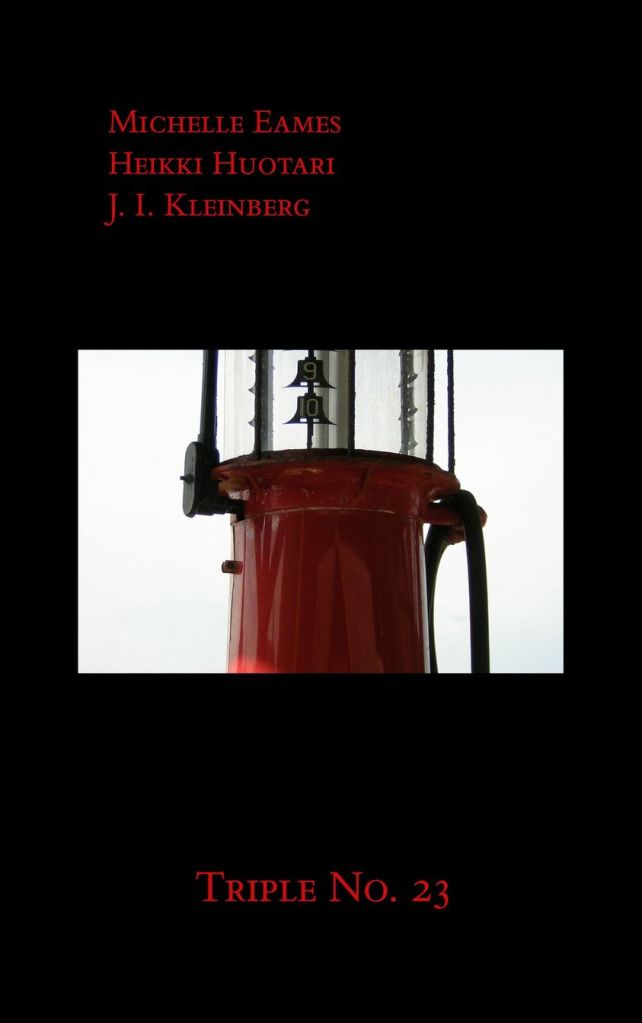
Another time, when I joined a panel with more literary-style poets and writers, I read a short prose piece from my book, to better illustrate the many ways of writing about animals, and how our relationships with animals can be used as metaphors for other things.  I also reached out to a more literary audience when I shared information on my short collection of fire poems in Triple 23.  Poetry readers are yet another audience that can be different than humor or memoir readers.    

I can’t decide if my eclectic writing style is a blessing or a curse.  If I only wrote humor, I could market that humor and immediately jump into writing another similar book.  Yet the poems and essays in my brain want to be written and heard, too.  Recently I saw writing described as “an expensive hobby” where only a relatively few writers make a lot of money.  I’ve decided to embrace that idea.  My hobby of writing is a second expensive hobby after my hobby of horseback riding. 

Like jumping my horse over fallen logs in the woods, I jump from audience to audience as my writing proceeds.  Just as I explore different riding disciplines with my all-around horse, I explore different writing disciplines.  I will be the all-around writer and rider.  When mixing Western and English styles of riding, I use the term “Wenglish”.  When I’m writing humor, essays, and poetry, I need a new term.  Maybe “Hum-ess-try”?  How about “Po-ess-um”?   Oh, that last word can be condensed to “possum”!  I think I need to write a poem about opossums. 

[photo credit pexels.com]

Rain Coats and Feeling Oats

Mary Jane’s Farm magazine once again was kind enough to publish an article of mine: Feeling Her Oats, p.26, in the April-May Issue. This issue is on newsstands now and has several horse-related articles in addition to the usual fun and interesting farm, garden, and cooking articles. It’s a great issue!

I can’t share my article from the current issue yet. Instead, I’ll share my article, Rain Coats, that was published in the last Issue (Feb-Mar) of Mary Jane’s Farm.

Rain Coats

Where I grew up, it was all about the rain.  We had spring rains, summer rains, fall rains, and cold winter rains.  Rain at 34 degrees is so much colder than snow at 32 degrees.  It’s so wet!  As a kid I would put on my coat with a hood and stand under roof lines or gutters.  I would close my eyes and imagine I was standing under a waterfall in the jungle. 

We rarely used umbrellas, they just got in the way. When I moved to Seattle for college, I had to get an umbrella.  It was for self-defense, to be used as a buffer.  As a tall person on sidewalks full of mostly shorter people, other umbrellas came at me at eye level.  Walking on crowded sidewalks between classes was dangerous, you could lose an eye!  Umbrellas are challenging though; one has to remember where you left the dripping wet umbrella when entering a building and remember to pick it up again on the way back out. I lost many umbrellas by walking out a different door.  Some days in Seattle were two-handed-umbrella days, with wind strong enough to invert an umbrella.  They rarely went back into shape.  Those days, a raincoat with a hood was better. 

I eventually became a bike rider, and changed my foul weather gear to a rain poncho and rain chaps.  Did you know that bikes without fenders toss up a line of muddy water on your backside during rainstorms?  Fenders are necessary.    

My husband and I eventually landed in Eastern Washington, on the edge of a desert.  Instead of year-round rain, we get regular thunderstorms.  There is so much drama: a dark bank of stacked clouds, then a breeze, then a gale ahead of the storm, crack of thunder, flash of lightning, and if we are lucky, a downpour.  If we aren’t lucky, wildfires. We can even have thunder-snow in the winter. I love thunderstorms, they don’t usually last long, so you can often avoid being out in the downpour.  But I still enjoy popping outside with a raincoat and a hood, listening to the rain drum down on my head.

My raincoats got better over the years. I learned that boaters and fishermen use entirely waterproof rain gear made from a thick plastic-type fabric.  Those work great for horseback riding, too, because you aren’t exerting too much.  But for hiking or walking, Gore-Tex raincoats work the best, they are effective at keeping rain out and breathable to let sweat out. 

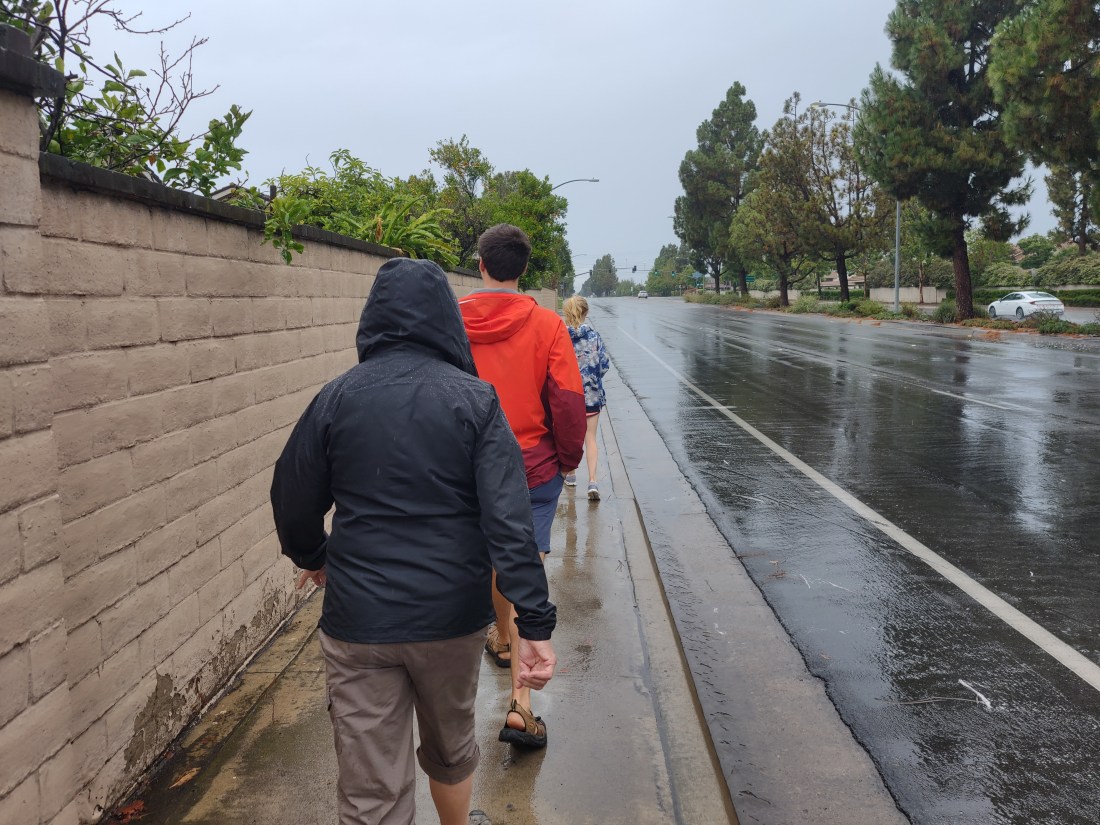
When I visit cities, though, I want something with style.  I’ve always looked for, but never found, a bright colorful flowered raincoat.  Preferably on sale, or from a thrift store.  I found a cool rain hat once that turned out to leak like a sieve when used in the rain.  I did find a black jacket with a hot pink lining and a pink zipper.  That would have to do for my city coat until I found something brighter.  I took that jacket with me on a trip to San Diego and tested it in a tropical storm.  It is not a good rain jacket, it’s more of a rain sponge.  It took two days to dry out after a walk in the deluge.  The hunt is on again, for a bright and cheerful raincoat, preferably with flowers, that actually repels the rain.  And once I find the right jacket, I will need to plan a trip to an exotic locale, maybe with a jungle and a waterfall, to test out my new coat. 

A Leap in Time

This essay is a blast from the past, written way back when, when the kids were little, and I was juggling all aspects of a working mom’s life. Also, I was wearing a watch, not relying on my phone for time and date, so that tells you how old this piece is.  It does seem appropriate for February 29 on a leap year. 

Ten minutes off my morning schedule pushes the kids twenty off theirs.  Any blip in routine has an exponential effect on their morning.  If they don’t get going on time, I don’t get going on time, and we’re all late.  It’s leap year and the calendar says March 8, my watch says March 9, it’s been off for more than a week and I have no idea how to reset it.  It doesn’t really matter, since between work, kids, and gardens I can barely keep track of days anyway.  

I can tell the seasons by the sun and the weather, but the days of the week confuse me.  Christopher asks me each morning, “Is it a stay-home day?”  I have to think.  I rewind yesterday for hints of today.   Do I have a meeting?  Did I get up early enough to drive to wherever I’m supposed to be, by whenever I’m supposed to be there?  Do I have time for a coffee on the way to work?  Must I get to work on time, or will a few minutes late go unnoticed?  If my muscles hurt from too much yard work, it must be the weekend. Or Monday.

Christopher gives up on my thinking frown and goes to ask his older brother.  Mac knows the days, he knows the schedule, and he can do math in his head.  He could probably reset my watch if I could remember to ask him.  I remember my kids’ ages, but not my own, and I have to think twice about their birthdays.  Mac’s is so symmetrical, born at 4:27 pm on  April 27th.  Or was it 4:28 pm on April 28th?  Christopher’s is May 9, I think, or that’s our friend Amber’s, and his is on May 11.

After juggling five days of work, schools, and music lessons I live for the weekends when I can slow down.  I like to watch plants grow.  This week the cactus seeds started in their tiny terra cotta pots.  Last week Johnny-jump-ups.  I pretend to grow seeds for the kids’ education, but it’s really for the magic.  Who knows what kind of cactus will germinate, or which ones will die from my kind over-watering. The Farmer’s Almanac recommends following the rules of astrology and planting when the moon is in Cancer, Scorpio, or Pisces.  But I simply use the paper calendar sitting by our table-top nursery with its calm rhythm of days printed on a grid.  It’s almost too late to start the peppers; less than six weeks until the last average frost date.  The earth, the sun, and the moon still tell the plants to grow, the tides to move, the days to shorten, or to lengthen.  They give seasons of fasts and seasons of harvests.  There is the day to plant the squash when the nights remain above 40 degrees, the day to rest on a lawn chair when the afternoon first reaches 70, and the day to cover the tomatoes when the first frost threatens in fall. 

Why do we have a leap day to add confusion to my barely coping routine?  Leap day of leap year, the extra day added to make our calendar match the Earth’s orbit.  The Romans had the Julian calendar; Julius Ceasar borrowed it from the Egyptians.  But it wasn’t quite right; they had to keep adding leap days.  In 1582, Pope Gregory the XIII put his best people on a review of the calendar, and implemented a more complicated leap day system, skipping the leap days on most of the beginning century years.  But to get the holidays back on schedule, they had to adjust by about 10 days.  Catholics at the time fell asleep on October 4, and woke up on October 15.  Eleven days in a single night on the word of a pope.  A loss of eleven days in the harvest month to gain the Gregorian calendar. What’s in a day, be it Sunday, or a week from Wednesday?  Today if the church or the government took away our days we would protest, not for the artificial shortening of our lifespan, but for the permanent loss of one weekend.  Two less days of rest and kids and gardens. 

Then there is the day to go on daylight savings time.  Another confusion of timing.  One more disruption to my diurnal clock. One more challenge to getting the kids up and out on time.  And my darn watch again.  Each spring, I plant seeds to grow into violets and then forget to water them.  Time and my memory can be the driest peat.  If I studied the theory of relativity, I’m sure I could really have time figured out.  Or I could let someone else do it, who has more time and inclination, someone who can do math in his head, and then write a book that simplifies the theory to plain English. Then I’ll read the book, in my spare time. Right after I read the owner’s manual for my watch. 

One day I gained a quarter of an hour.  That morning, I left my house at 7:45 for my half-hour drive to work and arrived at 8:00 am.  Where did those 15 minutes slip in from?  Where is that time warp on Interstate 90, and how can I hit it again?  If I could just find those extra minutes each day, I promise I wouldn’t waste them.  I’d spend them usefully and efficiently; I’d put in a load of laundry or tidy up the kitchen… or more likely I’d just have another cup of coffee, read the paper, and still leave late for work. Whatever the time of the morning, the name of the calendar, or the day of the week, I’m always waiting for the next thing, the next season, the next birthday, always reading ahead.  Some days I need to remember to stop looking at my watch, finish my coffee, hug my kids, and go outside and pull the weeds.

[Photo credit pexels.com]

Happy New Year and Happy New Book Year!

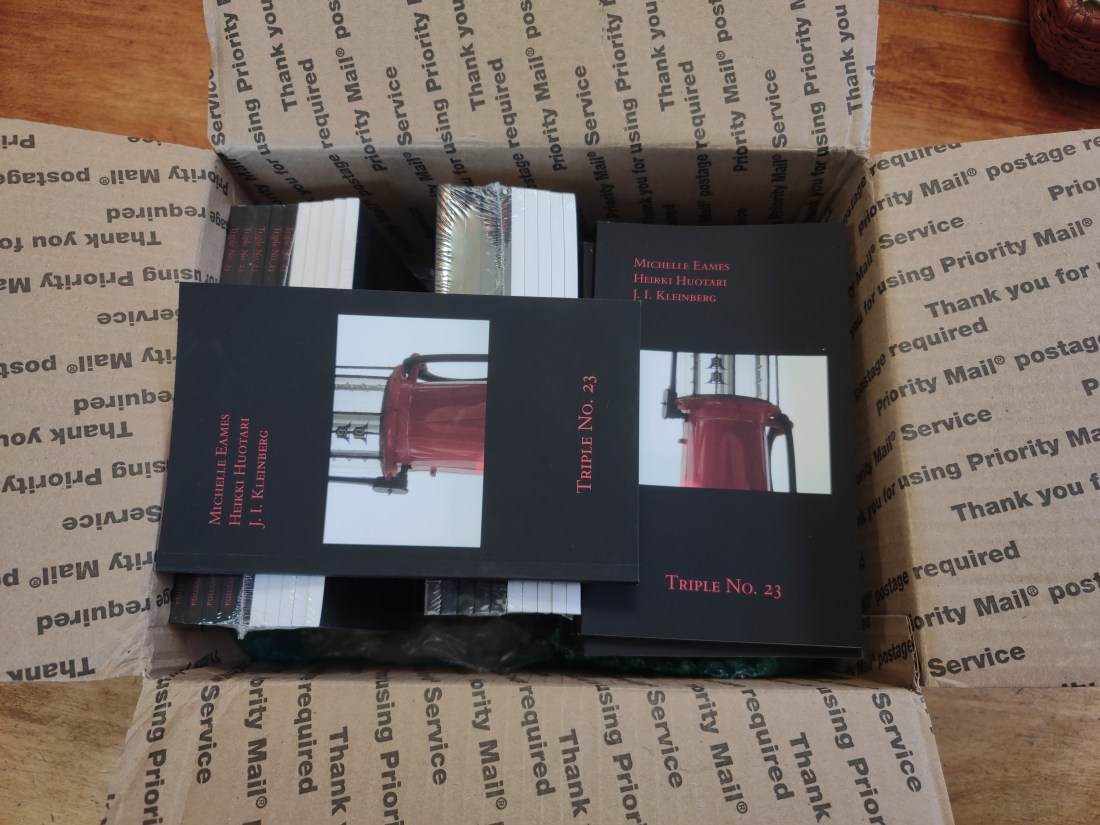
My fire poems are finally published! Ravenna Press has published Triple No. 23, with poetry chapbooks (short collections) by three poets (including me!). I was so happy to receive a box with my copies on the Winter Solstice.  It definitely brightened the longest night of the year.  Read on for details, and how to get copies.

My section of the book is titled Fire Triangle (Heat, Fuel, Oxygen) and includes 16 poems related to fire and wildland fire fighters, with several accompanying illustrations titled Arbitrary Borders by John Burgess, a graphic artist.

The second section of the book is titled Context for an Afterthought with prose poems by Heikki Huotari.

The third section of the book is titled Desire’s Authority with poems by J.I. Kleinberg.  This poet from Bellingham, Washington, writes collage poems, created with fragments of magazine text.  (They’re pretty cool; I might have to try some.)

How to get copies:

Option 1: If you would like a signed copy of the book, you can message, comment, or email me, and we’ll figure out the best purchase process.  The book is $12.95, and shipping within the U.S. is $5.00.  But if you’re close, I can deliver or meet you somewhere. I’m happy to provide copies until I run out.  Note that this option is the only way I get a bit of money, because, well, poetry.

Option 2: You can order the book from the publisher, here:   https://ravennapress.com/books/series/triple-series/

Option 3: You can ask your local bookstore to get you a copy.  And maybe they’ll order extras.  And maybe lots of people will buy them, and maybe we poets will be famous!!  But not rich.  Because, well, poetry.

Option 4: It should be available on Amazon, too. 

Again, Happy New Year and I hope you read lots of good books this year, including some poetry.