The Ironing Board

If you know me, you may be surprised to learn that I like ironing boards.  Not because I iron clothes very often (although we used to iron my son’s kilt and dress shirt before bagpiping performances, and when I say we, I mostly mean my mom, because she is really good at ironing.)  Anyhow, the ironing board that exists at my house is the kind that has the X-shaped legs, that with the pull of a lever can be adjusted  from tall to short, for different ironing heights.  In my craft room, I will sometimes use the board for ironing cloth smooth before cutting out a project, for ironing a folded edge to make sewing a hem easier, or for ironing the fusible sticky stuff for a patch or an applique project. 

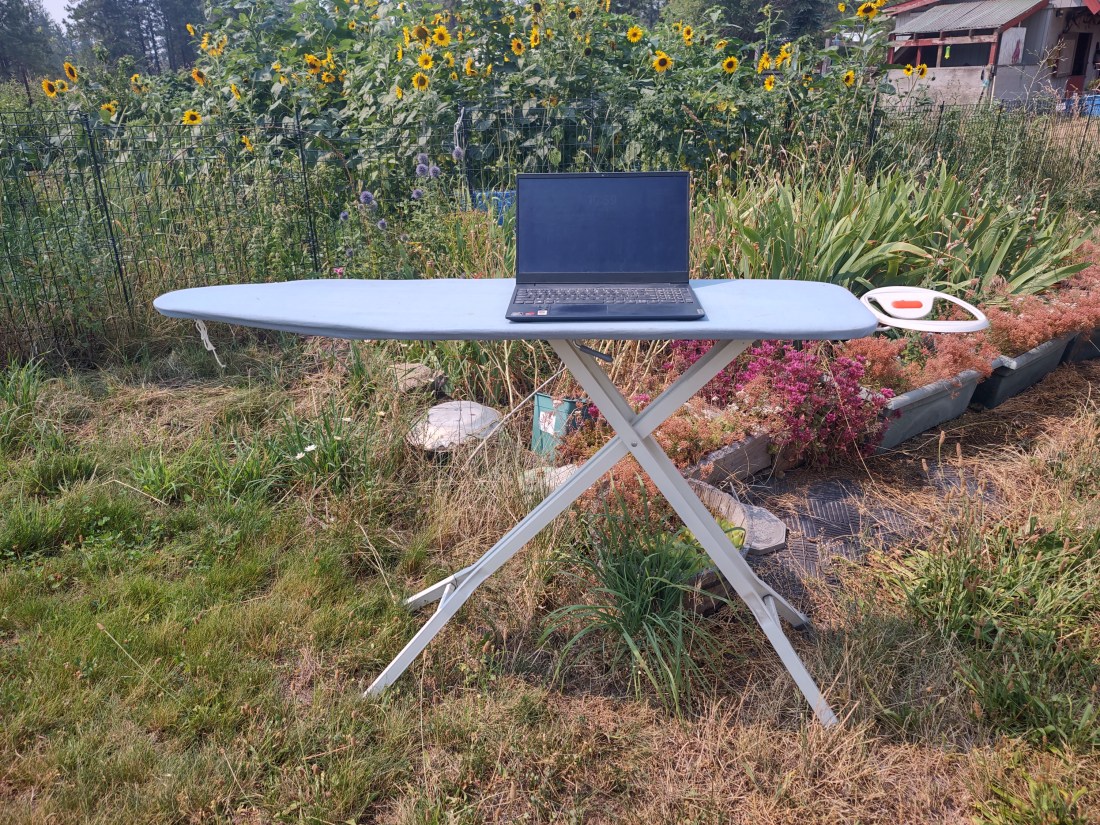
But the ironing board is useful for so many other things in my craft room.  I don’t have a work-table, so I use the board as a cutting table or a layout table for small projects.  I use it as a counter for my laptop to stream shows or podcasts while I sew.  As I think about it now, I could use it for a stand-up desk for writing.  It’s the perfect height.

In a living room, one could use an ironing board for a behind-the-couch table by disguising it with a tablecloth. Or even as a TV stand.  Perhaps all TVs are now affixed to walls?  We have a shelf for our large TV.  I don’t know if my ironing board could support the weight of a giant TV, but if it did, we could adjust the height from high to low to provide the perfect viewing situation.  It would all go great until the cat jumped up and pushed the TV off the stand, like he did with a monitor in my son’s room.  Crash.  

Of course, the main use of an ironing board, or any flat spot really, is to lay things upon it.  Piles of cloth, half-finished projects, art supplies, clothes that need mending, clothes that don’t need mending, pencils, cell phones (that then get buried and in order to find them you have to call them from another phone and hope that your ringer is turned on.)  Sometimes I even place the iron on the ironing board. Now and then I clean off the top of the ironing board to fold it up and stow it away, leaving space to move about in the craft room, that can then become a guest room.  Multi-use objects and multi-use spaces matter.

I’ll bet somewhere some tech company is trying to invent a smart ironing board and a smart iron.  Maybe the smart-board will have an electric jack that automatically adjusts to the perfect height for ironing.  Maybe it will iron your shirts while you are away from the house.  Maybe it will talk to you and tell you what temperature it is and then yell at you when you adjust the iron to the linen setting, but start to iron nylon fabric, thereby melting an iron-shaped mark on the garment.  But do we really need all of those smart doohickeys and advancements?  Sometimes the old designs are the best and most functional objects.  As my grandfather used to say, if it aint broke, don’t fix it.

I Resolve to Have Goals (If I Feel Like It)

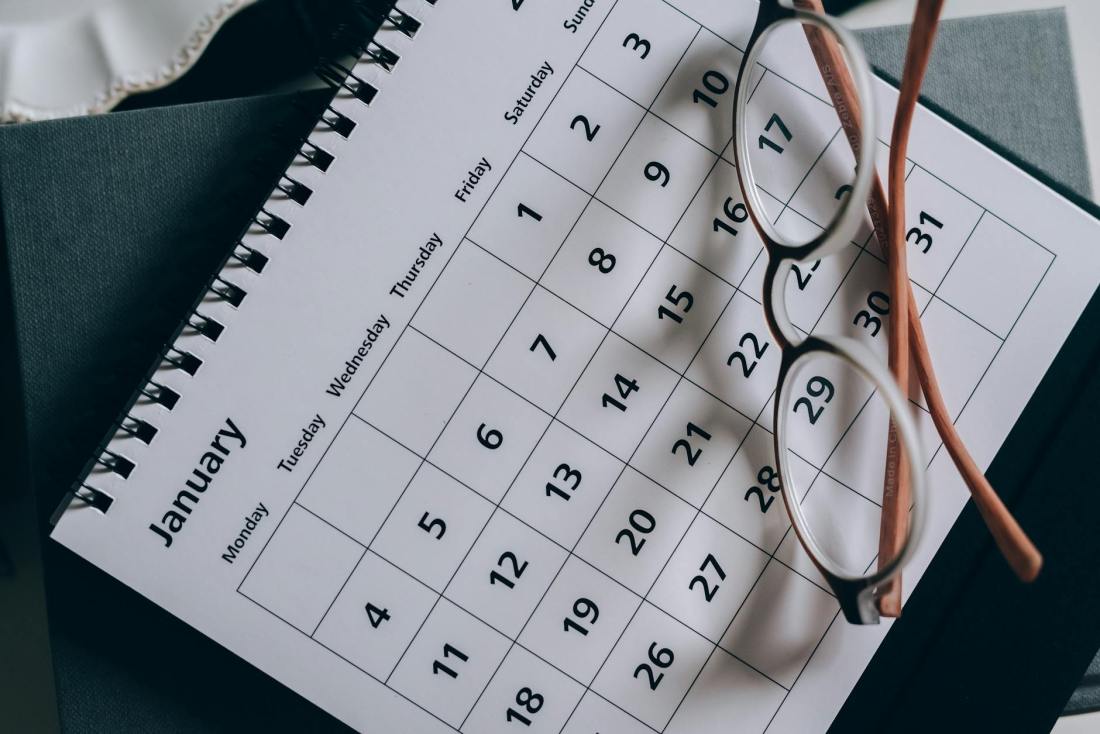
I don’t do New Years resolutions.  It’s not that I don’t believe in improving myself, it’s more that I don’t like to follow rules and expectations just because everyone else is doing it.  Just because it’s January first, doesn’t mean I must commit to an exercise program.  Instead, I might commit to an exercise program in October.  And finally get serious about it after Turkey Day, as I did this past year.  For me, resolutions are similar to spring cleaning.  Must I do it because everyone else is doing it?  No.  Spring is for outside work.  But I often do some serious cleaning and sorting in the Fall or Winter, when I’m spending more time inside and noticing the clutter.  It’s an opportunistic kind of cleaning, room by room as I feel like it.  If I feel like it. I have a high tolerance for clutter.  Eventually, though, the dirt and disarray gets to me, and I jump in for a serious clean.  Eventually, I get things done on my own time.

Nonetheless, I often revisit my writing goals and expectations in January.  I sometimes keep the goals in my head and I sometimes write them down.  But I don’t call them resolutions.  They are more of a plan for the year.  My writing goals include general intentions, and then those are broken down into specific attainable steps. The general goals can be vague, and by themselves overwhelming, for example, “Publish a new book”.  But if I break the goal down into small do-able steps, I can make progress toward the end goal. 

The other difference, to me, between resolutions and goals is that I can change my goals and steps regularly, when needed.  I revisit them as the year proceeds, as I get new information, new ideas, or new plans. These plans become to-do lists to reach the final result.  Even when I haven’t formally called them yearly goals, I am constantly making and revising to-do lists for my writing progress.   

Given all that, here is my first draft of my writing goals and steps for 2025:

Goal 1: Publish my new book of prose and poetry across Washington (I have a solid draft already).

 Steps to get there:

  1. Continue to research appropriate publishers and contests. 
  2. List the potential publishers on a matrix (I love matrices) to track submission information, dates sent, expected reply dates, and results.
  3. Follow online guidelines to send submissions to the publishers and wait for response.
  4. If no positive responses by about September, reconsider the plan. 

Goal 2: Write more stuff.

   Steps to get there:

  1.  Either through prompts, or on my own, do new writing several times a week, for at least an hour. 
  2.  Continue blogging, about twice a month.
  3.  Continue my Substack newsletter, about once a month. Continue newsletter for one year, then revisit whether it is still enjoyable, and useful to connect with readers.
  4.  Think about a third book, probably a humor book about hobby farming.
  5. Explore other forms of writing, maybe short stories.

Goal 3: Read more stuff.

  Steps to get there:

  1. Waste less time on social media, read more books.
  2. Last year I focused on poetry, this year focus on humor, satire, short stories.
  3. Do I have any Mark Twain books? Find some and read them. (Hey, I bet those are in public domain now, and I can find them free online!)

I was going to close this blog out with a final paragraph about the need to regularly revisit, revise, and revamp our goals, but it sounded, well… preachy.  You don’t need me to tell you what to do.  Instead, I’ll end with a quote by Mark Twain:

“Writing is easy. All you have to do is cross out the wrong words.”

P.S.  Here’s my latest substack newsletter, if you want to take a look:  https://michelleeames.substack.com/p/this-is-not-my-year-in-review

[photo credit pexels free photos]