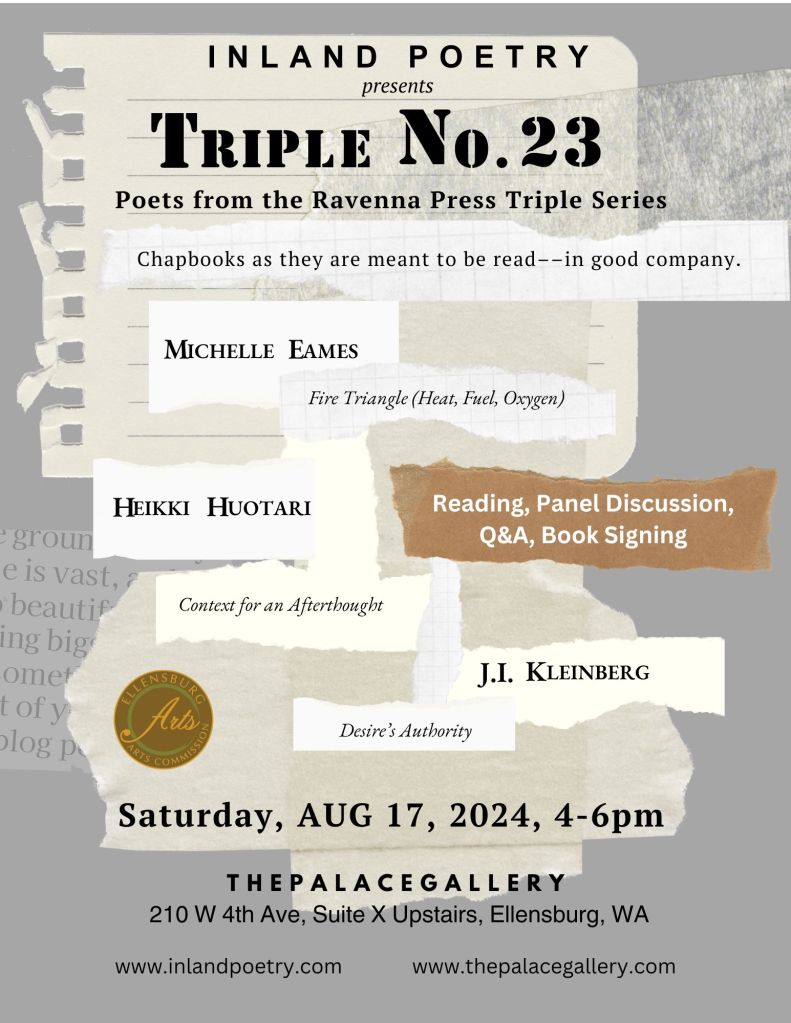
Good Day

Not long ago, I had a really good day, that turned into a really good week.  This was after a fairly crappy year, during the tension of the election season, and I was in a funk.  So I really noticed that good day. 

On that day, four delightful things happened: 1) I tracked down an old family friend through Facebook; 2) the old friend (a poet) happily agreed to review a draft of my new book; 3) my younger son received a job offer; and, 4) Chicken Soup for the Soul sent an email stating that a story I had submitted made it through the first round of  review, and was being considered for a humor collection in 2025. 

Later in the week, more good things happened, the best being that my family friend followed through with a glowing review of my draft book. 

I’ve never been one to keep a gratitude list.  Instead, I just have a generally positive attitude and realize that I have wonderful things in life.  But I don’t typically count and note those wonderful things individually.  I am changing that perspective late in this challenging year.  From now on, I will be looking for and noticing moments of joy, positivity, and laughter. 

Rather than just putting my weight into the harness and moving on with my work, despite my funk, I will be looking for the delights along the way.  On the frozen fog days, I will notice the ice crystals and the quiet air, instead of just bemoaning the lack of sun.  I expect a lot of gray as I travel the days ahead but will cherish the bright moments of time with friends and family, and the little successes along the way. 

I’ve always loved this Haiku by Mizuta Masahide, a 17th century Japanese poet:

Barn’s burnt down now I can see the moon.

I’ll be looking for the moon as soon as the frozen fog disperses. 

P.S.  I now have a newsletter on substack: Read. Write. Ride.  You can find it and subscribe here:   https://michelleeames.substack.com/. The approximately monthly newsletter will have thoughts on my (you guessed it) reading, writing, and riding.  This blog will still continue.
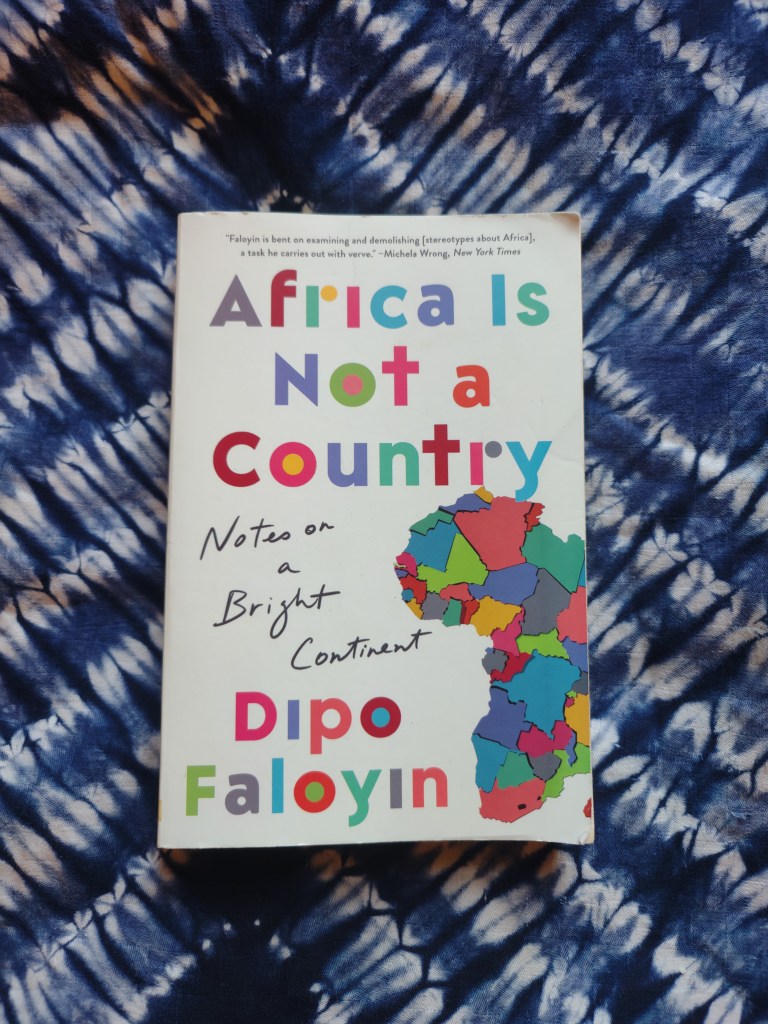
Book Review and Recommendation: Africa Is Not a Country, Notes on a Bright Continent, by Dipo Faloyin

I bought this book, because a sentence on the back cover stated that it “engages in the heated debate over which West African country makes the best jollof rice.”  In the Gambia, the West African country where my husband and I volunteered in the Peace Corps, that dish is called “benachin”.  And I could see why folks would argue over who makes the best version of that rich and savory rice and tomato dish.  It is a delicious comfort food.  While I might argue with the author about which country wins the cooking contest (oddly, he argues for his country of origin, Nigeria), I learned a lot about the ancient and modern history of countries in Africa from his book. Despite spending time in West Africa, I knew next to nothing about the history of the Gambia, and other countries throughout the continent.   

Faloyin details the history of how many African countries came to be, and how arbitrary their borders were (and still are).  The borders were set up during a conference of European countries arguing over a vague map, and carving up the African continent for economic and power reasons. Those borders split ethnic groups and great kingdoms.  It was a divide and conquer scenario, and the book shares the history of the cruelty and greed of the European governments and their proxy private companies and colonial governments. When the people in the individual African countries started gaining independence from their colonizers, they agreed not to renegotiate the borders, thus maintaining many of the historic tensions between ethnic groups.

Faloyin shares examples of heroic independence fighters, who became authoritarian dictators once in office.  He discusses the continuing governing challenges, and examples of successes in governing.  He notes the stereotypes we westerners have of Africa in general, and the push-back from the artists, writers, and movie makers across the continent, and from the African diaspora across the globe.   

I learned a lot that I wish I had known before I went to the Gambia with the Peace Corps.  I knew that France and Britain decided the borders of the Gambia and Senegal (and the Gambia definitely has an arbitrary boarder, ~10 kilometers either side of the Gambia River and completely surrounded by Senegal).  But I never fully understood the strange challenges of having many of your relatives and ethnic groups separated by borders, and having a nation forced on you.  Emphasis on force. 

I highly recommend this well-written, funny, entertaining, and thought-provoking book.  While I don’t typically gravitate toward books of history, it completely pulled me in.  The history is fascinating and explains and describes some of the continuing challenges, and also successes of various countries across the vast continent of Africa.

Overalls Beat All

Mary Jane’s Farm magazine has published a new article of mine, Bird Music, on p.26 in the August-September issue of the magazine. This issue is on newsstands now, take a look!

I can’t share that article from the current issue yet. Instead, I’ll share my last article, Overalls Beat All, that was published in the June-July issue of Mary Jane’s Farm magazine. 

Overall, it was a rough time when I broke my arm after that unplanned dismount off my horse.  It was my right arm, my dominant hand, and simple things became difficult.  Especially buttoning and zipping up my jeans.  Oddly, that season of the broken arm, when I was less active, my jeans started shrinking, becoming even harder to fasten.  Why do jeans do that to us?

Long ago when my oldest son was little, I had a pair of bib overalls.  The cool striped ones, like farmers wear.  Or railroad engineers. I even had the matching railroad-style hat, and a wooden train whistle.  One must respect the whole outfit, especially when raising boys.  I would wear those loose-fitting overalls often and I usually left one of the over-the-shoulder straps undone.  Because why buckle it when I’ll just have to undo it later when I go to the bathroom?  Bib overalls stay up fine with just one strap. 

My mom remembers visiting during that time and dressing my son, a toddler, in his own little overalls.  She started to fasten the second strap over his shoulder, when he clearly told her, with a few mispronounced words, that it wasn’t done that way.  Overalls were to be worn with only one strap.  Like mother, like son. 

Flash forward again to the time of my broken arm.  I no longer had overalls, and was wearing stretchy pants, sweatpants, and even slacks, because they were easy to pull up and fasten with one hand.  I’m really not a slacks-wearing girl these days, and the wind blows right through those lightweight pants.  I missed my jeans. I mentioned to my family how overalls would work well given my limited dressing abilities. 

My husband searched all over town for overalls in my size, long length.  He found some plain blue denim overalls, gave them to me as a birthday gift, and they actually fit!  I was happy to have them, and of course only used one shoulder strap, because that is the way we do things in this house.  Also because of laziness, and because I only had one working hand.   I wore those new overalls for a week straight.  Then my husband surprised me with another pair of overalls: purple, with vegies printed all over them!  I will be dressed in the height of style while gardening this year. 

Now that my arm is recovering, I’m back to jeans, at least some of the time.  But I’m still wearing those comfy overalls with one shoulder strap undone, sometimes on purpose and sometimes because the one side doesn’t clip very tightly anyhow.  A few times my friends have reached over to fasten the clip for me, making me laugh.  I guess they don’t recognize a fashion trendsetter when they see one. 

[Photo credit: pexels.com]